Cultivation Methods and Key Technical Points for Growing Bamboo Fungus in Northern China
How do you grow bamboo fungus in the north? Please give an introduction to the methods. For growing bamboo fungus in the north, you can refer to the following techniques: 1. Site preparation: Choose arable land that faces the sun, is well ventilated, has fertile soil, and has convenient drainage and irrigation. Prepare the land and make raised beds 1 m wide, 30 cm high, and of indefinite length; the distance between beds is 50 cm, and the bed surface is covered with more than 10 cm of fertile soil and leveled. Then...
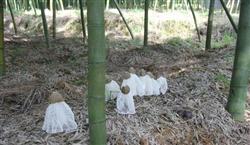 How do you grow bamboo fungus in the north? Please give an introduction to the methods.
For growing bamboo fungus in the north, you can refer to the following techniques:
1. Site preparation: Choose arable land that faces the sun, is well ventilated, has fertile soil, and has convenient drainage and irrigation. Prepare the land and make raised beds 1 m wide, 30 cm high, and of indefinite length; the distance between beds is 50 cm, and the bed surface is covered with more than 10 cm of fertile soil and leveled. Then spray the bed surface with 5% formaldehyde solution and keep it sealed for 12 hours. Before sowing, take the 5 cm thick layer of mature fertile soil from the bed surface and pile it aside for use as casing soil, then spray the bed with 0.3% dichlorvos solution or lime water. Set up a shade shed around the site; the light intensity requirement is "four parts shade, six parts sun."
2. Preparation of growing substrate: The formula is 48% corncobs, 30% corn stalks, 20% mixed wood chips, 1% gypsum powder, 1% superphosphate; or 68% mixed wood chips, 30% soybean stalks, 1% gypsum powder, 1% sugar. Before use, corncobs should be crushed into 2 cm pieces, and corn stalks or soybean stalks cut into 3 cm long segments; mixed wood should be sliced mechanically. First dry the raw materials in the sun, then put them in bags and soak them in clean water for 5 days; they can also be soaked in 0.5% lime water for 2 days, then rinsed clean with clear water, removed, and drained before use. Use 20 kg of material per sq m, with a moisture content of about 65%.
3. Cultivation season: It can be cultivated twice a year: spring cultivation is sown in early May and can be harvested in August; autumn cultivation is sown in September and harvested in the summer of the following year.
4. Sowing: Use the layered sowing method to spread the substrate and sow. First spread a 5 cm thick layer of substrate on the bed surface, sow by spot sowing or broadcasting, then spread a 10 cm thick layer of growing substrate on top, press it down slightly, and sow another layer of spawn; then spread another 5 cm thick layer of growing substrate on top, press it down, cover with fallen leaves and debris, and then apply casing soil. Apply 5 cm of casing soil around the bed and 2 cm on the bed surface, then cover with plastic film to preserve warmth and moisture. Use 8 bottles of spawn per sq m; the spawn blocks should not be too broken up, and are best about the size of a broad bean.
5. Bed management:
① Spawn-running stage: After sowing, cover well with plastic film, keep the temperature at about 25°C, ventilate once a day for 30 minutes each time; do not spray water for one month.
② Bud stage: After 30 days, when the white fluffy mycelium has covered the bed surface, cover with 1 cm of sterilized mature fertile soil, then scatter a layer of leaves or pine needles. When the mycelium twists together to form primordia, spray water on the bed surface every day, maintaining air humidity at 80% and temperature at 25°C.
③ Fruiting stage: After 40 days, the fruiting bodies form one after another; the temperature should be controlled at 28%, and the humidity maintained at 90%. Watering should be done before 7 a.m., generally ventilate once a day, and when the temperature is high, ventilate once in the morning and once in the evening for 30 minutes each time.
6. Overwintering management: Bamboo fungus can be harvested for more than two years after one sowing, but in the north, overwintering bamboo fungus is an important step. The specific method is: around Frost's Descent, before the soil begins to freeze, cover the bed well with weeds, leaves, and so on, with a suitable thickness of about 15 cm. Before covering with soil, irrigate with freezing water so that the bed and the ditches beside the bed are fully watered. When the soil begins to thaw in the following spring, uncover the covering in two stages, 7 days apart each time, and then enter normal fruiting management.
Click to get more bamboo fungus cultivation techniques
Click to get more edible mushroom cultivation techniques