What are the control methods for walnut anthracnose?
What harm does anthracnose do to walnuts? How is walnut anthracnose controlled? We ask experienced netizens to help explain. Zhongdiwang has compiled the harm and control methods of walnut anthracnose, listed in detail below for netizens' reference. Harm of walnut anthracnose: Anthracnose generally develops from June to August, and in orchards with heavy rainfall, weak walnut tree vigor, dense branches and leaves, and extensive management, the disease is severe; the pathogen spores invade through wounds or natural openings.
 What harm does anthracnose do to walnuts? How is walnut anthracnose controlled? We ask experienced netizens to help explain.
Zhongdiwang has compiled the harm and control methods of walnut anthracnose, listed in detail below for netizens' reference.
Harm of walnut anthracnose:
Anthracnose generally develops from June to August, and in orchards with heavy rainfall, weak walnut tree vigor, dense branches and leaves, and extensive management, the disease is severe; the pathogen spores invade through wounds or natural openings.
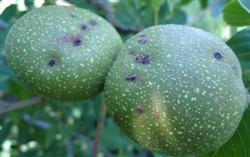
On walnut fruit skins harmed by anthracnose, brown to dark brown round or nearly round lesions appear, with the center sunken and bearing small black dots, sometimes showing concentric rings. When air humidity is high, pink protrusions appear on the lesions. When there are many lesions, they can merge into patches, causing the fruit to turn black and rot or drop early. Leaf lesions are irregular in shape, mostly strip-like. The leaf color at the lesions turns withered yellow, and severely affected leaves turn entirely yellow.
Control methods for walnut anthracnose:
Method one: Remove diseased branches, diseased fruits and diseased leaves and burn them in a concentrated manner. Strengthen tree management and improve ventilation and light conditions.
Method two: When the rainy season arrives, spray Bordeaux mixture at 1:1:200 (copper sulfate: lime: water) once every 10-15 days to prevent the disease.
Method three: When the disease occurs, spray 40% Tuzet wettable powder at 800 times dilution, or 50% carbendazim wettable powder at 1000 times dilution, 75% chlorothalonil at 600 times dilution, 70% thiophanate at 800 times dilution, once every 15 days, for 2-3 consecutive sprays.
Pruning methods for walnut trees
Autumn and winter management methods for walnut trees