How to control the corn armyworm? These practical methods you need to master
How to control the corn armyworm? What is the corn armyworm? What pesticide should be used against the corn armyworm? Please allow me to explain. The corn armyworm, also known as the five-colored worm, has a mixed diet. The adult hides by day and comes out at night, mostly laying eggs in the withered yellow leaf tips on the middle and lower parts of wheat and inside leaf sheaths, with a single female laying 1000-2000 eggs. The larvae are mostly active in the morning and evening, that is, from sunrise in the morning...
 How to control the corn armyworm? What is the corn armyworm? What pesticide should be used against the corn armyworm? Please allow me to explain.
The corn armyworm, also known as the five-colored worm, has a mixed diet. The adult hides by day and comes out at night, mostly laying eggs in the withered yellow leaf tips on the middle and lower parts of wheat and inside leaf sheaths, with a single female laying 1000-2000 eggs. The larvae are mostly active in the morning and evening, that is, from sunrise in the morning to before 10 o'clock and around dusk. They prefer to feed on gramineous crops and weeds, and their food intake increases with each instar. The fifth and sixth instars are the stage of gluttonous feeding. They have the characteristics of cluster damage, gluttonous feeding, and mixed feeding. The larvae often migrate in clusters to cause damage, hence the name "armyworm".
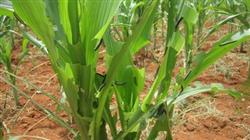
The first and second instar larvae only gnaw the leaf mesophyll, forming skylight-like holes. After the third instar, they nibble along the leaf edges, forming notches. When the damage is severe, they eat up most of the leaf, leaving only a very short midrib. When disturbed, the larvae have the habit of feigning death and burrowing into the soil. The corn armyworm bites and eats leaf tissue, forming notches. During major outbreaks, it often eats all the leaves, leaving only bare stalks, and the emerged corn ears can also be bitten off. It can harm more than a hundred kinds of plants. With strong migratory and gluttonous feeding characteristics, it is listed as one of the major agricultural pests nationwide. When the damage is severe, it can cause reduced yield or total crop failure.
The corn armyworm is a pest that prefers humid conditions and fears high temperatures and drought, but when rainfall is excessive, especially under the attack of heavy rain or storms, the number of armyworms often drops significantly.
Control methods for the corn armyworm:
1. Control adults to reduce egg laying:Taking advantage of the adult armyworm's egg-laying habits, phototaxis, and chemotaxis, use straw bundles, sugar-vinegar liquid, sex pheromone traps, insecticidal lamps, and other methods to trap and kill adults, so as to reduce the number of eggs laid by adults and lower the field pest population density.
1. Straw bundle method. Generally, make straw bundles with a diameter of 5 cm and insert 60-100 per mu, replace the straw bundles once every 5 days, and burn the replaced withered straw bundles in a centralized manner to eliminate adult armyworms.
2. Sugar-vinegar method. Take 350 g of brown sugar, 150 g of alcohol, 500 g of vinegar, 250 g of water, and add 15 g of 90% crystalline trichlorfon to make a sugar-vinegar attractant liquid, and place it 1 m high in the field to trap and kill adult armyworms.
3. Sex pheromone trapping method. Use dry traps equipped with armyworm sex pheromone lures, hang one pole-mounted trap per mu in the corn field to trap and kill egg-laying adults.
4. Insecticidal lamp method. During the adult mating and egg-laying period, set up insecticidal lamps in the field with a spacing of 100 m, turn on the lamps from 8 p.m. to 5 a.m. to trap and kill adults.
2. Control larvae to reduce damage:Spray pesticide in time at the early stage of larval occurrence to eliminate the larvae before the third instar.
1. Threshold-based control. When the pest population density in paddy fields reaches 25-30 larvae per sq m and the pest population density in corn fields reaches more than 30 larvae per hundred plants, per mu use 50% phoxim emulsifiable concentrate, 80% dichlorvos emulsifiable concentrate, 40% chlorpyrifos emulsifiable concentrate, 75-100 g, add 50 kg of water, or 20% diflubenzuron No. 3 suspension concentrate, or 25% fenvalerate-phoxim emulsifiable concentrate 20-30 ml, or 4.5% beta-cypermethrin 50 ml, add 30 kg of water, and spray evenly, or use 5% fenpropathrin (Meothrin) emulsifiable concentrate, 5% fenvalerate (Sumicidin) emulsifiable concentrate, 2.5% lambda-cyhalothrin (Kung Fu) emulsifiable concentrate, 2.5% deltamethrin (Decis) emulsifiable concentrate at 1000-1500 times dilution, 40% omethoate at 1500-2000 times dilution, 10% imidacloprid at 2000-2500 times dilution for spray control.
2. Early control. At the young larval stage, use 5% flufenoxuron emulsifiable concentrate at 4000 times dilution, diflubenzuron No. 1, diflubenzuron No. 2, or diflubenzuron No. 3 at 500-1000 times dilution for spray control. The effect on controlling armyworm larvae is good, and it does not harm natural enemies.
3. Broadcasting poisonous soil:Per mu use 40% phoxim emulsifiable concentrate 75-100 g, add an appropriate amount of water, mix with 40-50 kg of sandy soil, and broadcast it into the corn whorl. This can protect natural enemies and also simultaneously control the Asian corn borer.
Click to get more corn planting techniques
Click to get more food crop planting techniques