-
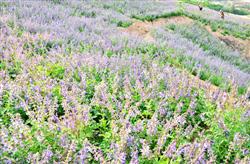
What are the cultivation techniques for Salvia miltiorrhiza (Danshen)? A detailed explanation of the planting methods
What are the cultivation techniques for Salvia miltiorrhiza (Danshen)? Please introduce the following methods for growing Salvia miltiorrhiza: Propagation and germplasm selection - select excellent Salvia miltiorrhiza varieties or strains (with a tanshinone content of no less than 0.2% and a salvianolic acid B content of no less than 3.0%) as propagation material. Seed seedling raising - pre-sowing preparation: deep-plow the seedling land 30cm...
-
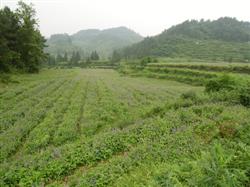
What are the cultivation methods and key technical points for Salvia miltiorrhiza?
What are the methods for growing Salvia miltiorrhiza? Please give an introduction. Salvia miltiorrhiza, also known as purple salvia, red salvia, blood salvia, and red-rooted salvia, is the dried root of the plant Salvia miltiorrhiza in the Lamiaceae family. It has the functions of removing blood stasis and relieving pain, promoting blood circulation and regulating menstruation, and nourishing the heart and relieving restlessness. It is suitable for irregular menstruation, amenorrhea, ectopic pregnancy, hepatosplenomegaly, angina pectoris, restlessness and insomnia...
-
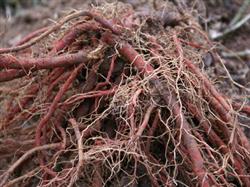
What are the control methods for root-knot nematode disease in Danshen (Salvia miltiorrhiza)?
How to control root-knot nematode disease in Danshen (Salvia miltiorrhiza)? What are the symptoms of root-knot nematode disease in Danshen (Salvia miltiorrhiza)? The control methods for root-knot nematode disease in Danshen (Salvia miltiorrhiza) can be referred to as follows: 1. Damage symptoms. The disease damages the roots of Danshen (Salvia miltiorrhiza). The affected taproots, lateral roots and fibrous roots all bear tumor-like root galls; the taproots and lateral roots become thinner, and the fibrous roots increase in number. On the galls...
-
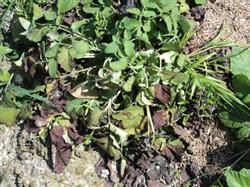
What are the control methods for root rot in red sage (Salvia miltiorrhiza)?
How do you control root rot in red sage? Please provide an introduction. Red sage root rot: 1. Harmful symptoms: Red sage root rot occurs in hot, rainy seasons and harms the plant's roots. In the early stage, only a few roots or part of the underground rhizome become diseased first, gradually spreading to the entire root system. After the roots are damaged, wet rot occurs, the outer skin turns black,...
-
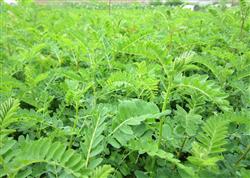
Astragalus Planting: Fertilization and Pest Control Methods
How do you fertilize and control pests when planting astragalus? Please help explain the methods. For astragalus fertilization and pest control, you can refer to the following methods: 1. Fertilization management. Astragalus prefers fertile soil, so in addition to applying sufficient base fertilizer, it also needs topdressing 2-3 times each year. The first time, after the seedlings are complete or after greening resumes, apply farmyard manure as topdressing; the second time, after intertillage and weeding, apply pen...
-
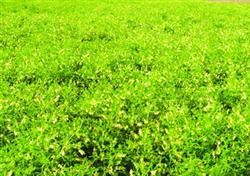
What are the control methods for purple root rot of Astragalus membranaceus?
How to control purple root rot of Astragalus membranaceus? Please explain the methods. The pathogen of purple root rot of Astragalus membranaceus is a kind of basidiomycete fungus, which mainly damages the underground roots. It first occurs on the underground fibrous roots, then spreads to the lateral roots and the main root. In the early stage of the disease, a layer of white thread-like material can be seen wrapped around the roots; as the disease develops, it turns purplish brown and...
-
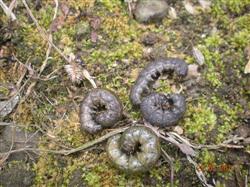
How to prevent and control Angelica rust? Detailed explanation of control methods
How to control cutworms in Angelica? Please advise. Cutworms, also known as "soil silkworms" or "black soil silkworms", belong to the order Lepidoptera, family Noctuidae. The main cutworms affecting Angelica are the black cutworm and the yellow cutworm, and their damage conditions and control measures are the same. 1. Damage situation: The larvae damage Angelica seedlings, hiding by day and emerging at night; in the young larval stage they mostly feed on tender leaves...
-
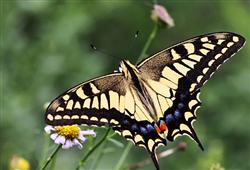
Identification and control methods of Angelica sclerotinia disease
What is the Angelica yellow swallowtail butterfly? Please introduce the Angelica yellow swallowtail butterfly, also known as the fennel swallowtail, belonging to the order Lepidoptera, family Papilionidae. 1. Damage situation: the larvae cause damage, feeding on leaves at night, causing notches, and in severe cases eating the leaves completely, leaving only the petioles and veins, and also feeding on flowers and fruits. This insect has a large appetite, seriously affecting the growth of Angelica, ...
-
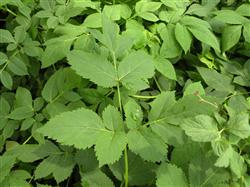
How to grow Angelica sinensis? Planting methods and key technical points
How to grow Angelica sinensis well? Please give guidance. To grow Angelica sinensis, you can refer to the following methods: For transplanted seedlings, loosen the soil and weed 3 to 4 times in 1 year, the first time when the seedlings are 3 to 5 cm tall. Apply topdressing after intertillage and weeding. For the first application, apply 1500 to 2500 kg of dilute human and livestock manure water per 667 sq m; for the second and third applications, apply 2500 to 3000 kg of decomposed...
-
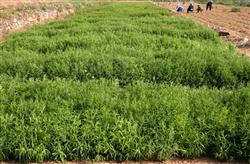
What are the propagation methods of Angelica sinensis?
How many methods are there for propagating Angelica sinensis? Please provide an introduction. Angelica sinensis is propagated by seed, generally using the method of raising seedlings and then transplanting, though direct sowing can also be used. 1. Raising seedlings and transplanting (1) Selecting seeds: After seed selection, Angelica sinensis yields about 14.6 kg more per mu than unselected seeds. The main selection method is selecting by seed head. At harvest time for Angelica sinensis, when the seed coat...
条件筛选