How to grow Angelica sinensis? Planting methods and key technical points
How to grow Angelica sinensis well? Please give guidance. To grow Angelica sinensis, you can refer to the following methods: For transplanted seedlings, loosen the soil and weed 3 to 4 times in 1 year, the first time when the seedlings are 3 to 5 cm tall. Apply topdressing after intertillage and weeding. For the first application, apply 1500 to 2500 kg of dilute human and livestock manure water per 667 sq m; for the second and third applications, apply 2500 to 3000 kg of decomposed...
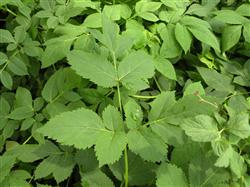
How to grow Angelica sinensis well? Please give guidance
To grow Angelica sinensis, you can refer to the following methods:
For transplanted seedlings, loosen the soil and weed 3 to 4 times in 1 year, the first time when the seedlings are 3 to 5 cm tall. Apply topdressing after intertillage and weeding. For the first application, apply 1500 to 2500 kg of dilute human and livestock manure water per 667 sq m; for the second and third applications, apply 2500 to 3000 kg of decomposed stable manure, compost, or ash soil per 667 sq m. Promptly pull out bolting seedlings. Water during drought, but stop watering in the later stage to avoid root rot.
The problem of early bolting: The key problem in Angelica sinensis production is early bolting (in the year of transplanting). The general early bolting rate is 30%, and in severe cases it can reach more than 50%. The roots of bolted Angelica sinensis are highly woody, faint in odor, lack oiliness, are poor in quality, and cannot be used as medicine. The cause of early bolting in Angelica sinensis is that, in individual development, the transition from non-bolting to bolting requires two developmental stages: the vernalization stage and the photoperiod stage. The former requires a low temperature of 0 to 5°C, while the latter requires a long daylength of more than 12 h. Under natural conditions, the low temperature comes from winter, and the required long daylength occurs around summer. For annual Angelica sinensis, the long daylength can be passed in the summer of that same year. It does not bolt because it has not experienced winter low temperature. However, not all planting stock stored through winter can pass through the vernalization process and bolt and flower. For Angelica sinensis planting stock to pass through vernalization, it also needs to have sufficient sugar content itself. Large planting stock tends to bolt, while small planting stock does not easily bolt.
In order to reduce early bolting in Angelica sinensis, the purpose of controlling bolting is achieved by improving seedling-raising techniques to control the size of the planting stock. Some technical measures can be adopted:
First, choose a seedling-raising site preferably on a semi-shady slope in a high-cold mountainous area with medium soil fertility; or delay the sowing and seedling-raising period, keeping the seedling age within 70 days, and making the seedling root diameter about 3.5 mm. The method of direct sowing after the Start of Autumn can also be used, resulting in a very low early bolting rate.
Second, when transplanting in the second year, it is best to plant in land with deep, loose, fertile soil and good drainage. After the seedlings recover from transplanting, strengthen fertilizer and water management so that the seedlings grow robustly and the roots obtain a large amount of assimilates, thereby increasing the yield and quality of the medicinal part.
Third, cold storage of seedlings. After lifting the seedlings, store the planting stock at a low temperature of about -10°C until planting in the following spring. Because the seedlings cannot obtain the necessary conditions for vernalization, the phase change cannot be achieved, and the bolting rate is reduced.
Click to get more Angelica sinensis growing techniques
Click to get more medicinal herb growing techniques