-
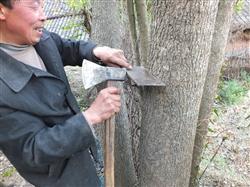
What are the harvesting and processing methods for Eucommia ulmoides?
How is Eucommia ulmoides harvested and processed? Please explain the methods. Eucommia ulmoides is a commonly used traditional Chinese medicine, and harvesting is done by the bark-stripping method. In our province, the more suitable time for bark stripping is from June 20 to July 31. The climate is suitable during this period, and after stripping, Eucommia ulmoides readily regenerates new bark, with a high survival rate. When stripping bark, first make a ring cut around the upper and lower ends of the section of the trunk to be stripped...
-
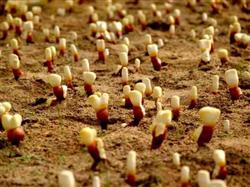
What are the cultivation techniques and growing methods for reishi mushroom?
How is reishi mushroom cultivated? Please provide an introduction to the methods. Artificial cultivation of reishi mushroom in China began in 1960 and was successfully domesticated by Mr. Chen Meipeng of the Edible Fungi Research Institute of the Shanghai Academy of Agricultural Sciences. Reishi cultivation has two types: substitute cultivation and log cultivation. Substitute cultivation means filling artificially prepared culture material into bags and arranging them in a shed to cultivate reishi fruiting bodies...
-
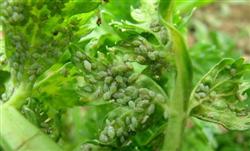
How to control aphids on honeysuckle? Detailed control methods
How to control aphids on honeysuckle? Please give guidance. Honeysuckle aphids: 1. Damage symptoms. They generally appear in early to mid-April. They mainly suck plant sap and spread viruses, causing leaves to turn yellow, curl and shrivel, and in severe cases can cause total crop failure. From April to June the infestation is heavier, and after the Start of Summer, especially on rainy days, it spreads faster...
-
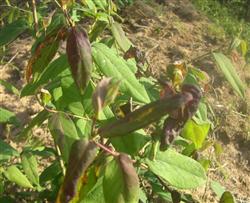
Identification of Symptoms and Control Methods for Honeysuckle Brown Spot Disease
What is honeysuckle brown spot disease? How is it controlled? An introduction to honeysuckle brown spot disease is given below: 1. Damage symptoms: This disease mainly damages the leaves. In the early stage of the disease, small yellowish-brown spots appear on the leaves. Later, several small spots merge together, forming round lesions or angular lesions limited by the leaf veins. When humid, the underside of the leaves also bears...
-
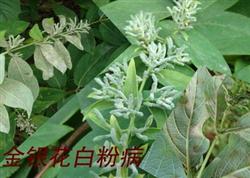
What are the common pests and diseases of honeysuckle (Japanese honeysuckle) and their control methods?
What pests and diseases need to be controlled when growing honeysuckle? Please provide an introduction and guidance on control methods. The main diseases controlled in honeysuckle cultivation are powdery mildew and leaf spot, and the main pest is aphids, etc. The control methods can refer to the following: (1) Powdery mildew. Powdery mildew is the main disease of honeysuckle, mainly harming the leaves and tender stems...
-
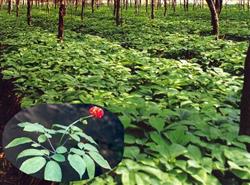
Detailed Explanation of Ginseng Planting Methods and Key Technical Points
How is ginseng planted? Please give an introduction. The environment selected for planting ginseng must be free from floods, droughts, wind damage and freezing damage. When cultivating ginseng in farmland in plain areas, choose land with high terrain, loose and fertile soil, strong water retention and good drainage. Ginseng likes forest humus soil. If the soil's organic matter content...
-
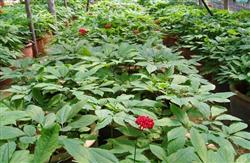
What are the management methods for ginseng in autumn, winter and spring?
How should ginseng be managed in autumn, winter and spring? Please explain the methods. Autumn, winter and spring are the overwintering dormancy period for ginseng, and field management during this stage is an important production step that cannot be ignored. The main tasks are cold protection and moisture conservation, and the key management points are: sealing the beds in autumn, allowing snow cover in winter, and digging drainage ditches in spring. Applying cold-protection soil in autumn...
-
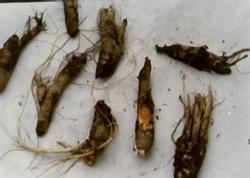
Detailed Explanation of Control Methods for Ginseng Bacterial Soft Rot
How to control ginseng bacterial soft rot? Please describe the symptoms of ginseng bacterial soft rot: it mainly affects the roots. The lesions appear as brown soft rot, with clear edges, round to irregular in shape, varying in size, often several merging together, and finally causing the entire ginseng root to become soft and rotten. When the lesion is squeezed by hand, white bacterial ooze overflows, with a strong pungent...
-
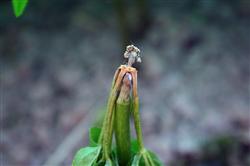
What are the control methods for ginseng gray mold?
How do you control ginseng gray mold? Please explain the methods. Ginseng gray mold symptoms: It damages ginseng leaves; the lesions on the leaves are limited by the leaf veins and appear polygonal or irregular. They are light brown, and on the underside of the lesions there is a sparse, thin, grayish-white or pale yellow mold layer, namely the pathogen's sporangiophores and sporangia. In the later stage, the lesion tissue necroses, breaks apart easily...
-
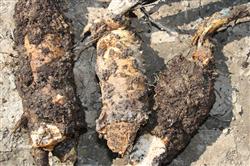
How to prevent and control ginseng root rot? These methods you need to master
How to prevent and control ginseng root rot? Please give an introduction. Symptoms of ginseng root rot: it mainly damages the roots of seedlings and the stem parts below the soil surface. The rotting ginseng roots appear dark brown and wet-rotten, and later become decayed and hollow, with only the hollow root skin remaining. The aboveground parts of affected ginseng seedlings show no obvious symptoms in the early stage, and in the middle and late stages the leaves fade to yellow, wilt and die....
条件筛选