-
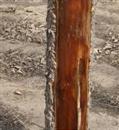
Symptom Identification and Control Methods of Poplar Canker
Distribution and Damage Poplar canker, also known as poplar rot disease. It occurs in all poplar cultivation areas in China, but is mainly distributed in the Northeast, Northwest, North China and other regions. It is a common and frequently occurring disease of poplars in parks, green spaces, street trees and nurseries, often causing mass death of street trees, and newly transplanted poplars are especially severely affected. Symptoms...
-
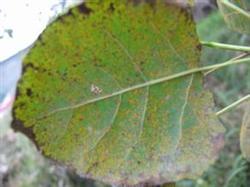
Identification and Control Methods of Poplar Black Spot Disease Explained in Detail
Poplar black spot disease, also known as poplar brown spot disease, is caused by a pathogen that can infect many species of poplar. Seedlings, young trees and mature trees can all be affected. When the disease is severe, it affects the normal growth of the trees and causes economic losses. Symptoms: it generally occurs on young leaves, shoot tips and fruit clusters, spreading from top to bottom, mainly damaging leaves. When the disease starts...
-
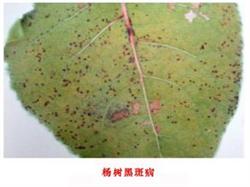
Detailed Explanation of Prevention and Control Methods and Occurrence Patterns of Poplar Black Spot Disease
Poplar black spot disease, also known as poplar brown spot disease, generally occurs on young leaves, tender shoots and fruit clusters, spreading from top to bottom, mainly damaging leaves. In the early stage of the disease, needle-like sunken shiny small spots first appear on the underside of leaves, then the lesions expand to about 1 mm, black, slightly raised, and brown spots also appear on the upper side of the leaves, 5-6 days...
-
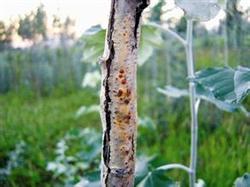
What are the control methods for poplar canker?
Canker, also known as rot disease, is mainly distributed in northeast, northwest, north China and other regions of our country. It mainly damages the branches and trunks of trees, is extremely contagious, and once the disease becomes epidemic, it often causes large-scale death of forest trees, resulting in great losses. In recent years, due to large-scale planting of poplars, this disease has occurred from time to time in various places, and planting a single poplar variety...
-
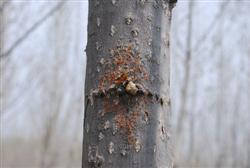
What to Do When Poplar Trees Get Canker Disease? A Detailed Guide to Prevention and Control Methods
Poplar is the general term for deciduous trees of the genus Populus in the willow family (Salicaceae). The genus contains more than 100 species, mainly distributed in the temperate and cold zones of Europe, Asia, and North America, as well as the Mediterranean coastal countries and the Middle East. China has more than 50 species. The wood is used for civil construction materials, furniture production, matchsticks, sawn timber, papermaking, and is also used for...
-
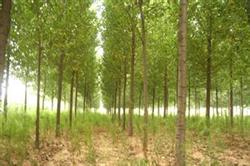
Poplar Pest Control Methods and Key Technical Points
Poplar pests can be divided into the following major categories based on their mode of damage and the corresponding control measures: 1. Leaf-eating pests: mainly including Clostera anachoreta (poplar prominent moth), Micromelalopha troglodyta (poplar small prominent moth), Cerura menciana (poplar two-tailed prominent moth), Botyodes diniasalis (poplar yellow leaf-roller), slug moths, and scarab beetles. Poplars from the seedling stage to the timber stage are all damaged by the above pests, which feed and cause leaf defects or completely strip the foliage...
-
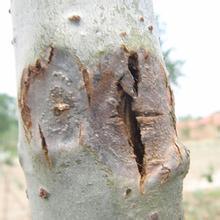
Common Poplar Pest Control Methods and Technical Key Points
In recent years, poplar canker disease has occurred widely, with incidence rates reaching over 30% in severely affected plots. Canker disease severely weakens tree vigor and inhibits growth. If not controlled in time, it will inevitably cause significant economic losses to growers. Disease symptoms: Canker disease mainly affects the trunk and is a chronic disease. In the early stage, on the bark...
-
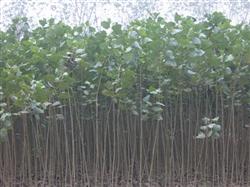
Detailed Explanation of Summer Poplar Seedling Cultivation Methods and Technical Key Points
Pre-planting preparation: select fast-growing, high-quality, high-yielding, and highly adaptable varieties, such as 80351, Populus × euramericana '72', Populus × euramericana '69', etc. From late July to late September each year, propagation begins when the cuttings are semi-lignified. For mass propagation, use mainly the branch shoots and thin, weak, inferior seedlings of the current-year seedlings in the nursery. Make beds 1 m wide, with length based on the number of cuttings, and 20 cm high. ...
-
Integrated Control Techniques and Methods for Poplar Leaf-eating Pests
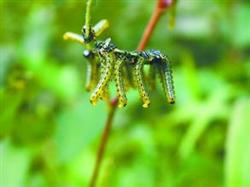
Poplar is deeply favored by people for its excellent characteristics such as fast growth, suitability for a wide range of growing sites, and outstanding economic benefits. However, as the planted area of poplar gradually expands, especially with the increasing development of pure stands, outbreaks of poplar leaf-eating pests continue to occur, so integrated control of poplar leaf-eating pests is very...
-
Key Points and Methods of Poplar Fertilization Techniques Explained
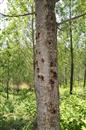
Poplar canker (rot disease) mainly occurs on the trunk and branches of poplar trees. After the disease develops, the cortical tissue of the trunk and branches rots, loses water, sinks, and cracks, with a smell of distillers' grains. When the diseased area encircles the trunk or branch completely, the entire upper part dies. The disease occurs twice a year, and when the temperature is above 7°C, ...
条件筛选