Key Points and Methods of Poplar Fertilization Techniques Explained
Poplar canker (rot disease) mainly occurs on the trunk and branches of poplar trees. After the disease develops, the cortical tissue of the trunk and branches rots, loses water, sinks, and cracks, with a smell of distillers' grains. When the diseased area encircles the trunk or branch completely, the entire upper part dies. The disease occurs twice a year, and when the temperature is above 7°C, ...
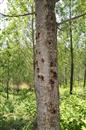 Poplar has the characteristics of fast growth, early maturity, high yield, and easy regeneration. It is the fast-growing timber forest tree species with the largest cultivated area and the highest timber yield in plain regions. Therefore, planting poplar has obvious benefits, wide uses, and good development prospects and potential.
Poplar generally reaches maturity in 6 to 10 years, with 2 growth peaks each year: the spring vegetative growth period (May to June) and the summer vegetative growth period (July to August). Poplar is fond of fertilizer and water. Timely and reasonable topdressing during growth peaks can improve forest soil fertility and promote poplar growth. Below is a brief introduction to issues related to poplar topdressing techniques.
Topdressing time: After poplar planting survives, topdressing can be done in the same year, with 2 applications in early May and late July giving better results. In the afforestation year, less and later application can be done; after young forests close their canopies, more can be applied appropriately.
Fertilizer types and application rates Topdressing types are generally mainly quick-acting nitrogen fertilizers. Each year per 667 sq m (1 mu), 15 kg of urea or 30 kg of ammonium bicarbonate can be applied, with each application supplying half of the annual fertilizer amount. Spring topdressing is mainly ammonium bicarbonate and binary compound fertilizer; at this time, soil temperature is low, urea has slow fertilizer efficiency and poor effect.
Topdressing methods Hole application or trench application can be used. For each tree, open 4 holes in different directions, with holes 0.2 m deep, 0.1 m wide, and 0.4 m long, applying 100 g of urea per tree or 200 g of ammonium bicarbonate per tree; for the second topdressing, the direction should be staggered from the first fertilization direction. For trench application, the trench depth is 20 to 30 cm. Note that trenches or holes should be opened at the outer edge of the tree canopy, not too close to the trunk, to avoid burning roots. Topdressing should be combined with watering to ensure that fertilizer efficiency can be fully exerted normally.
Symptoms of nutrient deficiency in poplar ① Nitrogen deficiency. Nitrogen-deficient plants suffer the greatest growth inhibition, have the fewest leaves, and the smallest single leaf area; leaves are pale green to yellow-green; roots are dark brown, thin and long, but root volume is slightly greater than with potassium or phosphorus deficiency. ② Potassium deficiency. Plants are short: leaves are smaller, leaf color is initially dark green, leaf surface is uneven and gradually develops dark black-brown necrotic spots from the leaf base, gradually spreading over the whole leaf; root volume is relatively small, roots are thin and long. ③ Phosphorus deficiency. Plants are relatively short; leaves are smaller, veins and leaf margins slightly appear purplish red, leaf surface is densely covered with long hairs; root volume is relatively small. ④ Magnesium deficiency. Plant height, leaf area, and leaf number are close to normal plants; in the early stage, the leaf surface wrinkles and is uneven, interveinal areas tend toward yellow-green, and in the later stage chlorotic spots appear near the leaf margins, quickly changing from yellow to yellow-green necrotic spots, but upper young leaves are relatively normal; root volume is not significantly reduced, and the root system is relatively long. ⑤ Iron deficiency. Height growth is less inhibited, chlorosis begins to appear from the 3rd to 4th leaves from the base upward, the green around the veins does not disappear, and the higher up the young leaves, the more severe the chlorosis, with the green around their veins becoming lighter, but the lower old leaves never show chlorosis.