-
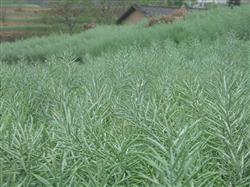
Weed Occurrence Characteristics and Control Methods in Rapeseed Fields
To obtain high quality and high yield in cultivated rapeseed, in addition to normal management such as timely sowing to secure seedlings, weeding and reducing waterlogging, skillful fertilizer application is the key to high yield. 1. Apply sufficient base fertilizer. Applying sufficient base fertilizer is the foundation for high rapeseed yield and should account for about 60% of the total for the whole growing period. To achieve a yield target of about 250 kg per mu, for medium-fertility...
-

Leaf Color Diagnosis and Control Methods for Red and Yellow Seedlings in the Rapeseed Seedling Stage
Rapeseed stem rot, commonly known as "white stalk", "hemp stalk", "moldy root crown" and so on, is one of the main diseases affecting rapeseed growth. The control of rapeseed stem rot should focus on prevention, and the main technical control measures are as follows. 1. Prevent seed-borne infection: eliminate sclerotia and kill pathogens on seeds through screening, air separation, chemical seed dressing and other methods...
-
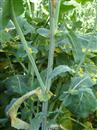
Control Methods and Key Technical Points for Sclerotinia Rot of Rapeseed
Sclerotinia rot of rapeseed, also called stem rot, is a fungal disease. It has a long period of harm, occurring from emergence to maturity, and is most prevalent after flowering. 1. After infection at the seedling stage, reddish-brown spots appear on the stem base and leaf stalks, then expand and turn white, with white cottony mycelium on the rotting tissue, and finally...
-
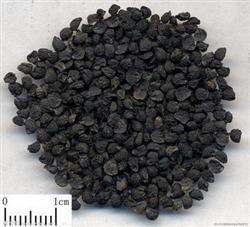
How to sow chive seeds? Detailed methods and steps
How are chive seeds sown? What to pay attention to when planting chive seeds: 1. Sowing time: after the soil thaws until the Autumn Equinox, sowing can be done at any time, generally from late March to early May, with spring sowing being preferable; for summer sowing, earlier is better than later. 2. Sowing rate: 4-5 kg of seed per 667 sq m. Open-field seedling raising...
-
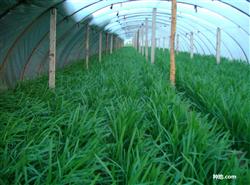
What are the pollution-free cultivation methods for garlic chives?
How do you grow pollution-free garlic chives? What should you pay attention to? For open-field cultivation of garlic chives, the root stock must first be developed, which can be done by direct seeding or by raising seedlings. At present, most regions in China use the seedling-raising method; garlic chives occupy little space during the seedling stage, are easy to manage, suffer little weed damage, and develop robust root stock with a long lifespan. ① Cultivating strong seedlings: When...
-
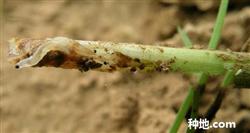
What to do when chives get chive maggots? All the chive maggot control methods are here
What to do when the chives you planted get chive maggots? Asking for guidance. Chive maggots: during spring irrigation, pesticides can be added to kill them; in late April, when adults emerge, spray with 600 times diluted Mieshabi; in early May, use 40% omethoate 800 times diluted solution to drench the roots for control. Mole crickets and white grubs are underground pests: during their peak damage period in March, April and May, in the chive beds use...
-
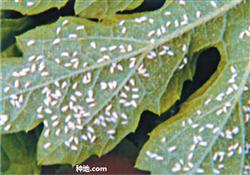
What are the control methods for greenhouse whitefly on bitter melon?
How to control whitefly on greenhouse bitter melon? Please advise. Greenhouse whitefly, also known as glasshouse whitefly, belongs to the order Homoptera, family Aleyrodidae. In the late 1970s, with the expansion of protected vegetable growing areas such as greenhouses and plastic tunnels, the occurrence and distribution of this pest showed a trend of spreading and expanding. At present, it occurs and causes damage in most areas of our country, ...
-
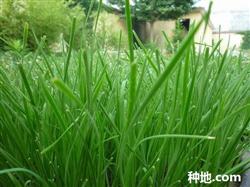
How to grow bitter melon in winter? Detailed methods and techniques
How should chives grown in a greenhouse be managed? What should be noted? When growing chives in a greenhouse, note: 1. Temperature management. Chives prefer a cool environment, and the suitable temperature for growth is 15°C-24°C, so ventilation should be provided appropriately during the day. To promote sprouting, after the shed is closed, the daytime temperature should be controlled at 18°C-25°C; after sprouting, the daytime temperature should be controlled at...
-
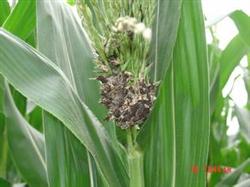
Occurrence Patterns and Control Methods of Black-Streaked Dwarf Disease in Spring Corn
Black-streaked dwarf disease is a viral disease transmitted by the virus-carrying small brown planthopper (Laodelphax striatellus), with the seedling stage being the main susceptible period. Since the 1990s, with changes in planting structure, black-streaked dwarf disease in single-season rice and spring corn in Chun'an County has worsened year by year, especially since 2000, when rice black-streaked dwarf disease has occurred throughout the county,...
-
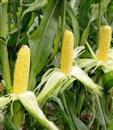
Spring planting techniques and variety selection methods for sweet corn
Everyone enjoys eating fresh sweet corn. It has a large market capacity, high yield, and good returns. From sowing to harvesting fresh cobs takes about 90 days, so it does not affect the planting of hybrid rice. It is a good grain-and-cash cropping model that can produce a thousand jin of grain and a thousand yuan per mu. Summarizing recent cultivation practices, to grow spring sweet corn well, the following points should be done well: 1....
条件筛选