-
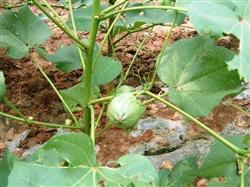
What are the main management techniques for cotton in July?
What is the main management for cotton in July? Please explain. The main management for cotton in July includes the following points: (1) Ditching and earthing up. This helps with watering and drainage, prevents both drought and waterlogging, and also helps with ventilation in the lower part of the cotton field, reduces humidity, increases the temperature difference between day and night, and helps improve the microclimate of the cotton field, which is useful for preventing boll rot...
-
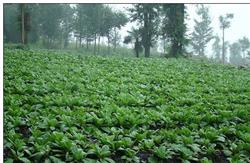
What are the key points of Rehmannia glutinosa cultivation management methods?
What management methods are there for Rehmannia glutinosa cultivation? Please provide guidance. Rehmannia glutinosa cultivation management is divided into several types, as follows: I. Field management 1. Timely thinning and replanting. When the seedlings are 10-12 cm tall, begin thinning, leaving 1 strong seedling per hole. If there are missing plants, replant promptly on a cloudy day, and when replanting, lift the seedlings with soil, ...
-
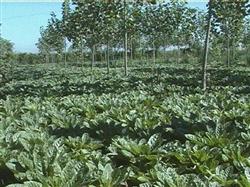
What are the management key points during Rehmannia cultivation?
What are the management key points for Rehmannia cultivation? Please share an introduction. There are several key points for Rehmannia cultivation management for reference: 1. Straw mulching: After sowing Rehmannia and covering with soil, cover the ridge surface with thatch or other crop straw. Mulching with straw can suppress weed growth and keep the soil loose. 2. Thinning: 20-30 days after emergence, remove excess seedlings during cultivating and weeding. The principle is to remove the inferior and keep the superior, leaving 1-2 seedlings per spot.
-
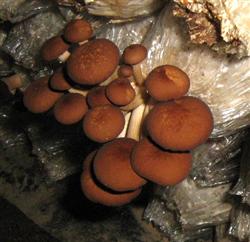
Detailed Explanation of Key Technical Points for Cultivation and Management of Tea Tree Mushroom
How to cultivate and manage Tea Tree Mushroom? Please introduce. Agrocybe aegerita, also known as poplar mushroom, columnar Agrocybe, willow pine mushroom, willow ring fungus, etc., is one of the newly developed edible mushroom varieties in recent years. The fruiting bodies of Agrocybe aegerita are delicious and fragrant, with a crisp and tender texture, and are rich in protein. It is one of the most popular edible mushrooms in Europe and Southeast Asia...
-
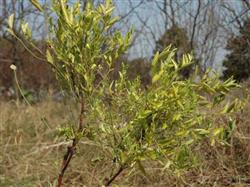
What is jujube root crown gall? Introduction to common diseases in jujube tree management
What is jujube root crown gall? What causes it? How should it be prevented and controlled? Please give an introduction. Jujube root crown gall is a bacterial disease that occurs in jujube-growing areas in the north. After the roots are affected, above-ground growth is slow and the plant is stunted; in severe cases the leaves turn yellow and drop early, and the branches and shoots weaken or even die, but it rarely causes the whole...
-
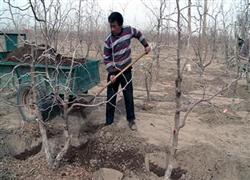
How to fertilize jujube trees for the best results? Jujube tree management tips
How should jujube trees be fertilized? Please explain the methods. In recent years, farmyard manure has greatly decreased, and most jujube growers have not applied organic fertilizer to their jujube trees for many years, applying only inorganic fertilizers such as nitrogen fertilizer and phosphorus fertilizer. This has led to a decrease in soil organic matter, imbalanced soil nutrients, changes in soil aggregate structure, soil compaction, and the inability of jujube tree roots to...
-
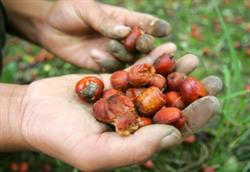
Key Management Techniques for Jujube Trees During the Fruit Enlargement Stage
How should jujube trees be managed during the fruit enlargement stage? Please provide an introduction to the management methods. After jujube fruits enter the enlargement stage, the heavy nutrient growth and reproductive growth consume a large amount of nutrients stored in the tree, and it is also the critical period when the roots rapidly absorb nutrients just as the girdling wound has healed. Therefore, the jujube trees become weaker, suffer from nutrient deficiency, and have a reduced ability to resist adverse external factors...
-
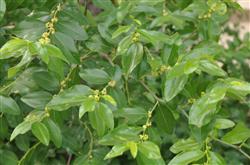
Reasons Why Winter Jujube Bears No Fruit and Management Measures
Why does the winter jujube bear no fruit? Please explain the reasons and solutions. The main factors for the winter jujube bearing no fruit are the following 3 causes: 1. Too little fertilizer applied the previous year, especially insufficient application of organic fertilizer. Because the bud stage of the winter jujube tree is also the period of rapid growth of the fruiting branches, and when it enters the initial flowering stage the jujube heads grow very vigorously, during a period when several organs of the winter jujube tree are simultaneously in a vigorous stage of growth activity, the phenomenon of competing for nutrients will occur...
-
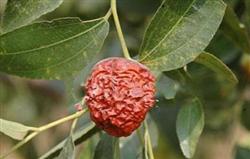
What is jujube fruit shrinkage disease? Basic knowledge of jujube tree management
What is jujube fruit shrinkage disease? What causes it? How to prevent and control it? Please give an introduction. The main causes of jujube fruit shrinkage disease are the many wounds on the fruit surface caused by wind, rain and pests, and it is formed by excessive application of nitrogen fertilizer, dense branches and leaves, and poor ventilation. You can refer to the following methods for prevention and control: 1. Strengthen orchard management, apply more organic...
-
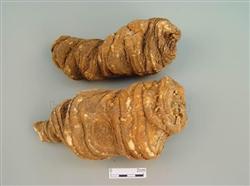
What are the uses of Paris polyphylla? A detailed guide to planting and management methods
What is Paris polyphylla used for? How do you plant and manage it? Please give an introduction. Paris polyphylla is also called Dulian (one-horn lotus), Qiyeyizhihua (seven leaves and one flower), Chonglou yizhijian (Paris polyphylla one arrow), etc. It belongs to the Liliaceae family and is a perennial herbaceous plant. It is one of the main ingredients of nationally protected traditional Chinese medicines such as "Yunnan Baiyao" and "Gongxuening". The medicinal part is the dried tuber of Paris polyphylla. Paris polyphylla tastes...
条件筛选