What are the uses of Paris polyphylla? A detailed guide to planting and management methods
What is Paris polyphylla used for? How do you plant and manage it? Please give an introduction. Paris polyphylla is also called Dulian (one-horn lotus), Qiyeyizhihua (seven leaves and one flower), Chonglou yizhijian (Paris polyphylla one arrow), etc. It belongs to the Liliaceae family and is a perennial herbaceous plant. It is one of the main ingredients of nationally protected traditional Chinese medicines such as "Yunnan Baiyao" and "Gongxuening". The medicinal part is the dried tuber of Paris polyphylla. Paris polyphylla tastes...
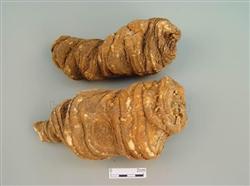
What is Paris polyphylla used for? How do you plant and manage it? Please give an introduction
Paris polyphylla is also called Dulian (one-horn lotus), Qiyeyizhihua (seven leaves and one flower), Chonglou yizhijian (Paris polyphylla one arrow), etc. It belongs to the Liliaceae family and is a perennial herbaceous plant. It is one of the main ingredients of nationally protected traditional Chinese medicines such as "Yunnan Baiyao" and "Gongxuening". The medicinal part is the dried tuber of Paris polyphylla. Paris polyphylla is bitter in taste and slightly cold in nature; it has mild toxicity and enters the liver meridian. It has effects such as clearing heat and detoxifying, reducing swelling and stopping bleeding, and cooling the liver and calming fright. It is used to treat sores and swellings, sore throat, venomous snake bites, and bruises. In recent years, as the practical value of Paris polyphylla and Panax notoginseng has increased, their economic returns have also become considerable. Shili Village Township in Jinping County has already developed nearly 100 mu.
I. Site selection and land preparation
Choose humus soil or acidic red soil with higher terrain, good drainage, and rich humus content.
II. Transplanting
Seedlings can be transplanted 2 years after emergence, with a plant spacing of 15 cm x 20 cm. Cut pieces with terminal buds are planted at a spacing of 15 cm x 20 cm. For cut pieces without terminal buds, dig them out in the second winter when adventitious buds have already formed, and plant them at a spacing of 20 cm x 25 cm. After transplanting, cover with pine needles or chopped grass, then set up shade netting for shade. To facilitate management, the height of the shade netting should be kept at 1.8-2 m. When fixing the shade netting, consider future gathering and spreading. In areas with strong winter winds and snow, after Paris polyphylla has withered (mid-October), the shade netting should be gathered in time, and then put back in place before emergence in April of the following year. The transplanting time is best in winter, after the aboveground stems have withered and while the rhizomes are dormant. During transplanting, take care to protect the terminal buds and fibrous roots from damage.
III. Field management
1. Cultivation and weeding. Because the root system of Paris polyphylla is relatively shallow and new roots sprout in autumn and winter, attention must be paid during cultivation. Around September to October, at the early stage of underground stem growth, use a small hoe to cultivate lightly, not too deep, so as not to damage the underground stems. When cultivating and weeding, combine with earthing up and apply winter fertilizer. Around the Beginning of Spring, the seedlings gradually grow out. If weeds are found, pull them out in time. When weeding, be careful not to injure the young seedlings and underground stems, so as not to affect the growth of Paris polyphylla var. yunnanensis.
2. Drainage and irrigation. Drainage ditches should be opened around the field to facilitate drainage. After Paris polyphylla emerges, water in time during drought, and pay attention to drainage after rain. Do not water before the aboveground stems emerge, otherwise root rot is likely.
3. Fertilization. Fertilization is required 2 times each year, namely winter fertilizer and spring fertilizer.
(1) Winter fertilizer. Generally carried out from late November to early December. First lightly cultivate the topsoil once, choose a sunny day, and apply 20-30 kg of potassium sulfate or compound fertilizer per mu.
(2) Spring fertilizer. After the seedlings emerge (April), apply 20-30 kg of potassium sulfate or compound fertilizer per mu.
4. Topping. Before the end of vegetative growth, remove the ovary from plants not kept for seed, but retain the sepals (which can carry out photosynthesis) to ensure the transfer of organic matter to the rhizomes.
IV. Pest and disease control
1. Root rot. It mainly harms the underground stems, causing them to rot. For control, soak seeds in 500-fold carbendazim for 1-2 hours during transplanting, and clear the drainage ditches. If disease has already occurred, pour with 500-fold carbendazim solution or 200-fold quicklime water to reduce the damage.
2. Leaf blight. It mainly harms leaves, and secondly harms stems, pedicels, capsules, and underground stems, causing underground stems to rot. Control methods: drain in time and loosen the soil. If early symptoms are found, spray with 200-fold Bordeaux mixture.
3. Cutworms and white grubs. They harm the roots. Use 90% crystalline trichlorfon, 180-200 g per mu, mixed with 8-10 kg of roasted wheat bran or rice bran, and scatter it in the field for trapping and killing.
Click to get more Paris polyphylla planting techniques
Click to get more medicinal herb planting techniques