-
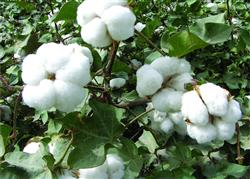
What are the key management techniques for the boll-opening stage of cotton?
How should cotton be managed during the boll-opening stage? Please advise. During the boll-opening stage, cotton can be managed by referring to the following methods: 1. Skillfully manage fertilizer and water to promote nutrient translocation. First, foliar feeding. For cotton fields where leaves lose green too early and show premature aging from nutrient deficiency, spray 50-60 kg per mu of a 1%-2% urea solution onto the leaves to extend the functional period of the leaves. For cotton fields that grow too vigorously and show late maturity with excessive vegetative growth, foliar spray of a 0.2% potassium dihydrogen phosphate solution or a 0.3% superphosphate soaking solution can be used to promote nutrient translocation and help improve boll opening. Second, prevent autumn drought.
-
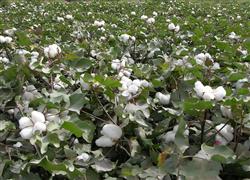
What are the key technical points for late-stage cotton management?
How should cotton be managed in the late stage? Please provide an introduction to the methods. For managing cotton in the late stage of cultivation, you can refer to the following methods: 1. Strengthen field management. First, for cotton fields with lush foliage and shading, the old leaves and empty branches on the lower part of the main stem can be removed. Second, promptly remove superfluous buds. Third, remove the cluster tips, generally removing the cluster tips of the lower, middle, and upper fruiting branches in stages...
-
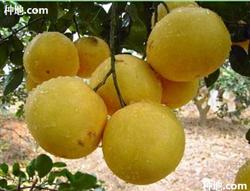
Grapefruit (Citrus paradisi) Planting Techniques and Management Methods (with pictures)
Grapefruit has a relatively high heat requirement and is suitable for planting in areas with an annual average temperature above 18°C. It can be planted where the annual accumulated temperature above 10°C is over 6000°C, and can produce high-quality fruit where it is above 7000°C. It is more cold-tolerant than lemon, withstanding extreme minimum temperatures of around -10°C. It cannot be planted in places where -8°C may occur. Therefore, choose...
-
What are the key management considerations for the late stage of cotton cultivation?
What should be noted in the late stage of cotton cultivation? Please give an introduction. In the late stage of cotton cultivation, the following points should be noted: Pay attention to drainage. When cotton is in the full flowering and boll-setting stage, rainfall is heavy, sunlight is scarce, and field water-holding capacity is basically saturated. Keeping cotton field drainage unobstructed and preventing waterlogging is particularly critical. Water appropriately. After the Beginning of Autumn, ...
-
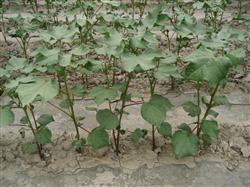
What are the key technical points for mid-to-late stage cotton management?
How should cotton be managed during the mid-to-late stages of cultivation? Please provide guidance. The following methods can be referenced for mid-to-late stage cotton management: 1. Pruning management. For fields where branches and leaves are so lush that they cover the entire cotton field, remove the old leaves, yellow leaves and empty branches without buds from the lower part of the main stem to achieve light penetration. This not only...
-
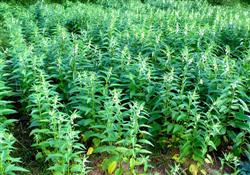
What are the key points for summer planting management of black sesame?
What are the main summer management practices for planting black sesame? Please give an introduction. For summer management of planting black sesame, you can refer to the following points: First, thin the seedlings in time and check for and fill in gaps: because sesame seeds are small and germinate in large numbers, when the first pair of true leaves appears after emergence, the seedlings should be thinned; when 2 to 3 pairs of true leaves have grown, the seedlings should be thinned further, and when 4 pairs of true leaves appear, the seedlings should be finalized, ...
-
What are the key points of cherry blossom autumn management techniques?
How should cherry blossoms be managed in autumn? Please introduce the methods. Autumn tree management for cherry blossoms. 1. Disease prevention and leaf protection. Cherry blossom leaves are susceptible to infection by diseases such as powdery mildew, brown spot, and sooty mold. If not controlled in time, it can cause premature leaf drop, affecting nutrient accumulation, which is unfavorable for flowering next year. You can use 70% thiophanate-methyl 1000x solution, 65% zineb wettable powder 500x solution, sprayed once every 15 days. Try to avoid using dichlorvos to prevent leaf drop. Water appropriately, and increase foliar fertilizer spraying (0.3% to 0.5% urea, 0.3% potassium dihydrogen phosphate) to ensure the leaves remain intact, thick, and dark green.
-
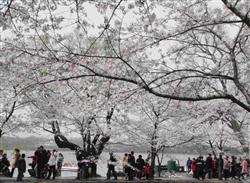
A Detailed Guide to Cherry Blossom Cultivation Techniques and Management Methods
How are cherry blossoms cultivated and managed? Please give an introduction. For cherry blossom planting and management, you can refer to the following: 1. Soil requirements and improvement measures. Cherry blossoms can grow well in sandy loam and clay loam rich in humus (pH 5.5 to 6.5). In places in the south where the soil is heavy clay, generally mix in homemade leaf mold (soil made by composting collected leaves, acidic soil, chicken manure, and charcoal powder). Note that before mixing, all existing clay clods must be broken up, otherwise it will not improve the soil. In places where the groundwater level is less than 1 m, use the raised planting method, that is, level the entire planting hole first, then pile soil on top and plant the seedling. For alkaline soil in the north, sulfur powder or ferrous sulfate, etc. needs to be applied to adjust the pH value to about 6. Apply 2 grams of sulfur powder per sq m, with a validity period of 1 to 2 years, and measure it every year so that the pH value does not exceed 7. Varieties such as mountain cherry and Somei Yoshino have straight trunks and larger tree bodies. They are strongly heliophilous tree species and require shelter from wind and a sunny location, with ventilation and light transmission. When planting in groups, every tree must be able to receive sunlight.
-
Cherry Blossom Summer Management Methods and Care Tips
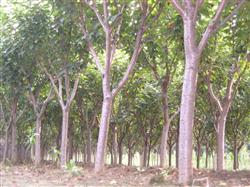
How to manage cherry blossoms in summer? Here is some guidance. In summer, cherry blossoms can be managed by referring to the following methods: 1. Mulching with straw to prevent drought: Summer temperatures are high and evaporation is fast, so the amount of watering is greater than in other seasons, but the principle of "do not water if not dry, and water thoroughly when watering" should still be adhered to. Cherry blossoms are shallow-rooted plants, and their growing roots are close to the soil...
-
What are the key points of cherry blossom planting and management methods?
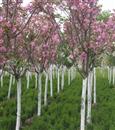
How should cherry blossoms be managed well when planted? Please provide guidance. Cherry blossoms are sun-loving flowering trees that like sunlight, tolerate cold and drought, and prefer well-drained sandy soil. They fear wind during the flowering period, so a sheltered spot should be chosen when planting; they are generally planted in mountain gullies, beside streams and in mixed forests. Cherry blossoms have a strong heliotropic tendency, so when transplanting, the original sun-facing side must still face the sun...
条件筛选