What are the management key points during Rehmannia cultivation?
What are the management key points for Rehmannia cultivation? Please share an introduction. There are several key points for Rehmannia cultivation management for reference: 1. Straw mulching: After sowing Rehmannia and covering with soil, cover the ridge surface with thatch or other crop straw. Mulching with straw can suppress weed growth and keep the soil loose. 2. Thinning: 20-30 days after emergence, remove excess seedlings during cultivating and weeding. The principle is to remove the inferior and keep the superior, leaving 1-2 seedlings per spot.
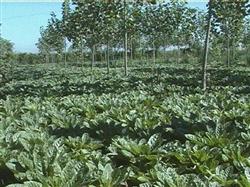
What are the management key points for Rehmannia cultivation? Please share an introduction.
There are several key points for Rehmannia cultivation management for reference:
1. Straw mulching: After sowing Rehmannia and covering with soil, cover the ridge surface with thatch or other crop straw. Mulching with straw can suppress weed growth and keep the soil loose.
2. Thinning: 20-30 days after emergence, remove excess seedlings during cultivating and weeding. The principle is to remove the inferior and keep the superior, leaving 1-2 seedlings per spot.
3. Topdressing: One month after Rehmannia emergence, a large number of fleshy rhizomes begin to form. Two months later, the dry matter of rhizomes increases sharply, and the rows close about two and a half months in, so topdressing must be completed before the rows close. Throughout the entire growth period of Rehmannia, topdressing is needed 2-3 times. The first time is 15-20 days after full emergence, the second time is 20-30 days after the first topdressing, and the third time depends on the growth vigor of the seedlings. Topdressing is mainly nitrogen-based, using 20-30 loads of human and animal manure or 3.5-5 kg of urea per mu each time.
4. Cultivating and weeding: Rehmannia has a relatively shallow root system, so the number of cultivations should not be too many; too many often reduces yield due to root damage. Only 1-2 cultivations (shallow cultivation) are needed throughout the entire growth period. However, weeds must be pulled out promptly.
5. Drainage and irrigation: If drought occurs after sowing, water promptly to improve the emergence rate. Two to three months after sowing, rhizomes form rapidly and require more water, which is also the period when rhizomes are prone to rot, so reasonable irrigation and timely drainage should be noted at this time.
6. Flower removal: For Rehmannia not grown for seed, if buds or flowers appear, remove them promptly to avoid nutrient consumption.
Click to get more Rehmannia cultivation techniques
Click to get more medicinal herb cultivation techniques