Grapefruit (Citrus paradisi) Planting Techniques and Management Methods (with pictures)
Grapefruit has a relatively high heat requirement and is suitable for planting in areas with an annual average temperature above 18°C. It can be planted where the annual accumulated temperature above 10°C is over 6000°C, and can produce high-quality fruit where it is above 7000°C. It is more cold-tolerant than lemon, withstanding extreme minimum temperatures of around -10°C. It cannot be planted in places where -8°C may occur. Therefore, choose...
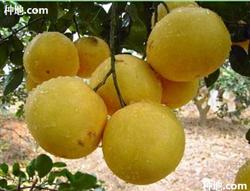
Grapefruit has a relatively high heat requirement and is suitable for planting in areas with an annual average temperature above 18°C. It can be planted where the annual accumulated temperature above 10°C is over 6000°C, and can produce high-quality fruit where it is above 7000°C. It is more cold-tolerant than lemon, withstanding extreme minimum temperatures of around -10°C. It cannot be planted in places where -8°C may occur. Therefore, choosing a location with suitable temperatures for planting or using greenhouse cultivation can reduce the impact of temperature on its growth.
In addition to its relatively strict temperature requirements, grapefruit has the following requirements:
(1) Soil: Not demanding, but loose, deep, fertile, neutral to slightly acidic soil is most suitable;,
(2) Rainfall: Not much needed; with annual rainfall above 1000mm, it can be planted in both wet and dry areas;
(3) Light: It can grow and fruit well under both strong light and cloudy weather.
Grapefruit (Citrus paradisi) Transplanting and Field Planting:
For grapefruit, the low-temperature period in winter is the planting time; planting in November to December allows the pomelo buds to grow faster in the second year. The planting distance varies depending on whether the soil layer is poor or fertile, or the terrain, but generally 7 m × 7 m or 7 m × 8 m is appropriate. When digging up seedlings, it is best to keep a soil ball or keep the roots moist. In the planting hole, first mix 10-20 kg of decomposed organic fertilizer with superphosphate, mix thoroughly and firm it down; after planting, the soil should be slightly higher than the original ground level. Cover the area near the plant, pay attention to irrigation, and use a small amount of straw to shade the plant, avoiding leaf drop that would affect subsequent growth.
Grapefruit (Citrus paradisi) Fertilization Methods:
In the first few years of grapefruit planting, the canopy is relatively small, so materials can be used to cover the ground under the canopy to maintain soil nutrients and moisture and increase soil organic matter; at the same time, attention should be paid to controlling longhorn beetles.
After entering the fruiting stage, grass cultivation or cover crop cultivation can be adopted instead, mowing 2-3 times each summer, saving soil management costs, reducing soil erosion, and maintaining and increasing organic matter, so as to maintain good soil properties, reduce nutrient and moisture stress, and promote normal tree growth.
Fruiting trees are fertilized twice a year. Base fertilizer is applied between December and January, preferably with compound fertilizer (with the three elements at 15-15-15), accounting for 60%-70% of the annual application rate, to promote flowering, fruiting, and spring shoot growth.
Topdressing is applied between May and June each year to promote fruit development; the application rate is increased or decreased depending on the number of fruits set, and it can be broadcast when the soil surface is moist after rain.
If the orchard soil is acidic, limestone powder or dolomite powder (both uncalcined) may be applied as appropriate in autumn and winter, about 2 kg per tree, to improve soil properties and increase fertilizer efficiency. In addition, irrigation should be carried out in the dry season, irrigating 1-2 times every month, to increase fruiting, improve fruit quality, and promote tree development.
Grapefruit (Citrus paradisi) Pruning Methods:
For ease of management and to control tree vigor and shape, grapefruit should be trained to a natural open-center form, with the trunk height at 40-60 cm, then retain 2-3 main branches, and each main branch should evenly retain 2-3 sub-main branches. When retaining main branches or sub-main branches, pay attention to the relative growth angle and direction of the branches.
Young trees should be trained to develop a good framework, which can reduce pruning troubles later.
The purpose of pruning fruiting trees is to regulate tree vigor and increase light and ventilation, cutting out overly dense branches, diseased branches (especially branches and leaves with canker disease), mechanically damaged branches, and weak branches. However, the amount pruned must not exceed 15% of the total branches and leaves. Pruning should be coordinated with fertilization and other soil management; if the tree is excessively vigorous, in addition to thinning branches, nitrogen fertilizer application should be reduced. If the tree is weak, short-cut pruning should be carried out, together with more nitrogen fertilizer, organic fertilizer, irrigation, etc., to achieve the management goal.
Grapefruit (Citrus paradisi) Pest and Disease Control Methods:
1. Virus disease: A major enemy of the citrus industry in Taiwan, China, transmitted by seedling scions and by aphids and wood-borne vector insects, and can also be spread mechanically through cultivation management. Grapefruit plants are most susceptible when under nutrient and moisture stress, showing leaf yellowing.
In autumn and winter, symptoms of malnutrition and trace element deficiency appear, fruit growth is deformed and asymmetrical, and the top part of the fruit does not color or colors poorly.
Once grapefruit is infected with virus disease, it cannot be cured.The prevention method is to select disease-free seedlings and plant them in clean areas, strengthen field pest and disease control, avoid transmission by vector insects, and once diseased plants are found, dig them up and burn them. Strengthen fertilizer management to make plants strong and prolong tree age; if the disease incidence rate in the orchard reaches more than 10%, it should no longer be planted.
2. Canker disease: Symptoms are like citrus canker.
The control method is: prune off diseased branches and leaves from seedlings, or during pruning cut off diseased branches and leaves and burn them in a centralized manner; plant windbreak forests in the orchard, and areca palm can also be used for shade and wind protection to reduce injury; in the rainy season, spray 4-4 formula Bordeaux mixture and other medicinal liquids for treatment.
3. Red and yellow spider mites. Red spider mites mainly damage leaves; when damage is severe, the affected leaves lose their luster and turn grayish-white, causing leaf drop and dried shoot tips. Yellow spider mite damage causes leaves to deform and twist, causing leaf drop and dried shoot tips. The peak damage period is generally from mid-April to early-to-mid June; September is the second peak damage period.
Control method: 1. Clean the orchard in winter, and spray the entire orchard with 800-fold diluted Xin Gao Zhi Mo.
4. Leaf roller moth. Damage symptoms: Larvae damage young leaves, young fruit, and flower buds; the larvae often spin silk to bind young fruit and young leaves together, bore into the fruit to feed, causing young fruit to turn yellow and drop.
Control methods: 1. Clean the orchard in winter and remove overwintering larvae. 2. Chemical control, focusing after flower drop and when larval population density is high, applying pesticide 1-2 times. 3. Selected pesticides: Decis emulsifiable concentrate 5000-fold dilution; 50% dichlorvos 800-1000-fold dilution; Decis 800-1000-fold dilution; Jin Sheng 1500-fold dilution combined with Xin Gao Zhi Mo 800-fold dilution.
5. Cottony cushion scale, red wax scale, arrowhead scale. Damage symptoms: Adults and nymphs damage branches, leaves, and fruit, and lead to the occurrence of sooty mold; affected trees become weak, branches die, and in severe cases the tree dies.
Control method: The key to scale insect control is to grasp the larval stage and concentrate spraying before adults form wax shells. Late March to late September is the peak period of scale insect damage, especially late April to mid-May, which is the key control period. Spray with Xin Gao Zhi Mo 500-fold dilution combined with Chu Jin 1000-fold dilution for control.
Click to get more pomelo planting techniques
Click to get more fruit planting techniques