-
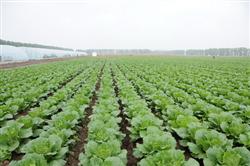
Detailed Explanation of Key Technical Points for Summer Cabbage Planting and Management
How should summer cabbage be managed during cultivation? Please give guidance. Summer cabbage is a type of Chinese cabbage that reaches the market between summer and autumn, when vegetable supply is in the off-season, offering considerable economic returns. However, because summer temperatures are high and rain is plentiful, it is a season with a high incidence of pests and diseases. When planting Chinese cabbage, key steps must be grasped, and you must...
-
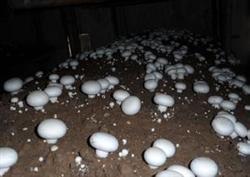
Detailed Explanation of Key Management Points for Button Mushroom (Agaricus bisporus) Autumn-Winter Mushroom Shed
Preventing spawn degeneration can increase yield, reduce the occurrence and development of pests and diseases, and decrease pesticide use, which is the foundation for producing organic button mushrooms. 1. The environmental temperature for culturing spawn must not exceed 28°C, and properly cultured spawn should not be stored at room temperature for more than half a month. 2. Effectively master the medium's...
-
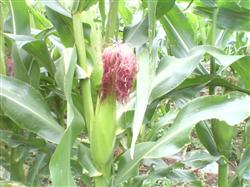
What are the key points of fruit corn planting and management techniques?
How do you manage fruit corn planting? Please provide guidance on the methods. Fruit corn has weak growth at the seedling stage and is prone to pest damage later on, so field management must be done well. The main tasks are checking for and filling gaps after emergence and weed control, removing tillers and excess small ears at the seedling and mid stages, and paying attention to controlling pests such as corn borers in the mid-to-late stages. Fruit corn...
-
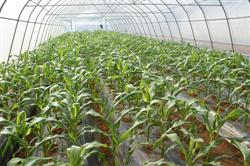
Key Points of Fruit Corn Planting and Management Techniques
How to plant and manage fruit corn? A detailed introduction. Fruit corn is a type of sweet corn suitable for eating raw. Compared with ordinary sweet corn, its main characteristics are thin skin, abundant juice, crisp texture and sweetness. It can be eaten directly raw or cooked. There is no essential difference between fruit corn and sweet corn; ordinary sweet...
-
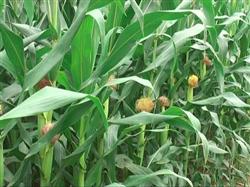
What are the key management techniques for corn during the flowering and grain-filling stage?
How should corn be managed during the flowering and grain-filling stage? Please explain. The flowering and grain-filling stage refers to the period from tasseling to maturity in corn. During this stage, vegetative growth has basically ended, and the crop shifts from the concurrent vegetative and reproductive growth of the ear stage to a reproductive growth period centered on flowering, pollen shedding, fertilization, and grain setting. It is the... period that determines yield, ear grain number, and grain weight.
-
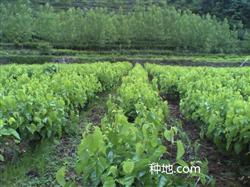
What are the spring management methods for a mulberry orchard?
How should a mulberry orchard be managed in spring? Please advise. The main points of spring mulberry orchard management are as follows: Strengthen fertilizer and water management. Spring fertilizer can be applied about 20 days before the mulberry trees bud. Apply first to mulberry trees used for feeding young silkworms, and later to those used for grown silkworms; apply first in clay soil mulberry orchards, and later in sandy soil ones. Generally, spring fertilizer application begins in early March...
-
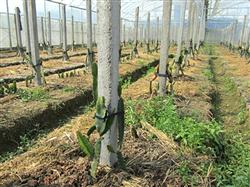
Detailed Guide to Dragon Fruit Planting Methods and Management Techniques
How to plant and manage dragon fruit? Please provide guidance. The reference for dragon fruit planting and management is as follows: 1. Site selection and soil requirements. The suitable growth temperature for dragon fruit is 25-35°C, and it can be planted anywhere south of the Tropic of Cancer. For planting, choose loose, fertile sandy loam soil with good granular structure, pH 6-7....
-
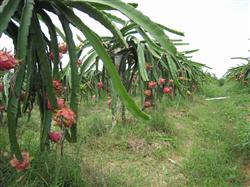
Detailed Explanation of Key Points in Dragon Fruit Cultivation and Management Techniques
How to manage dragon fruit well after planting? Please provide an introduction to management methods. Dragon fruit begins to flower and bear fruit about 12-14 months after planting, can flower 12-15 times per year, with the fruiting period from April to November, can be harvested 30-40 days after flowering, and individual fruit weight is generally 500-1000 grams. In the second year after planting, each column produces more than 20 fruits...
-
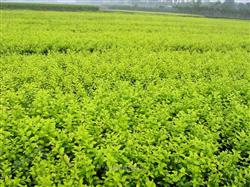
Detailed Explanation of Key Management Techniques for Lycium barbarum (Goji Berry) Cutting Seedlings
Lycium barbarum (goji berry) is a perennial deciduous small shrub in the Solanaceae family, about 2 m tall, with angular and thorny branches; leaves are simple, alternate or clustered on short shoots, lanceolate or rhombic, with entire margins; flowers are purple-red; the fruit is a berry, orange-red, ovate or oblong. Lycium barbarum prefers cool, moist, fertile soil, is cold-resistant, drought-resistant, and resistant to wind and rain, but is not tolerant of high temperatures, and in poor...
-
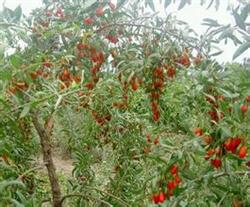
Detailed Explanation of Key Techniques for Soil and Fertilizer Management in Goji Berry Cultivation
Throughout the entire growth and development period of goji berries from seedling cultivation to harvest, the cultivator must carry out a series of technical management measures in the field, collectively known as field management. Field management is divided, according to the effective production cycle of pollution-free goji berry plants, into the young age period (1-4 years) and the mature age period (over 5 years). Field management begins with soil...
条件筛选