-
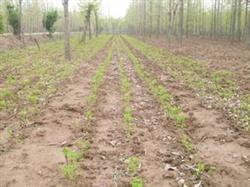
Key Technical Points for Irrigation and Drainage Management of Ginkgo Trees
In recent years, ginkgo production has developed rapidly, and the demand for seedlings is very large, but the seedling breeding cycle is relatively long, which is not conducive to production. Using cuttings to raise seedlings can save seeds, eliminate the grafting process, reduce seedling costs, and also speed up propagation. According to reports, treating ginkgo softwood cuttings with a low concentration of rooting powder has a certain effect on promoting root...
-
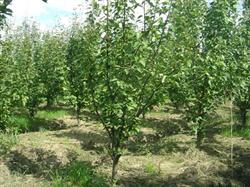
What are the post-harvest management methods for apricot trees?
What management methods are there for apricot trees after fruiting? Please introduce some methods. Pest and disease control for apricot trees after fruiting. After harvest, apricot trees are often harmed by pests and diseases, so pesticides should be sprayed in a timely manner according to the situation to protect the leaves and increase nutrient accumulation. Spraying growth regulators. After harvest, apricots can be sprayed 1-2 times with a 500ppm paclobutrazol solution, mixed with a 0.5% urea solution or potassium dihydrogen phosphate solution.
-

Key Technical Points and Methods for Autumn Management of Apricot Trees
How should apricot trees be managed in autumn? Please provide an introduction to the management methods. The apricot tree is the fruit tree that blooms earliest in spring, and it leafs out after flowering first. The nutrients needed for flower organ formation depend on the accumulation in the tree body from the previous autumn, so good autumn management plays a decisive role in the flower organ structure and fruit set the following spring. Apricot orchards...
-
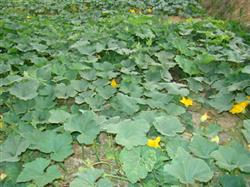
How do you carry out the planting and management of leaf-type pumpkin?
How do you plant and manage "leaf-type" pumpkin? Please give an introduction. For planting leaf-type pumpkin, you can refer to the following methods for planting and management: 1. Choose the sowing time. Pumpkin is a vegetable that likes warmth and tolerates heat, and the optimum temperature for stem and vine growth is 18-22°C. Therefore, "leaf-type" pumpkin can be sown from late February to early April...
-
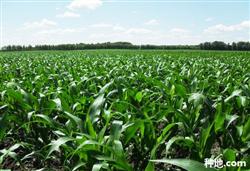
How can field management be done well during corn cultivation?
How should corn be managed when planting? Please give suggestions. With excessive rain, corn diseases and weed problems will be more severe than in previous years. Therefore, the following suggestions are offered for this year's corn planting and management. 1. Strengthen seedling-stage disease control. Because of frequent rain, high soil moisture, and lower-than-usual soil temperature, corn emergence will be relatively delayed, increasing the possibility of seed rot and seedling death. The focus of control is seed coating. You can choose Shileshi 2.5% water suspension concentrate. Usage: one bag of Shileshi (10 ml), add 100 ml to 150 ml of water, pour into an enamel basin or plastic bag, then add 3 kg to 5 kg of corn seed, stir forcefully or shake evenly so that the liquid medicine evenly coats the seed surface. The coated seed can be sown promptly without drying. You can also add 10 ml of phoxim or isofenphos-methyl to the liquid to also control underground pests.
-
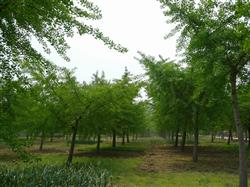
A detailed explanation of the five main aspects of ginkgo management
Ginkgo, also known as bai guo (white fruit), is one of the rare and precious fruit trees, and its seeds, leaves and their preparations have a wide range of uses. The relevant key points of cultivation techniques are introduced as follows: Ginkgo, also known as bai guo (white fruit), is one of the rare and precious fruit trees, and its seeds, leaves and their preparations have a wide range of uses. The relevant key points of cultivation techniques are introduced as follows: 1...
-
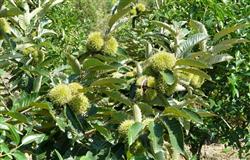
Detailed Explanation of Key Management Techniques for Chestnut Trees Before and After Harvest
How should chestnut trees be managed before and after harvest? Please give an introduction. Chestnut trees have a long fruiting period and a large fruit load, consuming many nutrients. Around the time the fruit ripens, the tree's vigor is already in a starved or semi-starved state, very weak. If nutrients are not replenished in time, it will seriously affect the flowering and fruiting of the coming year. Therefore, applying pre-harvest fertilizer well...
-
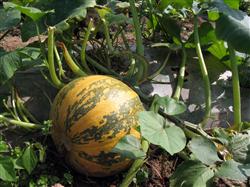
What are the key points of seed pumpkin cultivation and management techniques?
How should seed pumpkins be managed? Please provide guidance. Seed pumpkin management can refer to the following methods: Thin and set seedlings early. Thinning and setting seedlings of pumpkins is better done early than late. Early thinning and setting of seedlings helps ventilation and light penetration and promotes early, rapid seedling growth. Generally, thinning begins as soon as the seedlings can be handled, preferably thinning during the 2-leaf stage and setting seedlings at the 3-leaf stage, ...
-
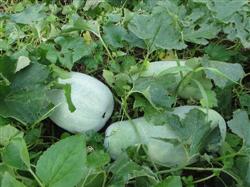
What are the key management techniques for growing winter melon in paddy fields?
How do you manage winter melon grown in paddy fields? What methods can increase yield? Growing winter melon in paddy fields can use the following three methods to increase yield: fertilizer and water management. During the stem and vine growth stage of winter melon, watering is not easy, so a combined "promote" and "control" management approach should be adopted. After watering, cultivate in time to conserve soil moisture and extend the watering interval...
-
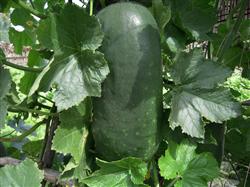
What are the cultivation and management methods for black-skinned winter melon?
How do you manage the cultivation of black-skinned winter melon? What are the special points to note? For growing black-skinned winter melon, you can refer to the following methods for management: Fertilizing: After planting, fertilize once every 7 to 10 days on sunny days (10% to 15% human manure and urine, or 0.5% to 1% urea), applying lightly in the early stage and heavily in the later stage. The key topdressing for winter melon...
条件筛选