-
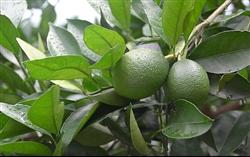
Detailed Explanation of Key Citrus Management Techniques for June
How should citrus be managed in June? Please give an introduction. In June, citrus can be managed by referring to the following methods: (1) Continue fruit retention. The second physiological fruit drop period (also called June drop) begins in mid-to-late May. Unlike the first physiological fruit drop period, the dropped fruit does not have a fruit stalk. For trees whose fruit in the canopy is not obviously different in size and mostly small, in order to reduce fruit drop, foliar topdressing should be strengthened, spraying 0.2% urea plus 0.3% monopotassium phosphate or nutrient solution fertilizer at intervals of about 10 days, and adding 0.2% borax spray in mountain citrus orchards. For young bearing trees and vigorous trees prone to fruit drop, remove summer shoots once every 7-10 days to help retain fruit. In view of the relatively intense competition for nutrients between shoots and fruit, which easily aggravates fruit drop, for vigorous trees that have already undergone girdling (girdling width 2-3 mm), another check should be made before early June, and the healing tissue should be wiped off again from girdling cuts that have healed early.
-
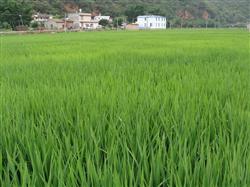
Key Technical Points for Late-Stage Rice Growth Management
How should rice be managed in the late growth stage? What should be noted? In the late growth stage of rice, premature senescence must especially be prevented. If premature senescence occurs from the heading to maturity stage, it will lead to poor grain filling and an increase in blighted grains, causing reduced yield. There are many factors causing premature senescence in the late growth stage of rice. First, improper cultivation management. Planting...
-
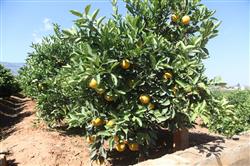
What are the summer and autumn management methods for citrus?
How to manage citrus well in summer and autumn? Please give an introduction. Summer and autumn are exactly when citrus is in the fruit expansion stage, with relatively large fertilizer and water needs, and at the same time it is a hot, sweltering, rain-scarce and drought-prone season, and it is the peak period for citrus pests and diseases. Therefore, attention should be paid to strengthening the management of citrus orchards in summer and autumn. The specific measures are as follows:...
-
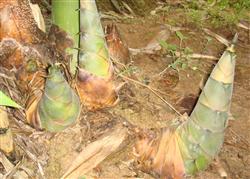
What are the key points of bamboo shoot planting and management methods?
What management methods are there for planting bamboo shoots? Please introduce them. The following methods can be used for managing bamboo shoot planting: 1. Uncovering and sunning: Uncovering the soil means exposing the shoot buds (shoot bud scales) on the bamboo stump above the soil surface to the sunlight, so as to raise the temperature, stimulate and promote the sprouting of shoot buds, and also make fertilizing easier. Generally in early March, use a hoe to dig away the soil around the bamboo from the outside inward...
-
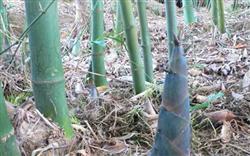
Sweet Bamboo Shoot Planting Management Methods and Technical Key Points
How do you manage sweet bamboo shoots well after planting? Here are the methods. The general management methods for planting sweet bamboo shoots include the following: 1. Fertilization: Because bamboo shoot yields are high, fertilizer demand is relatively large. Fertilization can begin one month after planting, applying 250-300 kg of plant ash per mu, 100-150 loads of farmyard manure, or 250 kg of poultry manure...
-
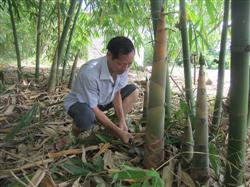
What are the key technical points for bamboo shoot planting and management?
How should bamboo shoots be managed during cultivation? Here is a detailed introduction. Managing planted bamboo is relatively easy, but without proper management it still will not deliver returns. The following introduces methods for establishing a bamboo shoot grove. I. First year. 1. Choosing bamboo species: the better varieties are Datoudian bamboo and Badu shoot bamboo. The former produces shoots early, starting to shoot around the May Day holiday, one month earlier than other shoots, and early shoots fetch a high market price. The latter has excellent quality; a normal shoot weighs several jin, and later shoots sell well on the market.
-
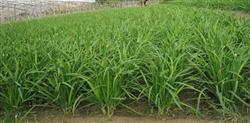
What are the spring and summer management methods for garlic chives?
How do you manage garlic chives in spring and summer? Please introduce the following methods for managing garlic chives in spring and summer: 1. Fertilizer and water management. After garlic chives emerge, growth is relatively slow, so they should be watered in time; when watering, scatter a small amount of urea in the bed to promote seedling growth. Generally, when garlic chives grow to 3 leaves, they should be watered 2? times. During midsummer, if it is not too dry, generally...
-
Cultivation and Management Methods for Getting More Flushes of King Oyster Mushroom in Spring
Control the environment and try to keep the ambient temperature within the growth range. The growth temperature of king oyster mushroom (Pleurotus eryngii) is 6°C to 25°C. At 6°C to 15°C, the fruiting body grows slowly, but its tissue is dense and its color is attractive, so high-quality mushrooms can be produced. Bud-stage management 1. Increase ventilation Increase ventilation to promote cap growth and inhibit stipe growth...
-
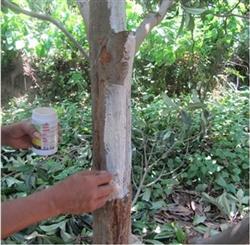
What are the key management techniques for loquat after fruit harvest?
How should loquat be managed after fruit harvest? Please give an introduction. After loquat harvest, the following methods can be used for management: cultivating and loosening the soil. During loquat harvest, due to human trampling, the orchard soil becomes compacted, which is not conducive to root growth; during the plum rain season, it is prone to breeding weeds that compete with loquat for fertilizer and water. Therefore, after fruit harvest, timely cultivating and loosening the soil can alleviate these problems...
-
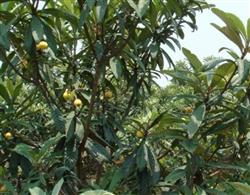
What are the management methods for loquat trees in June and July?
How should loquat trees be managed in June and July? Please advise. The main points for managing loquat trees in June and July are as follows: 1. Continue harvesting and selling the fruit. 2. Apply a heavy post-harvest fertilizer promptly after harvest. Apply it 5-10 days after harvest to replenish the tree's nutrients and promote flower bud differentiation and the sprouting and growth of summer shoots. The N, P, K ratio is generally 3:2:2 with quick-acting fertilizer and high-quality organic fertilizer, generally accounting for 30%; for trees with a heavy crop or weak vigor, more can be applied, accounting for 40-50% of the annual total. 100 jin of decomposed human and animal manure + 1.5 jin of potassium sulfate + 2 jin of calcium-magnesium phosphate fertilizer.
条件筛选