What are the key management techniques for corn during the flowering and grain-filling stage?
How should corn be managed during the flowering and grain-filling stage? Please explain. The flowering and grain-filling stage refers to the period from tasseling to maturity in corn. During this stage, vegetative growth has basically ended, and the crop shifts from the concurrent vegetative and reproductive growth of the ear stage to a reproductive growth period centered on flowering, pollen shedding, fertilization, and grain setting. It is the... period that determines yield, ear grain number, and grain weight.
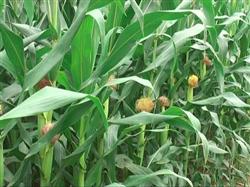
How should corn be managed during the flowering and grain-filling stage? Please explain.
The flowering and grain-filling stage refers to the period from tasseling to maturity in corn. During this stage, vegetative growth has basically ended, and the crop shifts from the concurrent vegetative and reproductive growth of the ear stage to a reproductive growth period centered on flowering, pollen shedding, fertilization, and grain setting. It is the key period that determines yield, ear grain number, and grain weight. The main management goals during this stage are to maintain roots and preserve leaves, prevent premature senescence and delayed senescence, extend the functional period of green leaves, prevent kernel abortion, and improve seed-setting rate and grain weight. The main technical measures for field management are:
1. Apply "grain-promoting fertilizer" as appropriate. High-yield practice has shown that in the late growth stage of corn, a large leaf area, high photosynthetic efficiency, and a long leaf functional period are the basic guarantees for achieving high yield. One of the important guarantees for corn to remain green and mature with living stalks is adequate inorganic nutrition during the flowering and grain-filling stage. Therefore, grain-promoting fertilizer should be applied as appropriate. "As appropriate" means it should be determined by the appearance of the field plants. In fields where ear fertilizer is sufficient, plants look good, leaf color is dark green, and there is no premature senescence or fading, it may not be applied to avoid prolonging the growth period; if ear fertilizer is insufficient and plants show signs of nutrient deficiency, grain fertilizer should be supplemented. Grain-promoting fertilizer is generally applied around the female ear flowering stage. Combined with irrigation, apply 5 kg of urea or 10-15 kg of ammonium bicarbonate per mu, and apply it deeply in holes. High-yield summer corn has a relatively large nutrient demand in the late growth stage. For plots showing fertilizer deficiency during the grain-filling stage, foliar fertilization can also be used for rapid supplementation. During grain filling, spraying the leaves with a 1%-2% urea solution, a 3%-5% superphosphate extract, or a 0.1%-0.2% potassium dihydrogen phosphate solution can extend the leaf functional period and increase 1000-grain weight by more than 7%.
2. Remove tassels in time. Tassel removal can reduce nutrient consumption, promote nutrient transport to the female ear, increase light intensity, improve light energy use efficiency, reduce plant height, and enhance lodging resistance. At the same time, tassel removal can also carry some corn borers and aphids out of the field, reducing damage, promoting kernel development, increasing ear grain number and grain weight, and generally increasing yield by about 10%. Tassel removal should be carried out when the tassel has just emerged but has not yet shed pollen. Too early can easily remove leaves and reduce photosynthetic area; too late means the tassel has already flowered and shed pollen, reducing the effect of tassel removal. Tassel removal should be done in alternate rows or alternate plants, and the number of detasseled plants should not exceed half of the total plants in the field. Do not detassel at field ends or edges, and do not detassel during continuous rainy days or high-temperature and drought weather, to prevent insufficient pollen from affecting pollination and causing sparse grains and bare tips.
3. Artificial supplementary pollination. Artificial supplementary pollination can ensure normal pollination and fertilization, improve the seed-setting rate, reduce bare tips, and promote grain uniformity. Supplementary pollination is more effective for plants that silk late and for plots with overly large populations and many weak plants. Artificial pollination is generally carried out at the end of full flowering, on a sunny morning from 9-11 a.m., collecting pollen while pollinating, for 2-3 consecutive times. Attention should be paid to cross-pollination between different plants.
4. Timely irrigation and drainage. The flowering and grain-filling stage of corn is the critical period for water demand. During this stage, corn water consumption accounts for about 50% of total water consumption, and the suitable soil moisture content is 70%-80% of field maximum water-holding capacity. During the flowering and grain-filling stage of corn, 2 key irrigations should be applied: the first from flowering to grain formation, which is the key irrigation for promoting grain number; the second at the milk-ripe stage, which is the key irrigation for increasing grain weight. Irrigation during the flowering and grain-filling stage should vary according to soil moisture and be applied flexibly. Sandy loam and light loam should have more irrigation times; clay and loam can be irrigated at the right time and in the right amount; fields with large populations should have more irrigation times and greater irrigation amounts. In addition, if there is excessive rain during the flowering and grain-filling stage of corn, timely drainage should be carried out.
5. Pull out empty-stalk and small plants. There are always a certain number of plants in a corn field that form no ear, namely empty stalks or short small plants. They not only consume nutrients and water in vain, but also affect the photosynthesis of other plants. Therefore, after pollination is completed, empty stalks and short small plants should be pulled out as early as possible, so that limited nutrients and water can be concentrated on normal plants, making their ears large, grains numerous, and kernels plump.
6. Shallow intertillage and weeding. In the late grain-filling stage of corn, shallow hoeing once along the rows can break soil compaction, loosen the soil for aeration, control weeds and conserve moisture, promote soil nutrient transformation and root absorption, prevent premature senescence, and increase grain weight. During shallow hoeing, care should be taken to avoid excessive root damage and breaking leaves.
7. Control pests and diseases. The main pests and diseases of summer corn during the flowering and grain-filling stage include corn borer, armyworm, cotton bollworm, aphids, northern and southern leaf blight, and rust. For corn borer, when the damaged plant rate reaches 20% at the silking stage, use a 600-800 times dilution of 50% dichlorvos emulsifiable concentrate and drip it at the base of the silks. In the middle and late grain-filling stage, if corn borers bore into the female ear, use a 800-1000 times dilution of 50% dichlorvos emulsifiable concentrate or 50% phoxim emulsifiable concentrate, 10 mL per plant, and inject it into the corn female ear. Spray 1500 times dilution of 50% phoxim on the leaves to control armyworm and cotton bollworm, and 1500-2000 times dilution of 40% omethoate to control aphids. For northern and southern corn leaf blight, spray with a 500 times dilution of 50% carbendazim or 70% thiophanate-methyl wettable powder. For corn rust, 75-100 mL of 20% triadimefon emulsifiable concentrate per mu can be mixed with 50 kg of water and sprayed for control.
8. Harvest at the right time. The external appearance characteristics of mature corn are that the husk leaves change color and become loose, the kernels become hard, and the cortex is glossy. A black layer appears at the cross-section where the kernel connects to the cob, marking that the corn has entered full maturity and can be harvested. If the green leaves are still very good and the growing season allows, harvest can be delayed by another 5-7 days, which has a yield-increasing effect.
Click to get more corn planting techniques
Click to get more food crop planting techniques