Detailed Explanation of Key Management Techniques for Lycium barbarum (Goji Berry) Cutting Seedlings
Lycium barbarum (goji berry) is a perennial deciduous small shrub in the Solanaceae family, about 2 m tall, with angular and thorny branches; leaves are simple, alternate or clustered on short shoots, lanceolate or rhombic, with entire margins; flowers are purple-red; the fruit is a berry, orange-red, ovate or oblong. Lycium barbarum prefers cool, moist, fertile soil, is cold-resistant, drought-resistant, and resistant to wind and rain, but is not tolerant of high temperatures, and in poor...
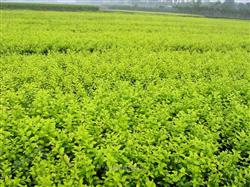
Lycium barbarum (goji berry) is a perennial deciduous small shrub in the Solanaceae family, about 2 m tall, with angular and thorny branches; leaves are simple, alternate or clustered on short shoots, lanceolate or rhombic, with entire margins; flowers are purple-red; the fruit is a berry, orange-red, ovate or oblong. Lycium barbarum prefers cool, moist, fertile soil, is cold-resistant, drought-resistant, and resistant to wind and rain, but is not tolerant of high temperatures, and can also grow normally along poor roads, ditches, and canals.
Lycium barbarum can be propagated by seed, and also by division, layering, and cuttings. The following mainly describes the facility cutting seedling method:
1. Land preparation and bed making: During land preparation, apply 5000 kg of farmyard manure per mu, 100 kg of three-element compound fertilizer or 150 kg of mixed fertilizer, requiring a plowing depth of more than 30 cm, with the soil harrowed fine, the land leveled, and the fertilizer mixed evenly, then make flat beds 1 m wide, with north-south beds being preferable.
2. Cutting of cuttings: In late February, cut current-year, well-developed, pest- and disease-free 1-year-old branches from Lycium barbarum trees, cut them into 15 cm long cuttings, with the upper cut flat and the lower cut slanted, bundle every 100 into one bundle, and store them in sand indoors for later use, keeping the room temperature at about 5°C.
3. Film covering: In early March, choose a sunny and windless day, cover the plastic film over the shed to warm the ground and raise the shed temperature.
4. Management of cutting seedlings: In late March, take out the cuttings, soak them in running water for 1 day and night, then insert them vertically or obliquely into the beds in the shed, requiring about 10 cm into the soil, with 5 rows per bed, and a plant spacing of 10 cm x 20 cm, then water thoroughly after insertion. By uncovering, covering the shading cloth, and ventilating, keep the shed temperature above 12°C, keep the soil surface moist, and sprouts can appear in about 25 days; after sprouting, keep the shed temperature above 10°C, and keep the soil surface slightly moist (or relative humidity 75%). When grass grows on the bed, shallow intertillage and weeding can be done to raise the ground temperature. In mid-April, after ventilating and hardening the seedlings for a period, the shed film can be removed; if insects occur, 3000-fold deltamethrin can be used for control; other management is the same as for open-field seedling raising.