Detailed Explanation of Key Techniques for Soil and Fertilizer Management in Goji Berry Cultivation
Throughout the entire growth and development period of goji berries from seedling cultivation to harvest, the cultivator must carry out a series of technical management measures in the field, collectively known as field management. Field management is divided, according to the effective production cycle of pollution-free goji berry plants, into the young age period (1-4 years) and the mature age period (over 5 years). Field management begins with soil...
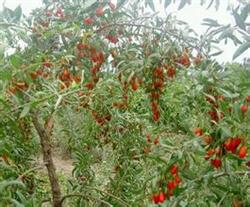
Throughout the entire growth and development period of goji berries from seedling cultivation to harvest, the cultivator must carry out a series of technical management measures in the field, collectively known as field management. Field management is divided, according to the effective production cycle of pollution-free goji berry plants, into the young age period (1-4 years) and the mature age period (over 5 years). Field management begins with soil management, which includes soil tillage, soil fertilization and irrigation. There is no fixed method for how to do soil management well; what matters is that it must be based on the biological characteristics of goji berries and the laws of vegetative growth and reproductive growth during the growth period of goji berry plants under the local climatic conditions at the time, closely centering on the goal of high quality and high yield.
I. Soil Tillage
Soil is the carrier of the goji berry plant body, and the effective soil layer (tillage layer) is the main source of nutrients needed for the growth and development of the goji berry plant. Carrying out soil tillage during the annual growth period of goji berries without missing the farming season can promote the loosening and aeration of the soil in the active layer, improve soil structure, promote the reproduction and activity of soil microorganisms, increase soil fertility, and create a good soil environment for the normal growth and development of goji berries. In soil management, the key factor affecting the development of the goji berry root system is the requirement for soil oxygen content, because the root system must carry out respiration during growth and development and to maintain life activities. The root system absorbs oxygen and releases carbon dioxide, producing the energy needed to sustain life activities. The released carbon dioxide is the raw material for exchange with soil particles when absorbing fertilizer. Therefore, managing the soil of a goji berry orchard well must achieve a balance among the following three aspects: first, combining soil loosening with moisture conservation and warming; second, combining improvement of aeration conditions with weed control; third, combining deep plowing with improvement of soil structure. In order to balance these three points in soil management, according to the growth and development habits of goji berries, the soil tillage operations in a goji berry orchard over the course of a year are as follows:
1. Spring orchard cleaning and shallow tillage
In conjunction with pruning and branch training, especially spring pruning, dead branches and fallen leaves should be promptly removed and destroyed, because many species of goji berry pests and diseases overwinter by leaving the tree body and moving into fallen branches, fallen leaves or weeds in the orchard, such as gall mites, rust mites and some adult goji berry psyllids.
Shallow tillage means rotary tillage with farm machinery or manual shallow turning of the surface soil layer (10-15 cm) of the goji berry orchard. The timing of this shallow tillage is in late March, when the spring soil thaws and before the plants sprout. Shallow tillage of the soil in early spring can loosen the soil, raise soil temperature, store water and conserve moisture, clear weeds and kill pest pupae overwintering underground. Because pests mostly overwinter in the soil in pupal or cocoon forms, plowing them up to the soil surface and exposing them to sun by day and freezing by night can cause them to die.
2. Intertillage and weed control
During the vegetative growth and reproductive growth seasons of goji berry plants, the orchard soil is tilled and weeds are removed to keep the soil loose and aerated. The intertillage time is from May to July. The intertillage period coincides with the spring branch growth period and the flowering period of the old-eye branches. Through turning and sunning at a certain depth, although the main purpose is weed control, it also improves aeration conditions, reduces water evaporation, coordinates the relationship among water, fertilizer, air and heat in the root zone, promotes gradual nutrient absorption, and ensures strong growth of spring branches, abundant flowering of old-eye branches, and no flower drop. From May to July each year, intertillage and weed control are generally carried out three times. The first intertillage is in early May, with a tilling depth of about 19 cm. While clearing weeds, it also removes root suckers under the canopy and water sprouts sprouting near the root crown of the trunk. Intertillage must be uniform with no missed areas, so as to loosen the soil and eliminate soil compaction caused by irrigation. The second intertillage is in early June, when goji berries are about to enter the fruit ripening period. Timely intertillage and weed control keep the orchard surface clean, making it convenient to pick up fallen fruit during the harvesting period. The third intertillage is in mid-to-late July, mainly to remove weeds to facilitate fruit picking, and at the same time it can enhance the effect of pesticide spraying for pest and disease control. Each intertillage must be thorough, and after intertillage the soil must be raked level. No soil ridges of 20 cm or more may be left under the canopy, to prevent the red gall midge from spinning cocoons and pupating.
3. Turning and sunning the orchard soil
After nearly half a year of production management and human trampling during the fruit harvesting period, the active soil layer of a goji berry orchard becomes compacted, so deep plowing of the orchard to sun the soil is needed to loosen the active soil layer and clear weeds. Deep plowing of the tillage layer cuts the horizontal lateral roots in the soil layer at the outer edge of the canopy, which serves as a root pruning, helping more new roots to sprout from the cut roots the following spring and increasing the number of absorptive fibrous roots. Through soil profile observation, one cut root in the soil layer 25-30 cm outside the canopy can sprout 3-6 new fibrous roots by mid-April of the following year. The more fibrous roots absorbing nutrients, the larger the area for nutrient absorption, which helps promote vigorous plant growth. In addition, deep plowing of the soil can effectively increase the amount of water stored by winter irrigation. In Northwest China, winter and spring drought lasts as long as half a year, and winter irrigation water storage can ensure the plants survive the winter safely. Measurements show that in an orchard turned in autumn, winter irrigation can bring in 75 cubic meters of water per 667 sq m, while in an unturned orchard, winter irrigation brings in only 60 cubic meters per 667 sq m. In Northwest China, the time for turning and sunning the orchard soil is from late September to early October, with a turning depth of about 20 cm. Mechanical deep plowing can be used between the goji berry rows, while under the canopy shallow turning is appropriate, taking care not to injure the root crown.
II. Goji Berry Fertilization Techniques
Goji berries have a long annual growth period. From mid-March to early November, they undergo important processes such as flower bud differentiation, branch and leaf growth, flowering and fruiting, and root growth. Each process consumes large amounts of nutrients, and moreover some physiological processes proceed in an overlapping manner. Therefore, the nutrient demand is large, the fertilization period is long, and there are no obvious stages. If nutrient supply is insufficient, branches grow short and weak, flower bud differentiation is affected, each bud eye produces fewer flowers, and naturally the fruit is fewer as well. Especially if fertilizer deficiency is severe at a certain stage, a large amount of flower and fruit drop is likely to occur. Insufficient nutrient supply not only affects the yield of the current year but also directly affects the nutrient accumulation of the tree body and the growth and fruiting of the following year. Fertilization is meant to continuously increase the nutrients in the soil, create good growth environment conditions for goji berries, promote vigorous growth of the tree body, enhance the ability to resist pests and diseases, and make goji berries grow well, with more flowers, more fruit, high yield and excellent quality. Common fertilization methods include basal fertilizer application and topdressing.
1. Basal fertilizer application techniques
Basal fertilizer is mainly organic fertilizer, supplemented by chemical fertilizer. Organic fertilizers mainly include sheep manure, cattle and horse pen manure, oil residue, soybean cake and human urine and feces. Organic fertilizer can not only improve the soil and increase fertility, but also has a long-lasting effect.
The main application methods of basal fertilizer are ring-shaped trench application, semi-ring-shaped trench application and strip trench application.
Ring-shaped trench application: dig a ring-shaped fertilization trench 30 cm deep and 40 cm wide below the outer edge of the canopy.
Semi-ring-shaped trench application: dig an arc-shaped fertilization trench with a length of 1/2 to 2/3 of the circumference below the outer edge of the canopy, with a trench depth of 30 cm and a width of 40 cm. The following year, the trench position is moved to the opposite side of the original trench.
Strip trench application: dig one fertilization trench on each side of the outer edge of the canopy, with the same depth and width as above. The following year, the trench position is moved to the other two sides.
Basal fertilizer is best applied in autumn, and the old goji berry production areas all have the habit of applying basal fertilizer in October. The advantages of applying basal fertilizer in autumn are: 1) at this time the aboveground part of the goji berry tree has begun to shed leaves and gradually enters dormancy, so cut roots have little effect on the tree body; 2) organic fertilizer applied in autumn decomposes earlier than when applied in spring, helping the root system absorb it sooner; 3) if some quick-acting fertilizer is applied as well, it can be absorbed in the current year, helping nutrient accumulation in the tree body, raising the nutritional level within the tree body, enhancing cold resistance, and being very beneficial to growth and fruiting the following year. If there is not enough time for autumn basal fertilizer application, it should be applied early the following spring, together with a portion of quick-acting fertilizer, so that the fertilizer effect can come into play sooner.
2. Topdressing techniques
Topdressing is the application of quick-acting fertilizer during the growth and fruiting period of goji berries to make up for the insufficiency of basal fertilizer. It is mainly quick-acting chemical fertilizer, supplemented by decomposed human urine and feces. Among chemical fertilizers, nitrogen fertilizers include urea, ammonium sulfate, ammonium nitrate and ammonium bicarbonate; phosphorus fertilizers include superphosphate, ammonium phosphate and monopotassium phosphate; potassium fertilizers include potassium sulfate and potassium chloride. In addition, there are multi-element compound fertilizers such as nitrogen-phosphorus-potassium, which are very good fertilizers for goji berries. Researcher Zhong Shengyuan of the Ningxia Academy of Agriculture and Forestry Sciences, the breeder of Ningqi No. 1, No. 2 and large-fruit goji berries, found through years of experiments that adding potassium fertilizer on the basis of applying nitrogen and phosphorus fertilizer can promote the absorption of soil nutrients by goji berry trees and is beneficial to the growth and development of the tree body.
Goji berry trees require different fertilizer elements at different growth stages. From sprouting to before flowering, the nitrogen requirement for branch and leaf growth should mainly be met; during the peak periods of flower bud differentiation, branch and leaf growth, and fruit growth and development, combined application of nitrogen, phosphorus and potassium fertilizer is better.
The topdressing period should be determined according to the growth and fruiting conditions of the tree body. From late April to early May is the period of new branch and leaf growth and flower bud formation on old-eye branches, requiring the first topdressing, mainly with nitrogen fertilizer and an appropriate amount of phosphorus fertilizer; from early June to the end of July is the peak period of the year for massive new branch growth, flower bud formation, and flowering and fruiting, and also the period of most vigorous growth and expansion of a large number of fruits, requiring sufficient nitrogen, phosphorus and potassium fertilizer. If fertilizer is insufficient, it will affect growth and aggravate flower and fruit drop. According to fertilizer tracer experiments by Chen Guisong, Xiong Zhixun and others, from June to August, the nitrogen, phosphorus and potassium contents in the annual branches of goji berries all showed a "V"-shaped distribution, proving that the tree body is most deficient in fertilizer in July. Therefore, a nitrogen-phosphorus-potassium compound fertilizer should be applied once in early June and once in early July. If in early August the goji berry new branches grow a lot and there are many flower buds, in order to promote autumn fruit growth, a nitrogen-potassium fertilizer should be applied once more at this time.
In conjunction with field fertilization, foliar spraying of superphosphate, monopotassium phosphate, zinc and boron can effectively increase the fruit-setting rate.
3. Combined application techniques of organic fertilizer and chemical fertilizer
Organic fertilizer contains a variety of nutrient elements, is economical and easy to obtain, and has wide sources, but its nutrient content is not high, its fertilizer effect is slow and long-lasting, and the application amount is large. Therefore, in formula fertilization, emphasis should be placed on the combined application of organic fertilizer and chemical fertilizer, so that they complement and promote each other. Generally, chemical nitrogen fertilizer can promote the mineralization of organic nitrogen and improve the fertilizer effect of organic fertilizer, while organic fertilizer can promote the biological fixation of chemical nitrogen fertilizer and reduce the nitrification and denitrification of inorganic nitrogen fertilizer, thereby reducing the loss of inorganic nitrogen. In addition to providing nitrogen, phosphorus, potassium, trace elements and other nutrient elements itself, the organic acids produced by the decomposition of organic fertilizer can dissolve phosphorus in the soil and reduce the fixation of phosphorus fertilizer and trace elements in the soil, thereby improving the availability of phosphorus and trace elements in the soil. In addition, after organic fertilizer is applied to the soil, it provides sufficient energy substances and nutrients for various soil microorganisms, thereby promoting the reproduction of microorganisms and activating their activity, thus improving the supply of chemical fertilizers and the absorption speed of the root system.
In the combined application technique of organic fertilizer and chemical fertilizer, organic fertilizer is generally mainly used as basal fertilizer, supplemented by topdressing, while chemical fertilizer is mainly used as topdressing, supplemented by basal application. From the perspective of convenient sources and good economic effect, organic fertilizer applied in goji berry orchards is preferably pig manure, chicken manure, sheep manure, various cake fertilizers and barnyard manure. However, when these fertilizers are used as topdressing, they must be decomposed before use, and a certain amount of chemical fertilizer must be added, which is most conducive to the rapid absorption and effect of the goji berry root system.
4. Selection of fertilizer types and application rates
The nutrient elements required for the growth and development of goji berry plants come from leaf photosynthesis (carbon, hydrogen and oxygen from the atmosphere and water) and the major elements nitrogen, phosphorus and potassium and trace elements such as calcium, iron, boron and zinc absorbed by the root system from the soil. These nutrient elements absorbed by the root system mainly depend on soil fertilization. After selecting suitable inorganic fertilizers and organic fertilizers, the following principles should be followed during fertilization: combining organic fertilizer (slow-release) with inorganic fertilizer (quick-acting); combining nitrogen, phosphorus and potassium (major elements) with zinc, boron, iron, etc. (trace elements); and combining deep autumn application of basal fertilizer with spring and summer soil topdressing and foliar topdressing (spraying on leaves and stems). This can basically ensure the fertilizer requirements for vegetative growth and reproductive growth of goji berry plants during the annual growth period.
According to the fertilizer requirement laws of vegetative growth and reproductive growth during the annual growth period of goji berries, slow-release organic fertilizer should be applied into the soil from late September to early October in autumn; quick-acting inorganic fertilizer used as topdressing should be applied into the soil at the critical nutrient period in mid-April and the maximum nutrient efficiency period in mid-June. If the climatic conditions meet the accumulated temperature required for autumn fruit production, a quick-acting chemical fertilizer can be added once in mid-August to promote autumn fruit production. Foliar topdressing is sprayed once about every 10 days from early May to late July.