What are the spring management methods for a mulberry orchard?
How should a mulberry orchard be managed in spring? Please advise. The main points of spring mulberry orchard management are as follows: Strengthen fertilizer and water management. Spring fertilizer can be applied about 20 days before the mulberry trees bud. Apply first to mulberry trees used for feeding young silkworms, and later to those used for grown silkworms; apply first in clay soil mulberry orchards, and later in sandy soil ones. Generally, spring fertilizer application begins in early March...
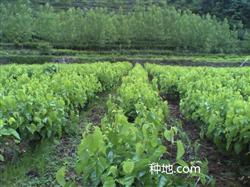
How should a mulberry orchard be managed in spring? Please advise.
The main points of spring mulberry orchard management are as follows:
Strengthen fertilizer and water management. Spring fertilizer can be applied about 20 days before the mulberry trees bud. Apply first to mulberry trees used for feeding young silkworms, and later to those used for grown silkworms; apply first in clay soil mulberry orchards, and later in sandy soil ones. Generally, spring fertilizer application begins in early March and should be finished no later than 30 days before leaf harvest. Spring fertilization is mainly based on quick-acting nitrogen fertilizer, supplemented with decomposed human manure and urine. Fertilizer amount and application method: generally, each kilogram of standard chemical fertilizer is applied to 20-40 young trees, or 10-20 mature trees; each load of human manure and urine is applied to 20 young trees, or 10 mature trees; each young tree is given 5 kg of barnyard manure, and each mature tree is given 10 kg. When fertilizing, a ring-shaped trench can be dug just outside the edge of the canopy projection or a little farther out; trenches or holes can also be opened on both sides of the tree, with a depth of 16-30 cm. After the fertilizer is applied into the trench or hole, cover it with soil promptly to prevent nutrient volatilization. After fertilizing, it is best to carry out one intertillage to loosen the ground that has been trampled. The first watering in spring should be done 15-20 days before the mulberry trees bud, together with fertilization; the second watering is done during the budding period; the third watering depends on the soil moisture at a depth of 2 cm underground. When the soil forms a ball in the hand and breaks apart as soon as it is released, that is the suitable time for watering. Do a good job of spring pruning to promote young mulberry shaping and rejuvenate old mulberry trees. During the tree-form training period, young mulberry trees should mainly be trained for tree shape, and all branches can be cut off in early spring before the mulberry trees bud. For aging mulberry trees with thin and short branches, summer pruning is not suitable; spring pruning and summer strengthening can be carried out, that is, before the mulberry trees bud in spring, cut off the scaffold branches, lower the canopy, and rejuvenate and renew them. Intercrop leguminous crops in spring. Intercropping soybeans, mung beans and other leguminous crops in mulberry orchards can loosen the soil, suppress weed growth, and increase fertilizer sources through the nitrogen fixation of legume rhizobia. Taking mung beans as an example, 4-5 kg of seed is used per mu. Mung beans are generally sown once and harvested once; the suitable harvest time is around the full flowering stage about 60 days after sowing, and after cutting they are turned and pressed into the ground on the spot. Timely prevent and control diseases and insect pests. Pests such as mulberry scale insects and mulberry thrips, as well as the pathogens of certain mulberry diseases, overwinter in dead stumps and dead branches. Through pruning, the dead branches are collected and burned. Before budding, spray copper-ammonia solution on the branches and trunks and the ground surface around the mulberry trees. One week later, spray 90% trichlorfon 1000-1500 times solution or 50% phoxim 500 times solution. During the mulberry budding stage, capture the overwintering larvae of mulberry geometrids and mulberry caterpillars to protect the mulberry buds. In April, remove the egg-laying leaves of mulberry psyllids and burn them centrally; capture newly hatched wild silkworm larvae, and take advantage of the death-feigning habit of adult yellow leaf beetles by knocking them down and killing them in the early morning before the dew dries. According to the order of mulberry leaf picking, spray the mulberry orchard in sections with 4000-8000 times solution of 20% fenvalerate or 4000-10000 times solution of 2.5% cyhalothrin EC to kill mulberry geometrids, mulberry caterpillars, mulberry weevils, wild silkworms, etc. In early April, control mulberry leafhoppers and scale insects by spraying 50% malathion emulsion 1500 times solution, or 80% dichlorvos emulsion 2000 times solution.
More mulberry cultivation techniques