-
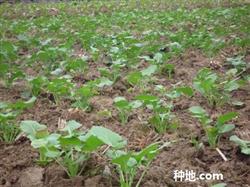
Key Technical Points for Spring Field Management of Rapeseed
How should rapeseed fields be managed in spring? Please advise. The bolting stage of rapeseed is a period of vigorous growth in both vegetative and reproductive development, known as "spring rapeseed fierce as a tiger." Due to the low temperatures and low rainfall in early spring this year, the growth and development of rapeseed has been slow, with weak growth vigor. To promote stable spring growth of rapeseed, coordinate vegetative growth and...
-

What are the key management techniques for bananas that bolt late?
How should bananas that bolt late be managed? Please introduce the management methods. Bananas that bolt late can be managed by referring to the following methods: 1. Apply overwintering insulation fertilizer in time. After bananas bolt, overwintering insulation fertilizer should be applied in time, mainly high-quality organic fertilizer and efficient phosphorus and potassium fertilizer, applying 10-15 kg of decomposed human, livestock and poultry manure and potassium dihydrogen phosphate per plant...
-
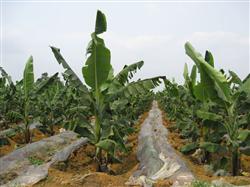
Detailed Explanation of Key Banana Management Techniques for Summer
How should bananas be managed in summer? Please introduce the management methods. Summer bananas can be managed with reference to the following methods: 1. Fertilization: In the early vegetative growth stage, banana fertilization should focus mainly on nitrogen fertilizer, combined with potassium fertilizer. At this time, since the root absorption capacity is still weak, fertilizer should be applied frequently and lightly, combined with foliar spraying. After flower bud differentiation, bananas enter...
-
Key management techniques before and after banana bunch emergence
How to manage bananas before and after bunch emergence? Please provide an introduction to the management methods. Management before and after banana bunch emergence can follow these methods: 1. Fertilize in time. When bananas enter the flower bud differentiation stage, this is the key period that determines the number of fruit hands and the number of fingers, and a heavy fertilizer application should be added in time. That is, when the banana leaves produce opposite leaves,...
-
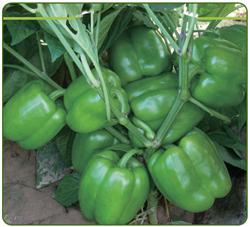
How should field management be carried out before harvesting bell peppers?
How should bell peppers be managed before harvest? Please give an introduction. Growers who plant bell peppers all know that the second crop of bell peppers is especially important in the management of the entire growth period, because this period is the key period that determines the level of income. At present, most of the first crop of bell peppers has already been harvested. How can the yield and quality of the second crop be ensured? The reporter believes...
-
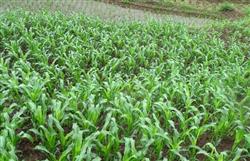
What are the key technical points for sorghum seedling stage management?
How to manage sorghum seedlings well? Please give guidance. Sorghum seedling stage management can be carried out by referring to the following methods: 1. Chemical weeding: Chemical weeding should be carried out 3 days after sowing, using 3-3.5 kg of atrazine per hectare mixed with 400-500 kg of water for spraying. If the weather is dry, spray clean water once within two days after spraying the herbicide, wetting the ground to a finger's depth to improve the weed-killing effect.
-
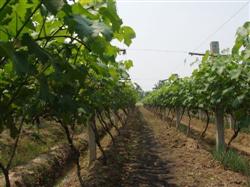
What are the key points of summer management techniques for trellised grapes?
How should trellised grapes be managed in summer? Please give an introduction to the management methods. Trellised grapes can be managed in summer by referring to the following methods: 1. Bud removal and shoot removal: Remove the weak lower shoots, keep an appropriate amount of lower buds and shoots, and do not favor keeping the strong upper shoots, otherwise the fruiting position will very easily move upward. 2. Number of shoots retained: Control the number of shoots retained...
-
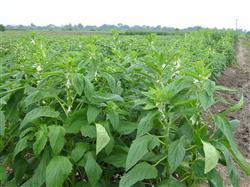
What are the key technical points for summer management of black sesame?
How should black sesame be managed in summer? Please give guidance. The summer management methods for black sesame can refer to the following: First, thinning and final thinning of seedlings, checking seedlings and filling gaps. Because sesame seeds are small and many seedlings emerge, after emergence, when the first pair of true leaves grows, the seedlings should be thinned; when 2-3 pairs of true leaves grow, the seedlings should be thinned again; at 4 pairs of true leaves, the seedlings should be finally thinned. Black sesame generally leaves about 8,000 plants per mu; if seedling gaps or broken rows occur due to poor soil moisture at sowing, transplanting dense seedlings to fill sparse areas or replanting after sprouting can be used to ensure full and strong seedlings.
-

What are the key management points for field roses after a flood?
1. Pests and diseases are unlikely to occur, especially downy mildew, the most lethal disease in the growth of cut roses. The reason: the key point of the tall-stem rose cultivation technique is that the nutrient branches are placed on the two sides of the ridge respectively, and the rose stems are about 50 cm above the ridge surface. There are no leaves below the stems, so ventilation and air permeability are very good, which is unfavorable for the growth of pests and diseases and can effectively...
-
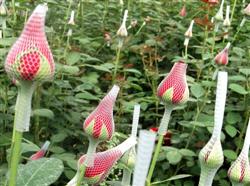
Detailed Explanation of Red Rosewood Cultivation Techniques and Management Methods
Red rosewood, Ochrosia coccinea, is a plant in the genus Ochrosia of the family Apocynaceae, distributed from Madagascar to Polynesia in the Pacific. Red rosewood is an evergreen small tree; the whole plant has white latex, the stems and branches are gray, and the young branches are bright green. The leaves are attractive in shape, nearly leathery or firmly papery, usually...
条件筛选