How should field management be carried out before harvesting bell peppers?
How should bell peppers be managed before harvest? Please give an introduction. Growers who plant bell peppers all know that the second crop of bell peppers is especially important in the management of the entire growth period, because this period is the key period that determines the level of income. At present, most of the first crop of bell peppers has already been harvested. How can the yield and quality of the second crop be ensured? The reporter believes...
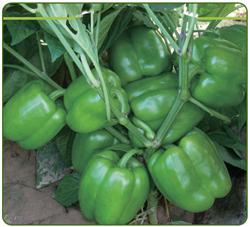
How should bell peppers be managed before harvest? Please give an introduction.
Growers who plant bell peppers all know that the second crop of bell peppers is especially important in the management of the entire growth period, because this period is the key period that determines the level of income. At present, most of the first crop of bell peppers has already been harvested. How can the yield and quality of the second crop be ensured? The reporter believes that work should start from three aspects: pruning, fertilizer and water management, and disease control, to adjust plant growth, and promote the second crop of bell peppers to reach the market early with high yield and good quality.
First, prune in time. After the first crop of bell peppers is picked, reasonable branch thinning should be carried out. This is because after the first batch of bell peppers is harvested, the lateral branches that originally bore fruit on the plants and some auxiliary vegetative branches grow rapidly, causing the field to become dense and shaded, which not only consumes nutrients but also makes diseases more likely to occur. For this, excess lateral branches should be removed in time, and according to the principle of keeping outer lateral branches and removing inner branches, the plant structure should be reasonably adjusted. Generally speaking, keeping 3-4 fruiting branches per plant is enough, to ensure that nutrients are supplied in a concentrated way to the fruit on the main branches.
Second, fertilizer and water management must keep up. During the growth of the first crop of bell peppers, the plants consume a large amount of nutrients. Before the first crop of bell peppers is completely harvested, watering and fertilizing should be carried out in time to supplement the nutrients needed by the plants. But now the ground temperature inside the greenhouse is relatively low, and the bell pepper root system is weak, so when watering, the amount must not be too large, otherwise it is easy to damage the roots and affect the growth of the bell peppers. Applying 5-10 kg of fully water-soluble fertilizer with the irrigation water can supplement all the nutrients needed by the crop.
Third, pay attention to preventing pests and diseases. Recently there has been more rainy and snowy weather, and the low-temperature and high-humidity environment inside the greenhouse is especially suitable for the occurrence of gray mold, Phytophthora blight, and bacterial diseases. In management, the idea of "prevention" must be firmly established. While using pesticides for control, attention should also be paid to combining them with management measures. For example, to control gray mold, while spraying and fumigating, flowers should also be picked in time to prevent disease.
Click to get more bell pepper growing techniques
Click to get more vegetable growing techniques