Detailed Explanation of Key Banana Management Techniques for Summer
How should bananas be managed in summer? Please introduce the management methods. Summer bananas can be managed with reference to the following methods: 1. Fertilization: In the early vegetative growth stage, banana fertilization should focus mainly on nitrogen fertilizer, combined with potassium fertilizer. At this time, since the root absorption capacity is still weak, fertilizer should be applied frequently and lightly, combined with foliar spraying. After flower bud differentiation, bananas enter...
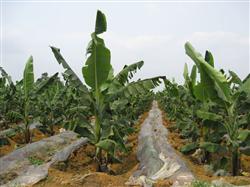
How should bananas be managed in summer? Please introduce the management methods
Summer bananas can be managed with reference to the following methods:
1. Fertilization: In the early vegetative growth stage, banana fertilization should focus mainly on nitrogen fertilizer, combined with potassium fertilizer. At this time, since the root absorption capacity is still weak, fertilizer should be applied frequently and lightly, combined with foliar spraying. After flower bud differentiation, bananas enter reproductive growth, and potassium fertilizer should be increased, combined with compound fertilizer, to promote fruit development and maintain the number of green leaves. 50-60 days before bunch emergence, apply a fertilizer for strengthening the bud and fruit once, with 1-1.5 jin of compound fertilizer plus 3-6 jin of decomposed organic fertilizer per plant, applied shallowly in a half-ring trench 80-90 cm from the banana corm.
2. Do a good job of retaining and removing suckers
When retaining suckers, the following must be considered: (1) the growth condition of the mother plant; (2) selecting healthy, uniformly sized suckers; (3) maintaining a certain plant and row spacing, rationally retaining double plants, and making full use of sunlight; (4) calculating a reasonable harvest period when retaining suckers. The time required from sucker retention to harvest for bananas is generally 14-18 months.
It is best not to retain suckers on mother plants below 1 m to avoid too great an impact on the mother plant.
Apart from the suckers to be retained, excess suckers are generally removed when they are 20-30 cm.
3. Do a good job of staking
Tall banana varieties should be staked for wind protection after flower bud differentiation, while medium and short varieties should be staked for wind protection around bunch emergence. This work should be strengthened especially during typhoon season.
4. Weed control and mulching
Banana roots are relatively shallow, so weeds in the banana plantation should be removed frequently. These weeds can be pulled up or cut and used as mulch, and rice straw and other materials can also be used as mulch. Water management. In the high-temperature summer season, in banana plantations without irrigation conditions and with a low groundwater table, one week without rain will affect plant growth, so irrigation work should be taken seriously. During the rainy season, drainage work should be done promptly so that no water accumulates in the banana plantation.
5. Pest and disease control.
May to June is the peak period for banana bunchy top disease and banana mosaic-heart rot disease, so timely prevention and control are needed, especially killing aphids to cut off transmission routes. At the same time, attention should be paid to the prevention and control of black spot disease, anthracnose, banana weevil, and leaf roller moth. High-temperature and high-humidity weather in summer, plus typhoons, is extremely favorable for the occurrence and spread of banana black spot disease, so timely spraying for prevention and control is needed. At the early stage of disease onset or after bunch emergence and before the bracts open, choose 25% Bipuer 1000-fold solution, or 25% Shenzhou Green 1500-fold solution, or 77% Keshade 1000-fold solution, or 64% Shadufan 800-fold solution to spray the fruit bunch and leaves, once every 7-10 days, alternating the above agents. In the young fruit stage after banana bunch emergence, bag the fruit as early as possible to protect it and isolate pathogens.
Click to get more banana cultivation techniques
Click to get more fruit cultivation techniques