Detailed Explanation of Red Rosewood Cultivation Techniques and Management Methods
Red rosewood, Ochrosia coccinea, is a plant in the genus Ochrosia of the family Apocynaceae, distributed from Madagascar to Polynesia in the Pacific. Red rosewood is an evergreen small tree; the whole plant has white latex, the stems and branches are gray, and the young branches are bright green. The leaves are attractive in shape, nearly leathery or firmly papery, usually...
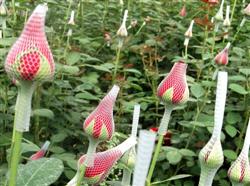
Red rosewood. Red rosewood (Ochrosia coccinea) is a plant in the genus Ochrosia of the family Apocynaceae, distributed from Madagascar to Polynesia in the Pacific.
Red rosewood is an evergreen small tree; the whole plant has white latex, the stems and branches are gray, and the young branches are bright green. The leaves are attractive in shape, nearly leathery or firmly papery, usually in whorls of 3, the flowers are ivory white and fragrant, and the fruit is a hard drupe resembling a small peach, turning rose red when ripe and appearing even more brilliant against the green leaves. This plant's flowering period is mainly concentrated from April to June, but in warm-climate regions it can flower almost year-round, while the fruiting period runs from the second half of the year to the end of the year; a plant with such fragrant flowers, beautiful fruit, and long flowering and fruiting periods is truly a tree species of great ornamental value.
Red rosewood can grow in sandy soil, clay soil, or saline-alkali land, with deep, loose, fertile sandy loam being more suitable. However, it can also grow in many other types of soil, so it can be widely used for landscaping in stone-mountain scenic areas, factories, and mining areas. It is an excellent new landscaping tree species with great development potential.
Propagation method: because this plant is rich in latex, propagation by cuttings is relatively difficult; therefore, seed propagation is currently commonly used for seedling production.
(1) Seed collection and handling
The fruit ripening period is generally from mid- to late November to early December, and the fruit can be harvested once it looks fully red; after harvesting, place the fruit in a nylon film bag (a plastic (11280, -35.00, -0.31%) bucket with a lid also works) and seal it for about one week. When the flesh softens or rots, remove the flesh, wash it clean with fresh water, and dry it in a ventilated, dry place.
(2) Sowing
After the harvested seeds are treated and dried, they can be stored at about 5°C until sowing the following spring, but storage at low temperature for too long will affect their viability; in the warmer southern regions, it is best to sow immediately after harvest. Before sowing, the fruit shell must be broken open to remove the seeds, which are then soaked in water at about 20°C for 8 hours before sowing; this helps promote earlier germination. The seedbed is generally best made of sandy loam, with the raised bed about 20 cm high, covered with a layer of clean river sand 3-5 cm deep, after which the seeds are evenly broadcast on top, and then covered with a layer of river sand about 2 cm thick. After sowing, keep the seedbed moist; if the seedbed temperature is around 20°C, germination and emergence generally occur after about 2 weeks.
(3) Seedling management and transplanting
Under suitable temperature conditions, the seedlings can generally be transplanted into nutrient bags after growing 2-4 true leaves; during the seedling stage, an appropriate amount of phosphorus and potassium fertilizer or compound fertilizer can be applied, and after 1-2 years of growth they can be planted out in the garden. (Ochrosia coccinea) is a plant in the genus Ochrosia of the family Apocynaceae, distributed from Madagascar to Polynesia in the Pacific.
Red rosewood is an evergreen small tree; the whole plant has white latex, the stems and branches are gray, and the young branches are bright green. The leaves are attractive in shape, nearly leathery or firmly papery, usually in whorls of 3, the flowers are ivory white and fragrant, and the fruit is a hard drupe resembling a small peach, turning rose red when ripe and appearing even more brilliant against the green leaves. This plant's flowering period is mainly concentrated from April to June, but in warm-climate regions it can flower almost year-round, while the fruiting period runs from the second half of the year to the end of the year; a plant with such fragrant flowers, beautiful fruit, and long flowering and fruiting periods is truly a tree species of great ornamental value.
Red rosewood can grow in sandy soil, clay soil, or saline-alkali land, with deep, loose, fertile sandy loam being more suitable. However, it can also grow in many other types of soil, so it can be widely used for landscaping in stone-mountain scenic areas, factories, and mining areas. It is an excellent new landscaping tree species with great development potential.
Propagation method: because this plant is rich in latex, propagation by cuttings is relatively difficult; therefore, seed propagation is currently commonly used for seedling production.
(1) Seed collection and handling
The fruit ripening period is generally from mid- to late November to early December, and the fruit can be harvested once it looks fully red; after harvesting, place the fruit in a nylon film bag (a plastic (11280, -35.00, -0.31%) bucket with a lid also works) and seal it for about one week. When the flesh softens or rots, remove the flesh, wash it clean with fresh water, and dry it in a ventilated, dry place.
(2) Sowing
After the harvested seeds are treated and dried, they can be stored at about 5°C until sowing the following spring, but storage at low temperature for too long will affect their viability; in the warmer southern regions, it is best to sow immediately after harvest. Before sowing, the fruit shell must be broken open to remove the seeds, which are then soaked in water at about 20°C for 8 hours before sowing; this helps promote earlier germination. The seedbed is generally best made of sandy loam, with the raised bed about 20 cm high, covered with a layer of clean river sand 3-5 cm deep, after which the seeds are evenly broadcast on top, and then covered with a layer of river sand about 2 cm thick. After sowing, keep the seedbed moist; if the seedbed temperature is around 20°C, germination and emergence generally occur after about 2 weeks.
(3) Seedling management and transplanting
Under suitable temperature conditions, the seedlings can generally be transplanted into nutrient bags after growing 2-4 true leaves; during the seedling stage, an appropriate amount of phosphorus and potassium fertilizer or compound fertilizer can be applied, and after 1-2 years of growth they can be planted out in the garden.