Key Technical Points for Spring Field Management of Rapeseed
How should rapeseed fields be managed in spring? Please advise. The bolting stage of rapeseed is a period of vigorous growth in both vegetative and reproductive development, known as "spring rapeseed fierce as a tiger." Due to the low temperatures and low rainfall in early spring this year, the growth and development of rapeseed has been slow, with weak growth vigor. To promote stable spring growth of rapeseed, coordinate vegetative growth and...
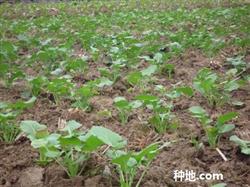
How should rapeseed fields be managed in spring? Please advise.
The bolting stage of rapeseed is a period of vigorous growth in both vegetative and reproductive development, known as "spring rapeseed fierce as a tiger." Due to the low temperatures and low rainfall in early spring this year, the growth and development of rapeseed has been slow, with weak growth vigor. To promote stable spring growth of rapeseed, coordinate the relationship between vegetative growth and reproductive growth, strive for more branches, more pods, more grains and greater grain weight, and reduce the harm of climate and disease to rapeseed growth, doing a good job in field management in the late spring period is the key to achieving stable and bumper harvests of rapeseed over large areas. The following key technical measures are specifically suggested for farmers' reference and application.
I. Increase and supplement bolting fertilizer
Apply bolting fertilizer according to seedling conditions. For fields with poor soil fertility, weak seedling growth, and late-sown densely planted fields, immediately increase and supplement bolting fertilizer, applying 3-5 kg of urea per mu as a top dressing.
II. Do a good job in clearing ditches and draining waterlogging
According to forecasts from the meteorological department, after the Rain Water solar term this year, rainfall will increase significantly, which can easily cause excessive soil moisture, poor aeration, and easily hinder root growth and expansion and impede nutrient absorption. At the same time, due to high field humidity, diseases are prone to occur, so ditches should be cleared and waterlogging drained in a timely manner, always keeping drainage and irrigation unobstructed.
III. Foliar boron spraying
Double-low quality rapeseed is very sensitive to boron fertilizer, and boron deficiency easily causes the phenomenon of "flowers but no seeds" (that is, large areas bloom but do not set seed). To make up for insufficient fertilization of rapeseed in winter, timely increase foliar boron spraying, and spray once with 0.3% borax solution at the bolting stage and early flowering stage.
IV. Prevent sclerotinia
For high-yield rapeseed fields, one week after the early flowering stage, spray once with a 1000-1500 times dilution of 40% dimethachlon wettable powder, focusing on spraying the middle and lower parts of the plants.
Click to get more rapeseed cultivation techniques
Click to get more food crop cultivation techniques