-

How to cultivate lion's mane mushroom (Hericium erinaceus) from spent mushroom substrate? Detailed new technique
Lion's mane mushroom is named for its resemblance to a monkey's head and its delicious flavor, and has long been known by the saying "monkey's head among mountain delicacies, bird's nest among sea treasures." During mushroom spawn production or transfer, contaminated spawn sometimes appears due to carelessness in sterilization, disinfection, inoculation, culturing and other steps. If contaminated spawn is discarded in the wild, it causes environmental pollution; if the substrate is dug out and the spawn bottles are washed for reuse, it wastes labor and time. But if contaminated spawn is used to cultivate lion's mane mushroom, waste can be turned into treasure with twice the result for half the effort. The specific method is as follows: 1. Collect contaminated spawn and sterilize. Promptly
-
How Do You Assess the Quality of Edible Mushroom Spawn? Practical Methods to Help You Tell Good from Poor
The quality of edible mushroom spawn directly affects the success or failure of production and the level of yield. Therefore, assessing the quality of edible mushroom spawn is crucial for growers. 1. Direct visual observation and assessment. In appearance, if the mycelium is dense white, thick and strong, and elastic, it has strong vitality; if the spawn mycelium has shrunk, is dry and lacking in color, or the mycelium has autolyzed and produced a large amount of reddish-brown liquid, then its vitality has already weakened and it should no longer be used; if wood-block spawn remains hard and solid, it is spawn with strong vitality, but if the wood blocks have become softened and loose, then it has aged and is not
-
How to grow Robinia hispida from seed? Detailed propagation techniques
Robinia hispida, also known as the rose acacia, is a deciduous small tree or tree in the genus Robinia of the Fabaceae family. Its branchlets, peduncles and petioles are densely covered with fine brown bristles. It is renowned for its graceful tree form and rich, brilliant flower color. Its flowers are rose-red or pale purple, and its pods are 5-8 cm long and covered with glandular bristles. Its flowering period is from May to July. It is a rising star among garden trees and is usually propagated by grafting onto black locust (Robinia pseudoacacia) rootstock. Native to the Americas, it is cultivated in Beijing, Hebei, Shandong, Henan and Liaoning in China. Grafting propagation
-
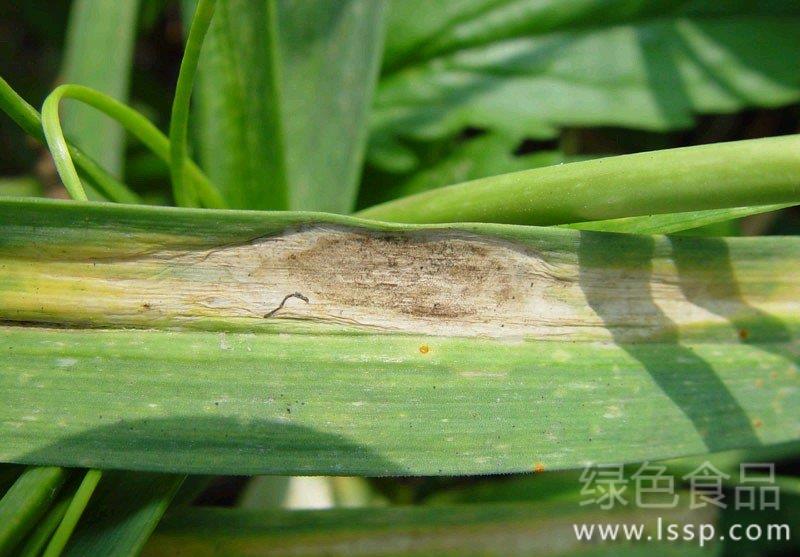
Garlic leaves turning from green to brown and yellow: master the control methods for garlic leaf blight
Garlic leaves turning from green to brown and yellow: control methods for garlic leaf blight
-
Key Technical Points for Mushroom Production from Standing Logs in Shiitake Log Cultivation
After a summer and an autumn of careful management, the mycelium of the mushroom logs enters the mature stage, and around the Beginning of Winter (Lidong), the logs can be set up standing for fruiting management. The signs that the mycelium in the logs has matured are: the surface of the log shows no great difference from when it was felled, with no contaminating microorganisms and the bark tightly attached; when tapped with the back of a knife or with a finger, it gives a semi-dull or dull sound; the bark is soft and loose, and the wood beneath the bark is yellow or yellowish-brown and has the fragrance of shiitake; when pressed with a finger, the bark feels elastic and rough and uneven. There are also nodular protrusions, which are the prelude to fruiting, and sometimes there will be
-
How to distinguish true from false before introducing fragrant flower locust?
Nursery stock identification methods Currently the fake and inferior fragrant flower locust nursery stock sold on the market generally falls into the following four types: (1) Red flower black locust substituted for fragrant flower locust. The red flower black locust and the fragrant flower locust both have papilionaceous purplish-red corollas; the red flower black locust blooms once a year, bears pods, and is grafted using black locust as rootstock. The fragrant flower locust blooms twice a year, does not bear pods, and is propagated from root segments. (2) Aged root stock. Perennial fragrant flower locust root stock, due to aging, has an extremely low germination rate. According to trial plantings, fragrant flower locust root stock over two years old is not suitable for use as planting material, and even less should it be sold on the market
-
How to prevent canine parvovirus in dogs? Keep your beloved dog away from the threat of the virus
Friends with dogs at home, have you heard of parvovirus? This disease, which is relatively common in spring and winter, has recently caused a great deal of suffering for many dogs. Regarding the specific details of this disease, the reporter consulted Dr. Jia at the Animal Hospital of the Shijiazhuang Municipal Animal Husbandry Bureau, hoping it will be of help to you. Symptoms fall into three types. For dogs, parvovirus is a terrible infectious disease with a very high mortality rate. Dogs of all ages can be infected, and it is even more
-
Detailed Explanation of Upland Rice Cultivation Techniques: From Sowing to Field Management Key Points
Upland rice refers to the practice, under dryland conditions, of selecting high-quality rice varieties with relatively strong drought tolerance, adopting dry direct seeding, relying mainly on natural rainfall throughout the growth period, and appropriately supplementing water during drought in key growth stages, so that rice can grow and develop normally and flower and set seed under relatively moist soil conditions. The key points of upland rice cultivation techniques are introduced as follows: 1. Variety selection. Because the sowing period of upland rice is later than the seedling-raising period of paddy rice, varieties with early maturity should be considered in variety selection. Recently approved at the national level in our province
-
How to Make Shiitake Mushroom Floss from Shiitake Stems? A Detailed Guide to the Processing Method
In artificially cultivated shiitake mushrooms, the stems account for about 30% of the fruiting body weight. Eating them directly is not only tough and hard to chew, but also not conducive to digestion and absorption. However, when processed into floss, they not only have a rich shiitake flavor but also combine the texture and mouthfeel of meat floss. They can be eaten alone, used as a side dish, or used as a filling for flavored foods such as sausages, pies and steamed buns. Because shiitake mushroom floss is rich in vitamin B2, vitamin D and the dietary fiber needed by the human body, it is a fairly ideal health food and has a certain effect in preventing rickets in children. Shiitake mushrooms
-
Success in Extracting Highly Effective Anti-Cancer Substance from Cloned Yew
Sichuan University professor demonstrates unique plant transgenic cloning technology, with the next step focused on anti-cancer plants. "We have already used transgenic cloning technology to successfully clone two plants with different genes, and the next step is to apply this technology to cloning the anti-cancer drug paclitaxel." Recently, Professor Wang Li from the Plant Research Laboratory of the College of Life Sciences at Sichuan University showed reporters a transgenic cloning technology little known to outsiders. A plant cloned from a leaf. In the laboratory, Professor Wang pointed to a green plant about 20 cm tall and said: "
条件筛选