Garlic leaves turning from green to brown and yellow: master the control methods for garlic leaf blight
Early-maturing garlic brings good returns, and many farmers grow it. But in recent years, the widespread occurrence of garlic leaf blight has become a major disease in both new and old garlic-growing areas, reducing yields by 20-30% in severely affected fields. Carrying out comprehensive control based on the occurrence patterns of garlic leaf blight is the key to achieving high quality and high yields in garlic.
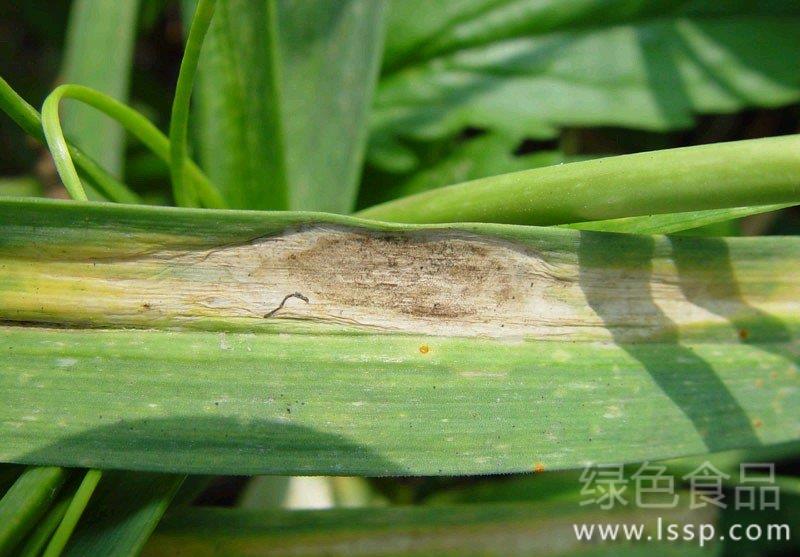
Garlic leaf blight
Leaf blight symptoms:
Garlic leaf blight first appears at the leaf tip, then spreads to the stem and leaves, moving upward from the base of the garlic plant. Garlic leaves turn from green to brown, and finally to yellow. Garlic leaf blight directly destroys chlorophyll, affects photosynthesis, leads to reduced yields and poor economic returns.
Climatic conditions for leaf blight:
There are many causes of garlic leaf blight, and it is greatly affected by weather. The optimum temperature for the occurrence of garlic leaf blight is 15-20°C; frequent rain and high temperatures also make infection easy, with rapid onset and fast spread. (In the Dali area, garlic leaf blight has two peak periods, namely early November to mid-December, and early January to the end of February the following year.) In early-sown garlic fields, the high temperatures of August to September coincide with the peak rainfall period, making the disease easy to develop and turning these fields into sources of infection for properly sown garlic fields. Secondly, waterlogged low-lying fields, garlic fields after rice cultivation, and garlic plots prone to water accumulation suffer severe disease; poor, thin fields with insufficient fertility also suffer severe disease. Conversely, garlic fields with strong water permeability and sufficient fertility are not easily affected or are only mildly affected.
Control measures:
Seed disinfection: Before sowing, soak garlic seed in warm water at 50°C for half an hour, or treat the seed with 0.5% amobam or thiram.
Soil treatment: Mix thiram and quintozene in a 1:1 ratio, using 500-750 grams per mu, dilute with 400 times dry soil and mix evenly, then broadcast over the soil surface before plowing.
Open ditches to drain moisture, and form beds with deep furrows: The sowing period for early-maturing garlic is September to October, which falls in the late rainy season when the soil is damp, making it prone to seed rot, seedling death and induced garlic leaf blight. Especially in fields following rice, ditches must be opened for drainage to reduce soil moisture, which helps emergence and reduces pests, diseases and weeds.
Apply more farmyard manure, build up soil fertility and improve disease resistance: Garlic has few fibrous roots and weak absorption capacity, so it needs loose soil rich in organic matter. Farmyard manure is recommended, along with increased phosphorus and potassium fertilizer. By building up soil fertility, the disease resistance of garlic is improved.
Chemical control: In the early stage of the disease, spray each mu of garlic with 200 grams of 70% mancozeb, then apply once more after 7-10 days; at the peak of the disease, each mu can be treated with 50 grams of 50% iprodione wettable powder at 1500 times dilution or with prochloraz, and broad-spectrum pesticides such as chlorothalonil and mancozeb can also be used for control.