-

Key Techniques for Raising Southern Yew (Taxus wallichiana var. mairei) Seedlings from Seed
The southern yew (Taxus wallichiana var. mairei) combines medicinal, timber and ornamental value, and has high development and utilization value. Because its seed coat has poor permeability and the dormancy period is long, propagation from seed is difficult. But as long as you grasp the biological characteristics of the southern yew and strictly follow the technical procedures, seedling raising is certain to succeed. The specific operations are as follows: 1. Nursery site selection and fertilization The nursery site should preferably be a paddy field with deep soil, loose structure, rich organic matter, good drainage and no exposure to afternoon sun (it must be paddy field soil from that year's harvest). After harvesting the mid-to-late rice, once the soil is dry, plow deeply once
-
What are the methods for determining a dog's age from its teeth
Age determination in dogs The age of a dog is mainly determined by a comprehensive assessment of the growth of the dog's teeth, the tooth cusps and the degree of tooth wear, shape, color, and so on. For ease of reference, the dog's dental stages are introduced as follows: adult dogs have a total of 42 teeth; puppies have a total of 28 teeth; around 20 days - teeth begin to erupt; 4-6 weeks of age - the deciduous incisors are fully grown. At nearly two months of age, all deciduous teeth are fully grown, white, thin and pointed. 2-4 months of age - replacement of the first deciduous incisor
-
How do you prevent the fish skin from breaking when deep-frying fish? Sharing practical methods
If you can't master the essentials when making fried fish at home, you'll often damage the fish skin, which not only burns the fish flesh and affects how tender and fresh it is, but also ruins the fish's appearance. Now, please listen to the experience of the chefs. 1. Before pouring oil into the wok, take a piece of fresh ginger, cut it into thin slices, rub it all over the inner wall of the wok, then add oil and heat. 2. Decide how much oil to use based on the size of the wok and the size of the fish. If the wok is small and the fish is large, it is best to cut it into pieces before frying, and the amount of oil should at least cover the fish.
-
What diseases are fish prone to when suffering from malnutrition?
With the rapid development of factory farming, the use of compound feed is becoming more and more widespread. However, some compound feeds cannot meet the nutritional needs of fish due to raw material problems or formulation technical problems. In particular, feed designed, formulated, processed and produced by small feed mills and farmers themselves may cause nutritional deficiencies or excesses, weakening the fish's constitution and, in severe cases, causing fish death. This article will discuss the causes of fish diseases from the nutritional aspect, in order to guide farmers to take timely measures in breeding production to prevent fish diseases.
-
What are the remedial measures after cotton suffers from waterlogging?
For waterlogged cotton that has been completely submerged for more than 3 days or soaked for more than 7 days, the root system rots and turns yellow, and the terminal leaves wither and die; such cotton seedlings have very little chance of survival and need to be replanted. Within 2 to 3 days after draining the water, if more than 500 surviving cotton plants per mu remain, they should be retained and given intensive management, with intercropping or relay intercropping of soybeans, corn, sesame and other crops; if fewer than 500 surviving cotton plants per mu remain, early replanting with a different crop should be carried out. After cotton is damaged by flooding, the root system is harmed, the taproot and lateral roots turn yellow, and the root tips become water-soaked; the stress-resistance contingency measures of "drain water quickly, loosen the soil early, apply heavy fertilizer, prevent diseases and pests, delay topping, and prune frequently" should be adopted.
-
Jun jujube is a famous jujube variety from Shanxi.
Botanical characteristics: The crown is mostly round-headed, the tree posture is semi-spreading, the trunk is relatively strong, the tree vigor is robust, and the tree body is tall. The main trunk is grayish brown, with longitudinal cracks in the bark, shallow cracks, and easy peeling. The fruiting branch is brownish red, with annual growth of 34-81 cm. The internodes are slightly curved, the lenticels are raised, medium to large and numerous, grayish white. The jujube spur is thick and large, blackish gray, long conical. It usually produces 3-5 bearing shoots, 12-21 cm long, with 6-10 nodes bearing more fruit. The flower quantity is moderately dense, with 1-7 single flowers per inflorescence. The bearing shoot has 9-14 leaves; the leaves
-
Qinghai Successfully Introduces a New Fish Species from Russia
The new fish species introduced from Russia for trial breeding - the whitefish (Coregonus peled) - will be promoted on a large scale in Qinghai Province. The introduction of this "foreign fish" has not only broken the previously rather monotonous aquaculture pattern in the province, but also moved Qinghai's fisheries one step closer to the international market. In order to make the whitefish breeding and cultivation technology more mature in the province's aquaculture sector, Qinghai Province recently invited Alexander Ivanovich Litvinenko, president of the Research Academy of the Siberian Fisheries of the Russian Federation and academician of the Russian Academy of Sciences, to visit Qinghai for inspection and technical analysis, and to provide market information.
-
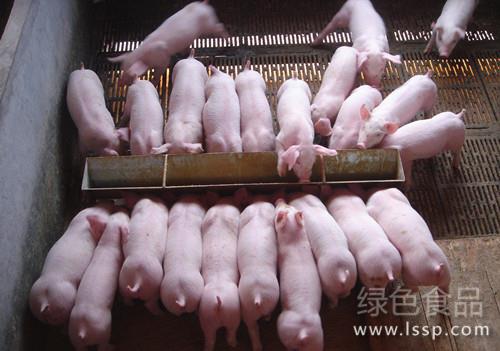
A pig's rectum has prolapsed from the anus and cannot be pushed back in; how should prolapse of the anus be prevented and treated?
How to prevent and treat prolapse of the anus in pigs when the rectum has prolapsed from the anus and cannot be pushed back
-
Cotton narrow row spacing should be widened: The second in a series of recommendations from rural advisory services in 2008
Before sowing, the author visited and investigated some cotton regions in Hebei, Shandong, Shanxi and Shaanxi. In most areas the cotton narrow row spacing is too narrow, seriously hindering the normal growth and development of cotton plants, and a planting reform of the population structure is essential. The pressing task is to widen the narrow row spacing. In order to carry out plastic film mulching of cotton, cotton farmers mostly adopt wide-and-narrow row sowing, sowing two rows at once. Most areas use 90 cm wide plastic film, with the narrow row spacing about 45 cm wide. This is not conducive to the normal extension of fruiting branches and flowering and boll setting, and also causes unbalanced growth on both sides of the cotton root system. Very
-
A Beginner's Guide to Bonsai Appreciation: Learn to Appreciate the Beauty of Bonsai from Scratch
1. Root spread The primary requirement of an excellent bonsai is the root spread. The root spread can be said to be essential and very important in creating the natural tree form of the entire bonsai. Whether the root spread is beautiful or not has a decisive influence on the artistic value and appreciation value of the work. The beautiful root spread referred to in bonsai is the ground-level roots below the trunk base, extending in all directions, sometimes curving, sometimes hidden in the soil, clinging tightly to the ground surface, so as to keep the potted tree from wobbling in any way. The commonly mentioned "four-sided root spread" is precisely the most beautiful root spread. 2. Trunk base Under normal
条件筛选