-

How to tell real fertilizer from fake? A few practical methods
Identifying from the packaging: First, check the markings. A fertilizer packaging bag must indicate the product name, nutrient content, grade, trademark, net weight, standard code, factory name...
-

How to Tell Real Urea from Fake: Learn to Buy Fertilizer with Confidence
How to Tell Real Urea from Fake
-
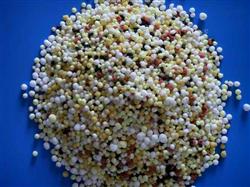
How to tell real fertilizer from fake? Keep these methods in mind
As the saying goes: "Fool the land for a moment, and the land fools you for a year." Once farmers buy and use fake or inferior chemical fertilizers, the losses caused are hard to make up for, which both dampens farmers' enthusiasm and harms farmers' interests. Below are the common methods for identifying real and fake fertilizers: Visual inspection First look at the fertilizer packaging. The fertilizer packaging bag must indicate the product name, nutrient content (grade), trademark, net weight, standard code, factory name and address, contact phone number, production license number and fertilizer registration number, etc. If the above markings are absent or incomplete and the packaging is rather rough, it may be fake or inferior compound fertilizer. Pay special attention to fertilizers whose packaging bag seals show obvious signs of being opened; this phenomenon may indicate adulteration. In addition, pay attention to the production date on the production certificate inside the fertilizer bag. If fertilizer is stored for too long, the total nutrients will be lost. Second, look at the fertilizer's granule size (or crystalline state). High-quality fertilizer has relatively uniform granule size and specific gravity, a smooth surface, and is not prone to absorbing moisture or caking, while fake and inferior fertilizer is exactly the opposite, with uneven granule sizes, a rough surface, high moisture, and easy caking. Third, look at the fertilizer's color. High-quality fertilizer has very uniform color, with no obvious color difference, and the entire granule is uniform from the inside out. Most fake fertilizer, however, is colored on the surface and easily loses its color.
-
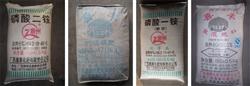
How to tell real phosphate fertilizer from fake? Here are a few practical methods
1. The role of phosphorus: the swelling element (the main nutrient for swelling of crop roots, stems, leaves and fruits), the energy of cell division. Deficiency symptoms: the most direct manifestation is uneven crop sizes in the field, especially obvious in orchards, and now most field crops also show this, with individual plants showing...
-
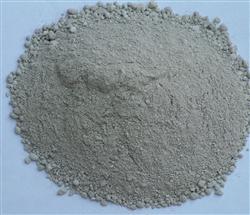
How to tell good phosphate fertilizer from bad? A few practical methods
August to October is the suitable sowing period for autumn crops in the south, such as rapeseed, broad beans, green manure, potatoes and various autumn vegetables, all of which are sown during this period. Experienced farmers know that autumn crops emphasize the application of phosphate fertilizer; this is based on the causal relationship between crops, soil and fertilizer, and is determined by phosphate fertilizer itself...
-
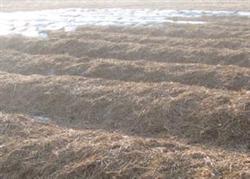
How to Make Organic Fertilizer from Rice Straw and Stalks
Not using chemical fertilizers and pesticides is one of the goals of modern organic agriculture. Through several years of practical experience, the author has found a method of making natural organic fertilizer from original ecological materials. Raw materials: 1500 kg of natural red soil. 150 kg of rice straw, stalks and garbage. Some human excrement and urine or pig, chicken and duck manure. Composting to obtain...
-
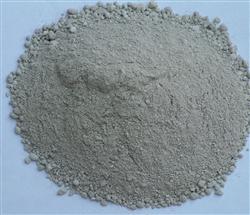
How can you tell good phosphate fertilizer from bad? These methods are simple and practical
The following methods for identifying good and poor phosphate fertilizer are introduced: observe the color and form. Phosphate fertilizer should be grayish white and powdery. If the color is white or yellow, it may be because the acid treatment was incomplete and its phosphorus content is low. Smell the odor. Phosphate fertilizer should have a slight sour odor. If it has no such odor, it means that during production...
-
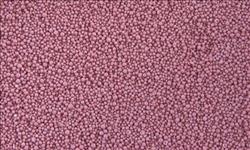
What are the methods for distinguishing potassium sulfate from potassium chloride?
How do you distinguish potassium sulfate from potassium chloride? Please give a detailed introduction. To distinguish potassium sulfate from potassium chloride, you can refer to the following methods: since potassium chloride is lower in price than potassium sulfate and cannot be used on chlorine-sensitive crops, to correctly distinguish and use these two fertilizers, note: first, when buying potash fertilizer, first look with your eyes at the appearance...
-
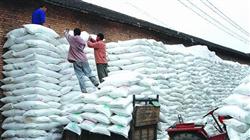
How to tell good fertilizer from bad? Try these methods in everyday situations
How do you usually tell good fertilizer from bad? Here are some methods you can refer to for identifying the quality of fertilizer: 1. Packaging identification method ① Check the markings: Relevant national authorities stipulate that fertilizer packaging bags must indicate the product name, nutrient content, grade, trademark, net weight, standard code, factory name, factory address, production...
-
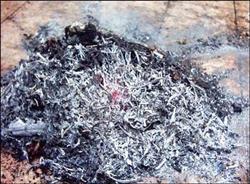
A Detailed Guide to Practical Methods for Making Potassium Fertilizer from Wood Ash at Home
The chemical formula of wood ash is potassium carbonate (K2CO3). Wood ash fertilizer, being the ash left after plants are burned, contains almost all the mineral elements found in plants. In general, wood ash has a relatively high content of potassium oxide; on average, 10 kg of wood ash is equivalent to the effective content of 1 kg of potassium sulfate...
条件筛选