-
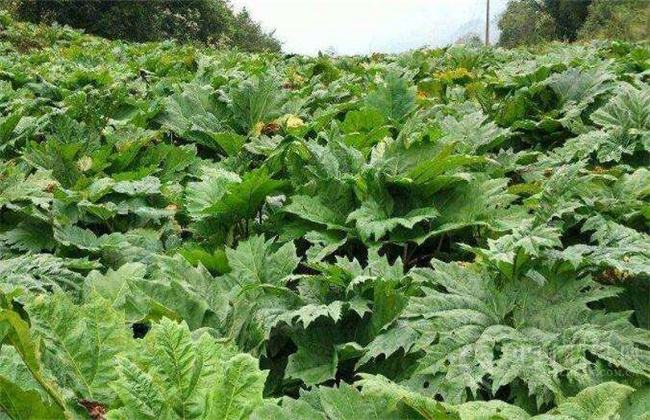
Full Analysis of the Key Techniques for Growing Rhubarb from Seed
Techniques for Growing Rhubarb from Seed
-
How to tell real medicinal herbs from fake ones? A few practical methods
For consumers, the most commonly encountered Chinese medicinal herbs are precious ones like ginseng and bird's nest. 1 Bird's nest strand-pulling method: Bird's nest is an excellent tonic; high-quality bird's nest...
-

Where do good medicinal herbs come from? Yunnan abounds in high-quality medicinal herbs
Good medicinal herbs come from Yunnan
-

A detailed guide to zinnia cultivation techniques, from sowing to care and management
Zinnia cultivation techniques
-

Detailed guide to Gymnadenia conopsea planting techniques, from site selection to field management
Gymnadenia conopsea planting techniques
-

How to Save Seeds from Angelica sinensis? Detailed Key Points of Seed-Saving Technique
Select disease-free plants or a field plot; do not dig them up in the autumn of that year. After seedlings emerge the following year, carry out normal field management. 30~40 days after bolting, that is around mid-August, when the seeds turn from red to pinkish-white, harvest the seeds. Because the seeds do not ripen uniformly, they can be harvested in batches. When harvesting, collect the seeds together with the fruit stalks, tie them into small bundles, dry them in a cool place and thresh them, then store them in a ventilated, dry place. Avoid heat and moisture.
-
Methods for Authenticating Panax Notoginseng: How to Tell Real from Fake
Panax notoginseng, commonly known as Tianqi, is considered best when the roots are large, heavy, smooth on the surface, brown-black, hard in texture, and grayish-green or yellow-green on the cut surface. Among the people, its quality and price are often determined by how many Tianqi rhizome pieces make up each jin: the larger the heads, the better the quality and the higher the price. If 20 Tianqi heads make up 1 jin, this is the best, called the "King of Seven." If 60 to 80 Tianqi heads make up 1 jin, they are called 80-head. If each jin contains more than 300 Tianqi heads, they are called headless grade, the poorest quality. Panax notoginseng tastes slightly bitter when chewed, with no numbing or spicy sensation, and breaks easily. It is easily confused with
-
Intercropping Cultivation Techniques for Licorice in Land Returned from Farmland to Forest
Intercropping licorice in land returned from farmland to forest can both conserve soil and water and increase economic returns, achieving the goal of using the land to support the forest and the forest to support the land, and realizing a "win-win" for both the economy and ecology. Since 2002, Regiment 137 has conducted cultivation trials of intercropping licorice in land returned from farmland. After several years of experimentation and exploration, breakthrough progress has been made. 1. Land selection: Select sandy loam plots of land returned from farmland to forest with relatively low salinity and alkalinity, relatively few field weeds, and good drainage for intercropping licorice. The main tree species planted in the sowing area is wolfberry seedlings; the planting pattern is furrow planting
-
Key Points for Preparatory Work Before Sowing Gastrodia elata Seeds from Sexual Reproduction
The sexual reproduction of Gastrodia elata uses hybrid seedling seeds of Gastrodia elata, which reproduce under the combined action of germination fungi and Armillaria mellea. The growth period of sexually reproduced Gastrodia elata is one and a half years, that is, planted in June-July of the current year and harvested at the end of the second year. Its characteristics are small investment, high success rate, and stable yield, and it is currently a relatively advanced high-yield cultivation technique for Gastrodia elata in China. 1. Selection of planting site. The growth of Gastrodia elata hardly requires sunlight, so it can be planted in basements, air-raid shelters, mountain streams, and other places with certain ventilation conditions, as well as in all idle land such as the edges of courtyards, fields, roads, slopes, forests, and bamboo groves. In areas with relatively high temperatures such as semi-mountainous and plain areas, indoor planting is advocated. For the sexual reproduction of Gastrodia elata, river sand, hemp-bone stone sand, etc. should be used as much as possible. In places where there is really no river sand, sandy loam soil with a sand content of more than 50% should also be selected.
-
How can Gastrodia elata in the Changbai Mountains of Jilin be protected from frost damage in years with little snow?
Wild Gastrodia elata in the Changbai Mountains of Jilin is mostly distributed in high-mountain broad-leaved mixed forests at an altitude of 500-2500 m with cool and humid summers, deep winter snow cover, high ground coverage, a thick layer of fallen branches and leaves, a relatively shallow frozen layer, and loose soil. Wild Gastrodia elata suffers frost damage in winters with little snowfall and a thick frozen layer, and cultivated Gastrodia elata also suffers frost damage when cold-protection measures are inadequate. In both 1981 and 1982, heavy snow sealed the ground, with winter snow 80 cm thick; when the snow was broken open, the frozen layer on the ground was found to be only 3 cm, so neither wild nor cultivated
条件筛选