-
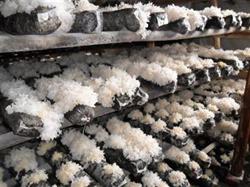
How to reduce contamination in spring cultivation of white fungus
In spring white fungus cultivation, most damage is caused by green mold, with some contamination by Rhizopus and Mucor, while Neurospora is rare. Green mold, Mucor and Rhizopus often occur at the edges of the inoculation holes in the fungus bags, or when the mycelial rings of two holes meet 9-10 days after inoculation, appearing at the front of the mycelium, and also on the bag walls. Green mold also occurs on the fruiting bodies, causing the fungus fronds to rot. Neurospora mostly occurs at the gaps where the bag openings are tied. The main causes of contamination are incomplete sterilization of the substrate bags, lax aseptic technique, holes in the bag film, impure spawn carrying contamination, or contamination of the environment.
-
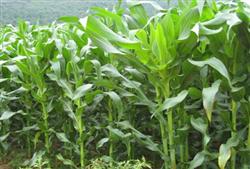
Want high yields from spring-planted corn? Remember these seven criteria when choosing seed
At sowing, apply 30-40 kg of compound fertilizer per mu; the fertilizer should be placed between two rows or two corn plants, at a depth of more than 10 cm, and covered with soil after application. At the 3-leaf stage, water once with dilute manure water, 1500-2000 kg per mu. After thinning at the 5-leaf stage, depending on the amount of base fertilizer and the corn's growth, appropriately apply a top dressing to promote...
-
Spring planting techniques and variety selection methods for sweet corn
Everyone enjoys eating fresh sweet corn. It has a large market capacity, high yield, and good returns. From sowing to harvesting fresh cobs takes about 90 days, so it does not affect the planting of hybrid rice. It is a good grain-and-cash cropping model that can produce a thousand jin of grain and a thousand yuan per mu. Summarizing recent cultivation practices, to grow spring sweet corn well, the following points should be done well: 1....
-
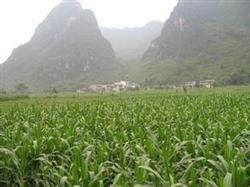
Detailed Explanation of Key Technical Points for Spring Planting of Sweet Corn
Everyone likes to eat fresh sweet corn. It has a large market capacity, high yield, and good economic returns. From sowing to fresh ear harvest is about 90 days, and it does not affect the planting of hybrid rice. It is a good grain-and-cash cropping model with a yield of a thousand jin of grain and a thousand yuan per mu. Summarizing recent cultivation practice, to grow spring sweet corn well, the following points should be grasped: 1....
-

Detailed Explanation of Spring Fresh-Eating Sweet Corn Cultivation Techniques
Selecting good varieties: You can choose the sweet corn varieties Chaotian No. 3 and Chaotian 204, which were promoted and planted last year, or you can trial-plant and demonstrate new varieties such as Dongtian 206. These varieties have high yields, a medium growth period, a fresh grain sugar content of more than 16%, and good taste for fresh eating. Sow at the right time and cultivate strong seedlings. Generally, sowing begins around March 15 to 20, ...
-
Detailed Explanation of Key Cultivation Techniques for Spring Maize and Late Rice
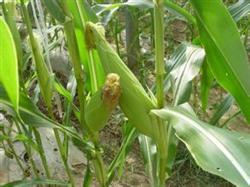
1. Deep planting of milk-stage seedlings, dry management to promote root growth and preserve seedlings. The techniques of raising seedlings in fertilizer balls and soft trays must be implemented, and the technique of deep planting of milk-stage seedlings must be carried out well. According to research, transplanting milk-stage seedlings has the advantages of early vigor and strong seedlings, strong dry matter accumulation capacity, sturdy plants, well-developed root systems, large and numerous ears with heavy grains, and low empty-stalk rate; its early-maturing and high-yielding growth advantage is 6 days earlier than production cultivation, and the seedling recovery period...
-

Detailed Explanation of Key Techniques for High-Yield Spring Corn Sowing
To improve the sowing quality of spring corn in the Hetao Irrigation District, it is essential to actively carry out work such as seed selection, fine land preparation, and timely sowing, which is crucial for ensuring full stands and securing a bumper harvest of spring corn. 1. Select suitable and appropriate superior varieties: Based on heat resources and actual production conditions, the irrigation district should select medium-to-late maturing varieties with a growth period of 120-130 days...
-
Occurrence Patterns and Control Methods of Black-Streaked Dwarf Disease in Spring Corn
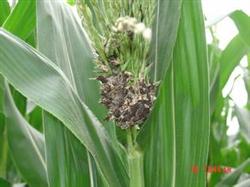
Black-streaked dwarf disease is a viral disease transmitted by the virus-carrying small brown planthopper (Laodelphax striatellus), with the seedling stage being the main susceptible period. Since the 1990s, with changes in planting structure, black-streaked dwarf disease in single-season rice and spring corn in Chun'an County has worsened year by year, especially since 2000, when rice black-streaked dwarf disease has occurred throughout the county,...
-
Detailed Explanation of Key Techniques for High-Yield Cultivation of Spring Bitter Gourd
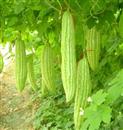
Bitter gourd fruit is rich in vitamin C, higher than tomatoes, and contains a glycoside that gives it a special bitterness, making it one of the popular health vegetables. Planting spring bitter gourd has mild diseases, low cost, high yield, and good returns. The high-yield cultivation techniques for spring bitter gourd mainly include the following four key points: select good varieties and raise seedlings at the right time. Spring planting...
-
Key Points and Precautions for Spring Cultivation of Bitter Gourd
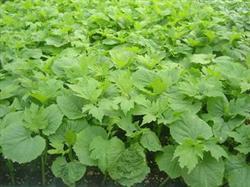
1. Select good varieties and raise seedlings at the right time. For spring planting of bitter gourd, choose high-yielding, highly efficient, high-quality hybrid varieties. For example: Yuefeng No. 1, Bilu No. 2, Lvbaoshi, etc., bred by the Provincial Academy of Agricultural Sciences. Sow and raise seedlings when the daily average temperature is stable above 10°C. Aim to sow early at the right time to extend the vegetative growth period. Use nutritional cups (bags...
条件筛选