-
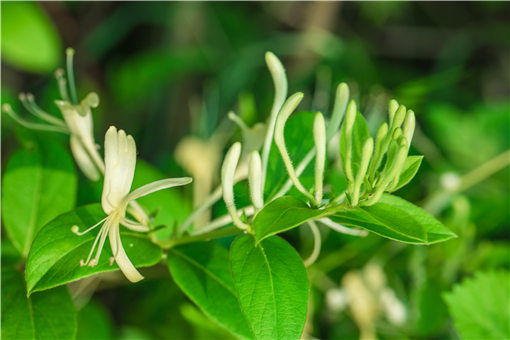
What medicinal herbs to plant this spring for good prospects? These five are recommended
Which medicinal herbs are suitable for planting this spring? These five have great prospects!
-

How to prune goji berry in spring? Detailed technical points
Spring pruning techniques for goji berry
-

Key Technical Points and Methods for Gastrodia elata Management in Winter and Spring
After November, as temperatures gradually drop, the new Gastrodia elata tubers stop growing, their size becomes fixed, and they enter dormancy directly, so low-temperature freezing damage should be prevented. In particular, the arrow tubers (Jianma) are easily damaged by freezing during overwintering. It is best to use arrow tubers for medicinal purposes when harvesting Gastrodia elata in winter, and to sow or store the small tubers (Mima) and white tubers (Baima) in time for spring planting. If they are not harvested in winter, cold-protection measures must be taken before freezing, such as covering with tree leaves to keep warm and prevent freezing, and removing them the following spring to facilitate growth. The temperature should be maintained at 1-5°C, and the humidity should be maintained at 30%.
-
Key Points of Spring Seed Propagation Techniques for Japanese Honeysuckle
Pick the black fruits in January. After picking, pile them at a thickness of 30 cm and let them after-ripen for 5-7 days, then put them in clean water and rub and wash them to remove the peel and pulp, and dry them in a shaded place. Avoid direct sun exposure, then winnow away the shriveled seeds and store them for later use. Seed treatment: before sowing, soak the seeds in warm water at 35-40°C for 24 hours, take them out and mix with 2-3 times their volume of wet sand, cover with plastic film, and place in a warm place to promote sprouting. When the seed cracking rate reaches 50%, they can be sown. Sowing time: spring sowing can be done in early March. Before sowing
-
Detailed Explanation of Key Technical Points for Spring Planting of Pinellia ternata (Dry Pinellia)
In recent years, there has been a large supply-demand gap in the dry Pinellia market, and prices have been rising steadily, so production can be developed according to local conditions. Planting on slopes or intercropping with other crops: Pinellia ternata is a shade-tolerant crop, so gentle slopes can be chosen for planting, or it can be intercropped in young orchards and fields of tall crops such as corn and wheat. Pre-sowing sprouting promotion, mulching during the seedling stage; generally sown from February to April. Before sowing, the seed tubers are sprouted on indoor hotbeds, with the bed temperature maintained at 20°C, and sprouts can emerge after 15 days. Place the seed tubers in a plastic greenhouse with a temperature of 20-25°C for 15 days, and sow after the bud sheaths turn white.
-
How to prune goji berry in spring? Detailed methods and techniques
1. Thinning branches. First, cut off dead branches, diseased and pest-infested branches, damaged branches, thorn branches and crossing branches, then thin out overly dense fruiting branches. When thinning fruiting branches, first remove shaded branches, downward-growing branches and thin weak branches; then remove upward-growing branches and middle branches; if still too dense, thin out the branches on both sides, so that after pruning the distance between fruiting branches is 5-6 cm, and all are plump, strong-fruiting white-stem branches. 2. Handling water sprouts. Water sprouts growing on the drooping parts of scaffold branches are kept as extension branches of the scaffold branches and appropriately cut back, so that the branch vigor and extension direction remain stable; if there is space near the water sprout
-
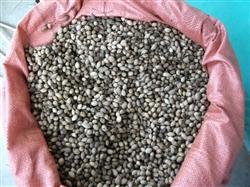
Detailed Explanation of Spring Seed Propagation Methods for Japanese Honeysuckle
Harvest black fruits in January. After harvesting, pile them at a thickness of 30 cm and let them undergo after-ripening for 5-7 days, then put them in clean water and rub and wash away the fruit skin and flesh, and dry them in a shaded place. Avoid direct sunlight, then winnow away the shriveled seeds and store them for later use. Seed treatment: before sowing, soak the seeds in warm water at 35-40°C for 24 hours, take them out and mix with...
-
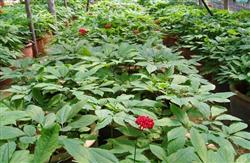
What are the management methods for ginseng in autumn, winter and spring?
How should ginseng be managed in autumn, winter and spring? Please explain the methods. Autumn, winter and spring are the overwintering dormancy period for ginseng, and field management during this stage is an important production step that cannot be ignored. The main tasks are cold protection and moisture conservation, and the key management points are: sealing the beds in autumn, allowing snow cover in winter, and digging drainage ditches in spring. Applying cold-protection soil in autumn...
条件筛选