-
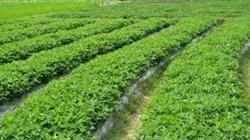
How to plant spring peanuts at a reasonable density? Key technical points on planting density
To achieve high yields of spring peanuts, six technical steps must be mastered: 1. Select excellent varieties. Good seed is the foundation for high yields, so varieties with strong resistance, high yield and high oil content should be used first. In recent years, trials have shown that "three-high" good varieties such as Shanyou 523, Shanyou 71, Yueyou 79, Guihua 21 and Wuyou No. 7. When planting, also...
-
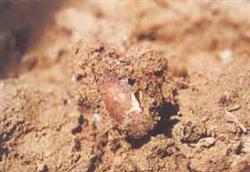
What to Do About Seed Rot in Spring Peanuts? Detailed Explanation of Causes and Control Methods
Symptoms: After spring peanuts are sown and before emergence, seed rot often occurs, with severe cases reaching 10%-20%, causing varying degrees of missing plants and broken rows. Causes: Poor seed quality or improper storage, or overly long storage periods; low-lying geothermal areas, heavy clay soil, poor soil texture, high soil water content, long emergence time for seeds, poorly firmed seedbed preparation, affecting...
-
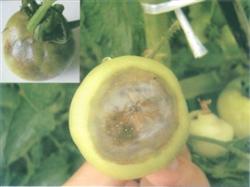
High-Efficiency Intercropping Cultivation Techniques for Spring Cauliflower and Pumpkin
I. Symptoms: 1. Seedlings: infected plants develop dark green water-soaked lesions that spread from the leaves to the main stem, causing the petioles and stems to become thin, dark brown, rotten and collapsed, with the whole plant wilting; when humidity is high, a white mold layer forms on the diseased parts. When the base of the young stem is affected, water-soaked constriction forms, and the seedling wilts or falls over. 2...
-
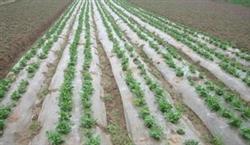
Proper application of the four fertilizers is very important for spring peanuts, and the fertilization method must be mastered
Spring peanut cultivation with plastic film mulching has the advantages of heat preservation, moisture retention, fertilizer retention, improving the soil environment, ensuring uniform and strong seedlings, promoting growth and development, earlier maturity, and increased yield and income. It can usually increase yield by 20%-30%, and increase net income by 50-100 yuan per mu. 1. Fine land preparation and full-layer fertilization for peanut mulching...
-
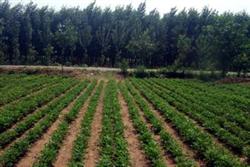
What are the key points of fertilization techniques for spring peanuts?
Calcium can promote pod formation, reduce empty pods and increase the number of filled pods; applying calcareous fertilizer such as lime to acidic soil can also reduce soil acidity and benefit nitrogen fixation by root nodules. Therefore, calcareous fertilizer can improve peanut yield and quality. When peanuts are deficient in calcium, plant growth is slow, roots are thin and seedlings are weak, and the edges and surface of old leaves will show...
-
Spring peanut planting should emphasize increased phosphate fertilizer application
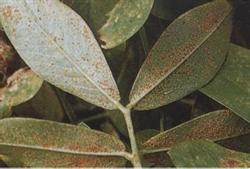
After spring peanut planting this year, there has been more rain, many overcast and rainy days, and high field humidity, which is favorable for the reproduction of peanut rust pathogen. Damage has already begun to occur. If measures are not taken in time to prevent and control it, peanut yield will be seriously affected. Peanut rust mainly damages leaves, but also damages stems, pod stalks and pod shells. Generally...
-
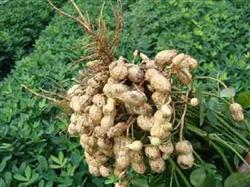
How to Water Spring Peanuts in Drought? A Detailed Guide to Drainage and Waterlogging Prevention
Peanut is an important oil crop in Zoucheng City, with a perennial planting area of 260,000 to 270,000 mu. In order to comprehensively utilize new technologies and new achievements at home and abroad, accelerate the transformation of scientific and technological advances, further explore the laws of high-yield peanut production, fully tap production potential, and increase peanut yields, after more than 30 trials over many years, a high-quality and high-y...
-
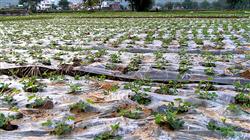
A Complete Analysis of the Key Points of Spring Peanut Cultivation Techniques
I. Fine land preparation and sufficient base fertilizer. For spring peanuts, choose sandy soil with relatively high soil fertility and convenient drainage and irrigation. Apply 150 dan of high-quality farmyard manure, 100 jin of compound fertilizer, and 2 jin of boron fertilizer per mu. After plowing and harrowing to level, open furrows with a bed width of 5.2 chi and a ditch depth of 0.6 chi, ensuring the three ditches are connected. II. Select...
-
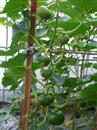
Key points of spring greenhouse cultivation techniques for pumpkin
I. Variety selection: Jinglüli and Jinghongli pumpkins. II. Seedling raising: The suitable sowing period for spring greenhouse pumpkin cultivation is generally mid-February. 1. Preparation before seedling raising: When sowing in early to mid-February, the temperature is relatively low, so electric heating seedbeds must be used for seedling raising. (1) Making the electric heating seedbed: Choose a greenhouse with good light transmission and strong heat preservation as the seedling-raising greenhouse, and build a seedbed inside the greenhouse that is 22.5 m long, 1.5 m wide, and 15 cm deep. After leveling and firming the bottom surface, use 2 heating wires with a power of 1000 watts, lay 12 lines longitudinally on the seedbed bottom, with a line spacing of 8-10 cm, completely cover the heating wires with fine soil, with a soil coverage depth of 1.5-2 cm.
-
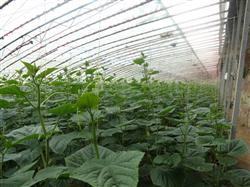
Detailed Explanation of Spring Cauliflower and Pumpkin Intercropping Cultivation Techniques
In spring, when it is time to train the pumpkins grown in arch sheds onto trellises, many vegetable growers choose single-line trellising. Single-line trellising simply means hanging the two vines of the pumpkin side by side, which makes trellising faster. However, because pumpkin leaves are relatively large, the vines already look crowded as soon as the fruit begins to set, which is unfavorable for pumpkin coloration. Vegetable growers in Jitai Town, Shouguang City, Shandong Province...
条件筛选