-
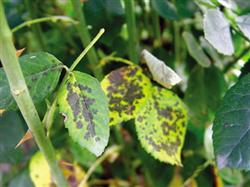
What are the control methods for mole crickets on Chinese roses?
Symptoms: This disease mainly affects the branches and stems of Chinese roses, causing cankerous lesions on the branches and stems. At first, they are small red spots, which then expand and darken, and may turn brown. In the later stage, the lesions become sunken and split longitudinally, black spots may appear on the diseased area, and in humid conditions black spore masses emerge. In severe cases, the lesions girdle the stem, and the branches below the diseased area shrink and die...
-
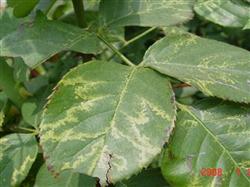
What to Do When Roses Get Rose Mosaic Virus? A Detailed Guide to Prevention and Control Methods
Rose mosaic virus is widely distributed and can cause a decline in the yield and quality of cut roses. Symptoms: Its symptoms vary depending on the rose variety. Rose mosaic virus is characterized by small chlorotic spots, sometimes showing polygonal patterns. The leaf surface around the lesions is often somewhat deformed. Some symptoms appear as rings, ...
-
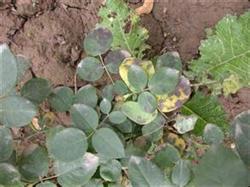
Identification and Control of Gray Mold in Roses
Symptoms: When gray mold occurs on rose leaves at the leaf margins and leaf tips, it first appears as water-soaked light brown spots that are smooth and slightly sunken, then expands and rots. When flower buds are affected, the spots are grayish-black and can prevent the flower from opening; diseased buds turn brown and die. When flowers are affected, some petals turn brown, shrivel and rot. The gray mold fungus also attacks the branch ends after flowers are cut, and the black diseased area can extend several centimeters downward from the infection point. In warm, humid conditions, the gray mold layer can completely cover the infected area.
-
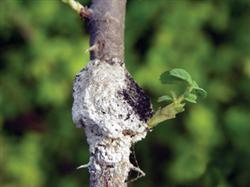
How to prevent and remedy the aging of rose plants?
Symptoms: It mainly harms flowers, leaves and young shoots. At first, water-soaked small spots appear on the petals, or the tips and edges of the petals turn brown, then rapidly expand, wilt and rot, and finally the whole flower turns brown and withers. Under humid conditions, a gray-green mold-like substance can be seen, namely the conidiophores and conidia of the pathogen. Disease characteristics...
-
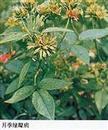
Symptom Identification and Control Methods for Rose Green Petal Disease
Symptoms: The main manifestation is narrow, thin petals that appear green and sepal-like or leaf-like, with the corolla turning green and flowers transforming into leaves; this is the typical symptom of rose green petal disease. Any plant affected by this disease, under the same cultivation and management conditions, will be more dwarfed than ordinary rose varieties, with profuse lateral branching, narrow and small leaves, and the petioles and stems rarely showing red coloration...
-
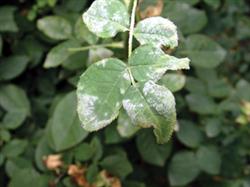
Analysis of the Causes of Dieback in Rose Cuttings
Symptoms: It mainly affects flowers, leaves and young shoots. Initially, water-soaked small spots appear on the petals, or the tips and edges of the petals turn brown, rapidly spreading, wilting and rotting, and finally the whole flower turns brown and withers. Under humid conditions, a gray-green mold-like substance is visible, namely the pathogen's conidiophores and conidia. Disease characteristics...
-

Symptoms and Control Methods of Rose Little Leaf Disease
Symptoms Rose little leaf disease is a common physiological disease of roses in northern China. Little leaf disease occurs on young shoots and young leaves, and is more obvious when roses sprout in spring. Diseased branches sprout later, and after the leaves emerge, the leaves are narrow, small and slender, with leaf margins turning upward, hard and brittle texture, and a relatively pale yellow-green leaf color, with uneven color intensity...
-
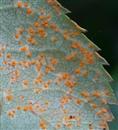
Symptoms, Identification, and Control Methods of Rose Rust
Rose rust occurs in climatically suitable regions around the world. It sometimes causes severe damage to greenhouse-cultivated roses. In addition to roses, the disease can also infect rugosa roses, wild roses, and other flowering plants. Pathogen: Rose rust has many pathogenic species; 10 species have been reported abroad and 3 species are known in China. Among them, Phragmidium montivagum (Pers.) Schlecht. is the main pathogen, belonging to the phylum Basidiomycota, genus Phragmidium.
-
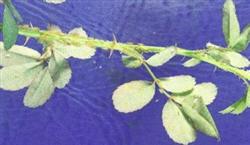
What are the control methods for the rose long-tube aphid?
The rose long-tube aphid belongs to the order Homoptera, family Aphididae. It damages roses, multiflora roses, 'Shijiemei' roses and others with nymphs and adult aphids; the affected young leaves and flower buds stop growing and are difficult to extend, and the honeydew excreted often sticks to the leaves, reducing their ornamental value. 1. Morphological characteristics: The wingless parthenogenetic female is relatively large, body elongated-oval, 4.2 mm long.
-
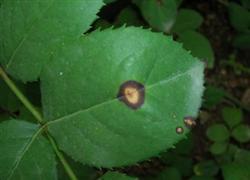
What are the control methods for rose black spot disease?
Black spot disease mostly occurs in the hot and humid rainy season. Purple-brown round lesions appear on the upper surface of the leaves, with slightly ciliate edges, and many small black dots grow in the center. These small black dots are the acervuli of the pathogen. After the small black dots crack open, spores are released, causing the disease to spread, and it can also spread with rainwater. Black spot disease relies on con...
条件筛选