What to Do When Roses Get Rose Mosaic Virus? A Detailed Guide to Prevention and Control Methods
Rose mosaic virus is widely distributed and can cause a decline in the yield and quality of cut roses. Symptoms: Its symptoms vary depending on the rose variety. Rose mosaic virus is characterized by small chlorotic spots, sometimes showing polygonal patterns. The leaf surface around the lesions is often somewhat deformed. Some symptoms appear as rings, ...
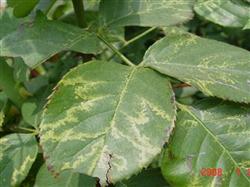
Rose mosaic virus is widely distributed and can cause a decline in the yield and quality of cut roses.
Symptoms: Its symptoms vary depending on the rose variety. Rose mosaic virus is characterized by small chlorotic spots, sometimes showing polygonal patterns. The leaf surface around the lesions is often somewhat deformed. Some symptoms appear as rings, irregular undulating mottling, and oak-leaf-type chlorotic spots, generally with no effect on growth vigor, or with effects ranging from slight to severe dwarfing. Some show mosaic patterns; some develop a pale yellow single-peak curve-shaped chlorotic band at the leaf tip or center, or near the leaf base, or show systemic ringspot or oak-leaf-shaped chlorotic spots; some exhibit yellow veins, leaf deformity, and plant dwarfing.
Pathogen: There are currently 3 known viruses that cause rose mosaic virus in China, namely Rose mosaic virus, Apple mosaic virus, and Arabis mosaic virus. Rose mosaic virus (RMV). The virus particle structure is spherical, about 25 nanometers. The thermal inactivation point is 54°C, the dilution endpoint is 1:125, and the longevity in vitro is 6 hours (at room temperature).
Transmission routes: Rose mosaic virus is transmitted through sap, and also through grafting and aphids. Rose mosaic virus overwinters in the living tissues of the host, and spreads through diseased buds, diseased scions, and diseased rootstock, causing infection during budding and grafting.
Epidemic characteristics: The optimal temperature for symptom development is 15-25°C. Below 15°C, symptoms are very mild. Plants grown in greenhouses are relatively more severely affected than those planted outdoors. Using diseased plants as propagation mother plants is the main reason for the year-by-year increase in the disease.
Prevention and control methods:
1. Avoid using susceptible roses as propagation material. Promptly remove and destroy diseased plants to reduce the source of the virus.
2. Keep at 38°C for one month; heat treatment can inactivate and eliminate the virus.
3. Spray pesticides promptly to control aphids and other virus-transmitting insects.