-
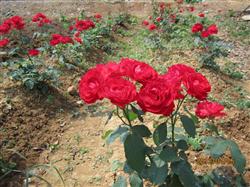
How do you grow roses so they bloom into beautiful flowers?
To make roses grow strong and healthy, even non-professionals can do a lot of helpful work: 1. Find ways to give the roses good light. Photosynthesis is the source of growth and vigor. 2. Always maintain good air circulation around the roses; do not plant them too densely, and do not let weeds affect their air circulation....
-
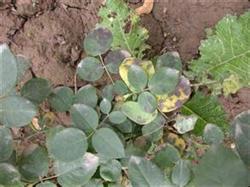
What are the common diseases of roses? A detailed guide to prevention and control methods
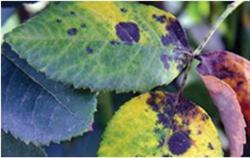
Symptoms: In the early stage of the disease, small purple-brown spots appear on the leaves, which later expand into nearly circular dark brown spots, often with a radial yellow halo at the edges. In severe cases, the spots merge, and the leaves wither and drop, especially in summer and autumn, causing massive leaf loss, leaving the lower part of the plant as bare stems. After young shoots are infected, dark brown streaks appear, slightly sunken, causing the young...
-
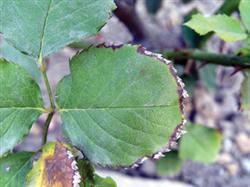
How to Identify and Control Black Spot on Roses? A Detailed Guide to Practical Methods
This disease occurs commonly and causes serious damage, resulting in heavy leaf drop in roses and enormous losses. The pathogen is a fungus of the genus Actinonema in the subphylum Deuteromycotina. 1. Symptom identification: At the initial stage of the disease, brown radial lesions appear on the leaf surface, which gradually expand into circular or nearly circular lesions with a diameter of 4-12 mm; in severe cases...
-
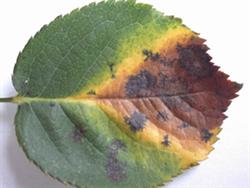
Detailed Explanation of the Onset and Control Measures of Black Spot Disease in Roses
Black spot disease of roses is a worldwide disease with a fairly wide distribution, occurring in every region where roses are cultivated. In recent years, the disease has been severe in many provinces and cities in China. The occurrence of black spot disease can cause premature defoliation of roses, affecting rose growth and the survival rate of stem cuttings, and reducing ornamental and economic value. Black spot disease can also harm Rosa multiflora, rugosa roses and other plants...
-
Occurrence patterns and control methods of black spot disease in Chinese roses
Black spot disease of Chinese roses (Rosa chinensis) and roses is a worldwide disease, occurring commonly across China. It mainly damages the leaves, followed by petioles, leaf tips, young tender shoots and flower stalks. It occurs severely in both southern and northern regions and other areas. The disease causes leaves to turn yellow and drop early. When the disease is severe in summer during April and May and in late summer during August and September, the leaves can drop completely, causing Chinese roses...
-
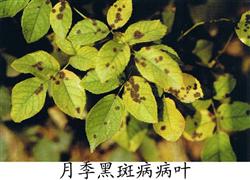
What are the prevention measures for rose black spot disease? Explained clearly in one article
Rose black spot disease is a stubborn disease that harms roses, mainly occurring on leaves, young shoots and flower stalks. The lesions mostly occur on the upper surface of the leaves. On severely affected plants, all the leaves from the lower to the middle part fall off, making the plants grow weakly and susceptible to low-temperature damage to flower buds, affecting flowering the following year, and even causing branches to die. The author...
-
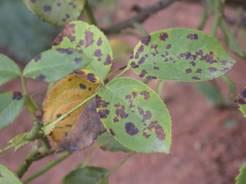
Symptom Identification and Control Methods of Rose Black Spot Disease
The rose black spot fungus attacks leaves, young shoots and flower stalks. When leaves are first infected, small purplish-brown spots appear on the upper surface, gradually expanding into round or irregular dark brown lesions, 1-12 mm in diameter, with radiating edges, which is the characteristic symptom of black spot disease. In the later stage the leaves turn yellow, the center of the lesion becomes grayish-white, and on it are borne...
-
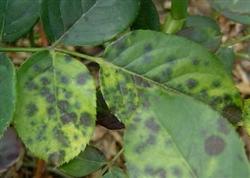
What are the methods for preventing and treating rose diseases
1. Symptoms. Black spot is most prevalent in the Beijing area during summer and autumn. Infected rose leaves develop dark brown spots 3-4 mm in diameter with a yellow halo around them, and the leaves drop off; when the disease is severe, only the stems and infected young shoots remain on the rose plant. 2. Early prevention (1) During the rose seedling stage, prevent the leaves from...
-
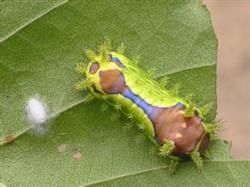
How to control the yellow-tailed moth (Monema flavescens) on roses
Morphological features: The adult is orange-yellow, with filamentous antennae and brownish diagonal lines that converge at a single point on the wingtips. Forming an inverted V shape, the hindwings are grayish-yellow, the legs are brown, and the eggs are flat and oval, pale yellow. The larva is slightly rectangular, somewhat larger at the front end, brightly colored, with a large purple patch on the dorsal side of the body, and a dark brown head. The cocoon is oval. 12m...
-
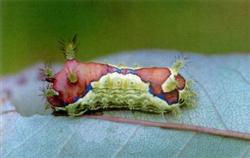
Occurrence Characteristics and Control Methods of the Yellow Slug Moth on Chinese Rose
Morphological characteristics: The adult is orange-yellow, with filiform antennae and brown diagonal lines that meet at a single point at the wingtip, forming an inverted V shape; the hindwings are grayish-yellow, the legs are brown, and the eggs are flat and oval, pale yellow. The larva is roughly rectangular, slightly larger at the front end, brightly colored, with a large purple patch on the back of the body and a dark brown head. The cocoon is oval,. 12m...
条件筛选