Analysis of the Causes of Dieback in Rose Cuttings
Symptoms: It mainly affects flowers, leaves and young shoots. Initially, water-soaked small spots appear on the petals, or the tips and edges of the petals turn brown, rapidly spreading, wilting and rotting, and finally the whole flower turns brown and withers. Under humid conditions, a gray-green mold-like substance is visible, namely the pathogen's conidiophores and conidia. Disease characteristics...
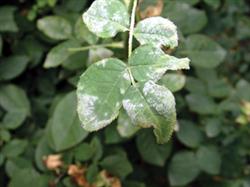 When propagating roses by cuttings, the abnormal phenomenon of young leaves turning brown and the shoot tips turning brown until they die may have the following two causes: first, the cutting medium has poor drainage and aeration and has not been properly disinfected, so the base of the cuttings fails to root in time. Second, during the management after cutting, there is insufficient light, poor ventilation and no attention to disease prevention; under unfavorable external environmental conditions, infection by powdery mildew and leaf spot disease is triggered, causing the new leaves and young shoots to die.
For rose cuttings, softwood cuttings from early May to early July are the most ideal. Choose the current year's shoots after flowering, cut them at the first compound leaf with 5 leaflets; about 5 days after cutting, bend the retained middle and lower branches by hand, and they should be slightly elastic, with a small grayish-white pith in the cut surface, fairly firm tissue, and axillary buds that have not yet sprouted. Cut a section about 10 cm long as the cutting, with about 3 to 4 buds on it, and the lower cut is best made 0.5 cm below a node. On the upper part of the cutting, keep only the 2 cotyledons at the base of each compound leaf and cut off the remaining leaflets; all leaves on the lower end of the cutting that will be inserted into the medium should be cut off completely; then immediately insert the prepared cuttings into a medium mixed half-and-half with vermiculite and river sand, or a medium mixed in equal amounts of alkaline-leached rice husk ash and river sand. The insertion depth of the cuttings is about 1/3 of the cutting length, then soak the flowerpot thoroughly with water and cover it with plastic film to retain moisture. For the first 2 to 3 days, it should be placed in a location with scattered light, then gradually increase the light, maintain a suitable rooting temperature of about 25°C, and roots can form in about 15 to 20 days. After the cuttings have rooted, remove the covering film, give full light, and regularly spray 75% chlorothalonil wettable powder at 500 times dilution to prevent powdery mildew and leaf spot disease. After 1 to 2 months of cultivation, divide and repot them.