-
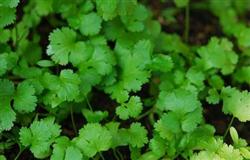
How to manage large-leaf cilantro for high yields? Detailed technical points
Select improved varieties: Japanese large-leaf cilantro, Thai large-leaf cilantro, Beijing large-leaf cilantro. Sow at the right time. For greenhouse cultivation, sow in staggered succession throughout the year, and in summer cover briefly with a shade net. For open-field cultivation, start sowing in late April and harvest in late June. For sowing in May, sow sweet corn as double plants in advance on both sides of the bed at 1 m intervals...
-
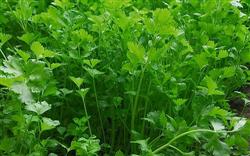
High-Yield Cultivation Techniques for Cilantro with Shade Net Covering in Summer and Autumn
Cilantro prefers a cool climate and cannot tolerate high temperatures; it stops growing when the temperature exceeds 30°C. How can cilantro be grown well in summer? Summers are hot, so when growing cilantro, the first step is to choose good varieties, and heat-tolerant varieties that bolt late and grow quickly should be selected as much as possible, such as Beijing cilantro and North China Large Leaf. When planting, you also need to...
-
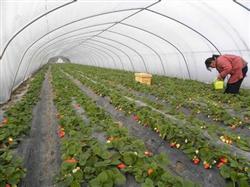
Simple, Easy-to-Learn and Efficient High-Yield Cultivation Techniques for Greenhouse Strawberries
In recent years, with the rapid development of strawberry cultivation, many farmers have not fully mastered strawberry cultivation and management techniques. Continuous cropping and repeated cropping often cause a series of problems such as major outbreaks of certain strawberry diseases, worsening soil-borne diseases, nutrient imbalance and physiological disorders; in strawberry production, slow development after seedling transplanting or excessive seedling growth...
-
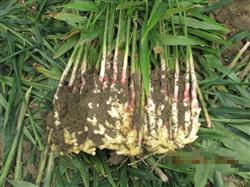
Detailed Explanation of High-Yield Cultivation Techniques for Ginger and Taro
Ginger and taro are traditional specialty agricultural products of our city. In recent years, with the adjustment of crop planting structure and the pull of market prices, the planting area of ginger and taro in our city has also continued to expand, and they have become one of the main specialty agricultural products of our city. At present, ginger and taro in our city have been fully sown and are in the early growth stage...
-
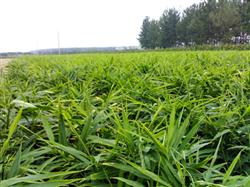
Detailed Explanation of Key Technical Points for High-Yield Ginger Cultivation and Management
I. Pre-planting Preparation 1. Fine land preparation and adequate base fertilizer. It is advisable to choose plots with fertile soil, good irrigation conditions, and no ginger blast disease, and to avoid continuous cropping as much as possible. On the basis of winter plowing, carry out fine land preparation early in spring, so that the soil has no visible or hidden clods and is loose on top and firm below. Increase the application of organic fertilizer, using high-quality chicken manure, disease-free residue-free barnyard manure, cake fertilizer, and plant ash in combination, and broadcast 4 cubic meters of high-quality decomposed chicken manure or 5,000-10,000 kg of high-quality barnyard manure as base fertilizer in combination with land preparation. In high-fertility and high-water plots, open furrows at a row spacing of 60-65 cm for sowing, and apply 100 kg of soybean cake, 50 kg of ternary compound fertilizer, 50 kg of potassium sulfate, 2 kg of zinc fertilizer, and 1 kg of boron fertilizer in the furrows as seed fertilizer.
-
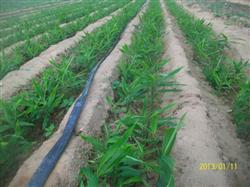
How to skillfully apply nitrogen fertilizer to ginger for high quality and high yield
Reasonably applying suitable varieties of nitrogen fertilizer according to the fertilizer uptake pattern of ginger can greatly increase yield, improve quality, increase the starch, protein and volatile oil content of commercial ginger, and reduce the soluble sugar and cellulose content. Among the four nitrogen fertilizers ammonium bicarbonate, sodium nitrate, urea and ammonium nitrate, sodium nitrate has the...
-
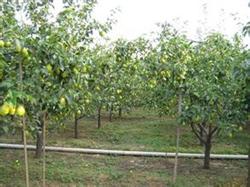
Key Technical Points for High-Yield Fertilization Management of Pear Trees
About one month before pear fruit ripens, the growth rate accelerates, which is called the fruit expansion stage. Topdressing at this time can improve photosynthetic efficiency, promote nutrient accumulation, and benefit fruit expansion and flower bud differentiation. This topdressing can both increase the yield of the current year and lay the foundation for fruiting in the following year. 525 Shandong Fruit Network The fertilization period is generally at the fruit...
-
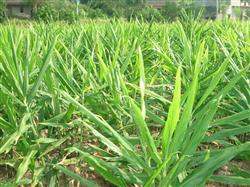
Key Techniques for High-Yield Cultivation of Ginger Intercropped with Watermelon
When planting ginger, apply heavy base fertilizer and increase phosphorus and potassium fertilizer; avoid applying too much nitrogen fertilizer. Apply sufficient base fertilizer, mainly organic fertilizer, with a combination of slow-release and quick-release chemical fertilizers. Base fertilizer generally accounts for 40% of the total fertilizer application. Before sowing, apply 15 kg of imported compound fertilizer plus 50 kg of calcium magnesium phosphate fertilizer per mu as deep-layer base fertilizer. After sowing, use high-quality farmyard manure...
-

The grass you can grow on your roof insulates against sound and prevents leaks, is free of pests and diseases, and is highly effective for treating bites, burns and scalds
Imagine: in the countryside, how beautiful it would be if your roof were completely covered with grass! Some farmers would start to worry about the roof leaking. If you plant Sedum lineare, there is no need to worry at all. Sedum lineare is a succulent...
-
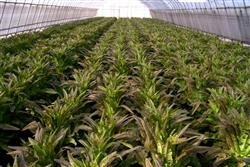
High-Efficiency Multiple Cropping Technology for Greenhouse Lettuce, Thick-Skinned Melon, and Green Garlic
In the multiple cropping model of greenhouse lettuce, thick-skinned melon, and green garlic, lettuce is sown and raised as seedlings in mid-to-late September, transplanted in late October, and harvested in mid-March; thick-skinned melon is sown and raised as seedlings in late February, planted out in late March, and harvested at the end of June and the beginning of July; green garlic is sown in late July and harvested in mid-to-late October. Per mu, the yield can reach 4500-500...
条件筛选