-
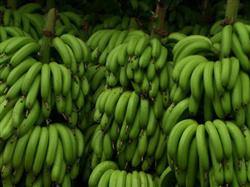
Key Techniques for High-Yield and High-Benefit Banana Cultivation
Banana is an important tropical and subtropical fruit. To achieve high quality, high yield and high benefit in banana production, it is necessary to do a good job in banana orchard selection, use certified varieties and strong seedlings, plant at the right time, establish a rational close planting density, manage fertilizer and water well, remove and retain suckers at the right time, carry out scientific de-budding and bagging, implement integrated pest and disease control, and do good work in wind protection and cold protection...
-
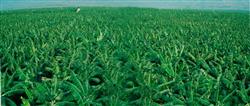
Detailed Explanation of Key Points of Fertilization Techniques for High-Quality Banana Cultivation
1. Suitable planting density. Planting 120-130 plants per mu is relatively suitable, yielding higher production and better commercial appearance quality of bananas. 2. Suitable seedling age and planting time. The suitable planting seedling age is 9-10 leaves, and the planting period is mid-to-late March. In this way, the buds can emerge uniformly in mid-to-late October and be harvested in January-February of the following year....
-
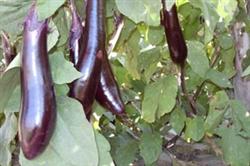
Key Points of High-Yield Cultivation Techniques for Eggplant in Early Spring Open-Field Cultivation
1. Variety selection: Choose varieties with good marketability, strong cold and disease resistance, high and stable yield, tolerance to low light, suitability for dense planting and excellent quality, such as Hangqie No. 1, Yinqie No. 1, etc. 2. Seedling raising and cultivation methods: Open-field eggplant generally adopts improved solar hotbed with electric heating wire for seedling raising, sowing and raising seedlings in mid to late January, planting in April...
-
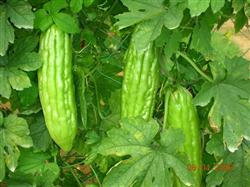
Remember these four key points for high-yield spring bitter melon cultivation
Bitter melon fruit is rich in vitamin C, higher than tomatoes, and contains a glycoside that gives it a distinctive bitter taste, making it one of the popular health vegetables. Growing spring bitter melon means mild diseases, low costs, high yields, and good returns. The high-yield cultivation techniques for spring bitter melon mainly include the following four key points: select good varieties, raise seedlings at the right time. Spring planting...
-
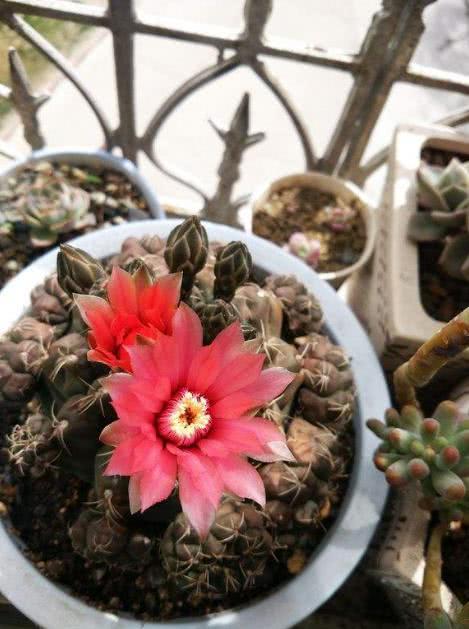
Feiyuhua needs no watering and is easy to keep alive; grown as a bonsai it blooms in a profusion that is highly ornamental
The editor tells everyone every day that you should care about your flowers, pay attention to your flowers, and be sure to treat them a little better, otherwise they very likely will not bloom, but the plant the editor brings you today is different from the previous ones...
-
Key Technical Points for Pollution-Free High-Efficiency Cultivation of Bitter Melon in Greenhouses
I. Grafting Seedling Cultivation 1. Seedling Raising Methods The rootstock is raised in nutrient pots, and the scion is raised in sterile soil to strictly prevent soil-borne disease infection. Soak bitter melon seeds in a 75% thiophanate-methyl 800-fold solution for 12 hours, then soak in clean water for 16 hours, remove and air-dry, bury in sand for 2 days of warm germination; disinfect the nutrient soil with quintozene...
-
Methods for High-Yield Cowpeas: Scientific Planting and Management Are Key
1. Cowpeas can be direct-sown or raised as seedlings and transplanted; generally, seedling raising and transplanting is practiced, as it can appropriately suppress vegetative growth and promote reproductive growth. Choose good land, apply base fertilizer, water appropriately, use disease-resistant seeds, and treat the seeds with New High Lipid Film. This can repel underground pests and diseases, isolate viral infections, and does not affect germination...
-
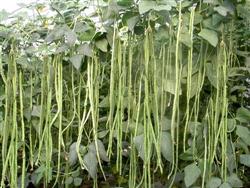
Detailed Explanation of Key Points for High-Yield Cultivation Techniques of Yardlong Beans
Yardlong beans are also called cowpeas, and their habits and cultivation techniques are similar to those of common beans. Although yardlong beans have root nodule bacteria that can fix nitrogen, they are harvested for their tender pods and tender seeds, so nitrogen supply is indispensable, especially in the early stage. Nitrogen:phosphorus:potassium = 1:0.6:1.3. The trace element molybdenum can promote vigorous development of root nodules. Legumes are also very sensitive to trace elements such as boron and zinc, so on the basis of reasonable application of N, P, and K fertilizers, spraying boron fertilizer, molybdenum fertilizer, and zinc fertilizer has a certain effect on increasing the pod-setting rate of legumes, promoting full seeds, and improving yield. Below is a discussion of high-yield cultivation techniques for yardlong beans. Because the root system has aerobic root nodule bacteria, this is also one of the reasons why common beans can tolerate short-term soil drought and have poor moisture tolerance.
-
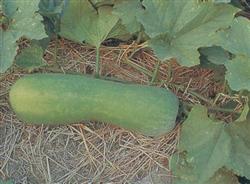
Key Points of Fertilization Management Techniques for High-Quality and High-Yield Winter Melon
In Dongxia Town, Qingzhou City, the overwintering summer melons grown by vegetable farmers are mainly cultivated in a creeping manner, similar to watermelon cultivation, which results in the melon body touching the ground, uneven light exposure on the top and bottom of the winter melon, the part touching the ground turning white or developing yellow-brown necrotic spots, or even rotting, while the upper part of the melon exposed to direct sunlight is prone to sunburn...
-
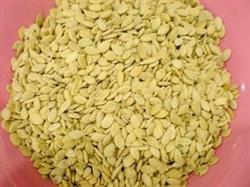
How to plant winter melon seeds for high yield? All the technical points are here
1. Sow at the right time and grow strong seedlings. The sowing period should be arranged according to local climate conditions, aiming to set fruit before the rainy season arrives. Generally sow from late February to mid-March, use a heat-retaining seedbed and nutritional pots for seedling raising, with about 100g of seed per mu. Before sowing, soak the seeds in hot water at about 70 degrees, let them cool naturally, soak for 1...
条件筛选