-
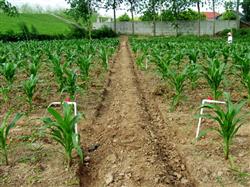
Detailed Explanation of Ginger and Corn Intercropping Cultivation Techniques
Ginger is a shade-tolerant crop, and high temperatures and strong light are unfavorable for its growth. Intercropping tall-stalk crops in a ginger field can make full use of the three-dimensional space of tall and short crops, provide shade for ginger, improve light energy utilization, and also improve land utilization, increasing yield per unit area. It does not affect the yield and quality of ginger, and can also...
-
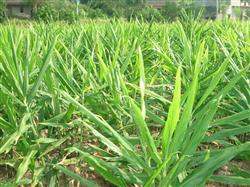
Key Techniques for High-Yield Cultivation of Ginger Intercropped with Watermelon
When planting ginger, apply heavy base fertilizer and increase phosphorus and potassium fertilizer; avoid applying too much nitrogen fertilizer. Apply sufficient base fertilizer, mainly organic fertilizer, with a combination of slow-release and quick-release chemical fertilizers. Base fertilizer generally accounts for 40% of the total fertilizer application. Before sowing, apply 15 kg of imported compound fertilizer plus 50 kg of calcium magnesium phosphate fertilizer per mu as deep-layer base fertilizer. After sowing, use high-quality farmyard manure...
-
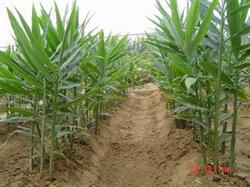
Detailed Explanation of Key Techniques for Softening Cultivation of Ginger
Softening cultivation of ginger is based on normal cultivation; first, increase the planting density and strengthen measures for shading and cooling, thereby achieving the goal of harvesting tender ginger. In this way, tender ginger not only has a long harvest period and high yield, but is also fresh, tender and crisp, with thin skin and sparse nodes, and has a fragrant ginger flavor when eaten. 1. Site selection: Choose...
-
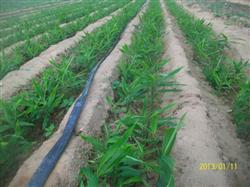
How to skillfully apply nitrogen fertilizer to ginger for high quality and high yield
Reasonably applying suitable varieties of nitrogen fertilizer according to the fertilizer uptake pattern of ginger can greatly increase yield, improve quality, increase the starch, protein and volatile oil content of commercial ginger, and reduce the soluble sugar and cellulose content. Among the four nitrogen fertilizers ammonium bicarbonate, sodium nitrate, urea and ammonium nitrate, sodium nitrate has the...
-
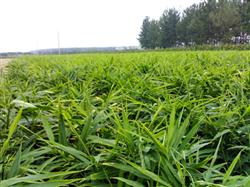
Detailed Explanation of Key Technical Points for High-Yield Ginger Cultivation and Management
I. Pre-planting Preparation 1. Fine land preparation and adequate base fertilizer. It is advisable to choose plots with fertile soil, good irrigation conditions, and no ginger blast disease, and to avoid continuous cropping as much as possible. On the basis of winter plowing, carry out fine land preparation early in spring, so that the soil has no visible or hidden clods and is loose on top and firm below. Increase the application of organic fertilizer, using high-quality chicken manure, disease-free residue-free barnyard manure, cake fertilizer, and plant ash in combination, and broadcast 4 cubic meters of high-quality decomposed chicken manure or 5,000-10,000 kg of high-quality barnyard manure as base fertilizer in combination with land preparation. In high-fertility and high-water plots, open furrows at a row spacing of 60-65 cm for sowing, and apply 100 kg of soybean cake, 50 kg of ternary compound fertilizer, 50 kg of potassium sulfate, 2 kg of zinc fertilizer, and 1 kg of boron fertilizer in the furrows as seed fertilizer.
-
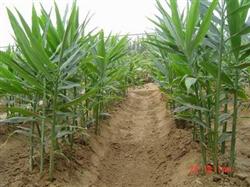
The method of cultivating ginger with plastic film mulching is simple and easy to learn.
Ginger softening cultivation is based on normal ginger cultivation, increasing planting density and strengthening shade and cooling measures, so as to achieve the goal of harvesting tender ginger. The tender ginger harvested in this way not only has a long harvest period and high yield, but is also fresh, tender and crisp, with thin skin and sparse nodes, and has a fresh aromatic ginger flavor when eaten. 1. Land selection and seed selection. Choose 3 consecutive...
-
Key Technical Points and Precautions for Ginger Management After Autumn
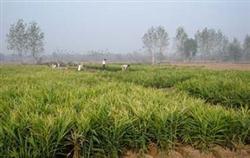
After the Beginning of Autumn, the weather turns cool and the ginger rhizomes enter a period of rapid expansion. During this period, the demand for water and fertilizer is relatively high, and pests and diseases occur more frequently, making it a critical time for control. Strengthening mid-to-late stage management of ginger is very important. The relevant technical points are introduced below. 1. Watering: Ginger prefers moist conditions and is not drought-tolerant...
-
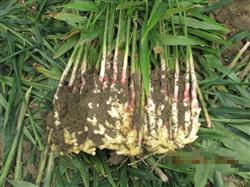
Detailed Explanation of High-Yield Cultivation Techniques for Ginger and Taro
Ginger and taro are traditional specialty agricultural products of our city. In recent years, with the adjustment of crop planting structure and the pull of market prices, the planting area of ginger and taro in our city has also continued to expand, and they have become one of the main specialty agricultural products of our city. At present, ginger and taro in our city have been fully sown and are in the early growth stage...
-
How to manage ginger after autumn? Key measures to master
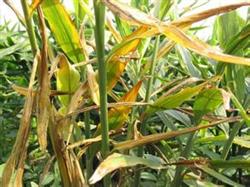
In recent years, as the continuous cropping area of ginger has kept expanding, coupled with extensive field management, ginger diseases have also shown a worsening trend. Especially since June, due to high temperatures and frequent rain, ginger stem base rot is most likely to occur. Recently, Li Hualiang and Lu Changlei of Renzhao Town, Pingdu City, Shandong Province, and Yu Wanquan of Ju County and others reported that in their area...
-
How to control ginger stem base rot with good results
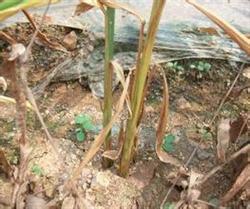
In recent years, as the area of continuous ginger cropping has continued to expand, combined with extensive field management, ginger diseases have also shown a worsening trend, especially since June, when high temperatures and frequent rain make ginger stem base rot most likely to occur. Recently, Li Hualiang and Lu Changlei of Renzhao Town, Pingdu City, Shandong Province, and Yu Wanquan of Ju County, among others, reported that in their area...
条件筛选