How to manage ginger after autumn? Key measures to master
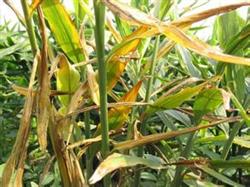
In recent years, as the continuous cropping area of ginger has kept expanding, coupled with extensive field management, ginger diseases have also shown a worsening trend. Especially since June, due to high temperatures and frequent rain, ginger stem base rot is most likely to occur. Recently, Li Hualiang and Lu Changlei of Renzhao Town, Pingdu City, Shandong Province, and Yu Wanquan of Ju County and others reported that in their area...
 After the Beginning of Autumn, the weather turns cool and the ginger rhizomes enter a period of rapid expansion. During this period, the demand for water and fertilizer is relatively high, pests and diseases occur more frequently, and it is also a critical period for control. Strengthening mid-to-late stage management of ginger is very important.
1. Watering Ginger prefers moisture and is not drought-tolerant, so it is generally best to water after shallow hoeing and loosening the soil. If drought occurs, the number of waterings should be increased, but flooding irrigation must not be used. September is the best period for ginger rhizome growth, and the demand for water is noticeably higher. Watering once every 7-10 days is appropriate, and water less when there is more rain. Watering should preferably be done in the morning and evening, and try not to water at noon.
2. Topdressing Ginger has a long growth period and requires a large amount of fertilizer. In particular, the fertilizer demand in the mid-to-late stage of ginger accounts for about 80% of the entire growth period. After the Beginning of Autumn, topdressing should be carried out in combination with removing weeds or dismantling the ginger shed, requiring sufficient fertilizer, comprehensive nutrition, and lasting fertilizer effect. Open a fertilization trench on the north side of the ginger seedlings 15-20 cm from the base of the plant, with a depth of 10 cm, and apply 70-80 kg of decomposed bean cake or 500 kg of decomposed dried manure per mu, plus 30 kg of nitrogen, phosphorus, and potassium ternary compound fertilizer. Evenly spread the fertilizer in the fertilization trench, cover with soil, and then water thoroughly. In early to mid-September, when the ginger seedlings have 6-8 branches, this is the period of rapid rhizome expansion, and topdressing can be carried out as appropriate according to plant growth. Generally, apply 4-5 kg of nitrogen fertilizer per mu, and promptly supplement trace fertilizers such as boron fertilizer and zinc fertilizer along with topdressing. Generally, apply 2 kg of zinc sulfate and 1 kg of borax per mu, which plays a very important role in improving the yield and quality of ginger.
3. Hilling Because ginger rhizome growth requires a dark environmental condition, hilling should be done multiple times. Generally, hill 2-3 times. The first hilling is carried out during the major topdressing, with soil covering the farmyard manure as appropriate, not too thick, so as not to affect growth. After 15 days, carry out the second and third hilling. The final hilling should form a ridge, and the rhizomes must not be exposed above the ground.