-
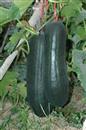
Detailed Explanation of Key Cultivation and Management Techniques for Black-Skinned Winter Melon
The black-skinned winter melon plant has strong growth vigor and wide adaptability, and can be planted in most parts of the country. The fruit is resistant to storage and transport, with dense flesh and excellent quality. It is deeply welcomed by consumers. Characteristics: 1. The plant has strong growth vigor, with vines 450-500 cm long; 2. The first female flower is borne on the 18th-22nd node of the main vine, and thereafter one female flower is borne every 4-5 nodes...
-
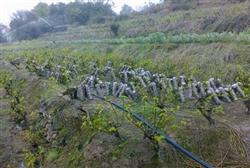
Key Technical Points for Interplanting Black Wood Ear Mushrooms in Orchards
Interplanting black wood ear mushrooms in trenches between orchard rows yields fairly considerable returns. The main cultivation methods are as follows: 1. Stock culture substrate formula: sawdust 78%, rice bran (or wheat bran) 5%, corncob 15%, gypsum powder 1%, sucrose 1%. Weigh each ingredient according to the above proportions. First dissolve the sucrose in water, then stir the sawdust, rice bran and gypsum powder...
-
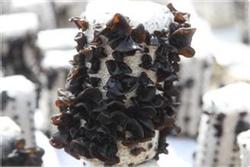
Detailed Explanation of Key Points for High-Yield Bag Cultivation of Black Wood Ear Mushroom
In recent years, substitute material cultivation of black wood ear mushroom has become one of the paths for northern farmers to escape poverty and achieve prosperity. Farmers in Yushu County, utilizing agricultural by-product resources such as miscellaneous wood sawdust and corn cobs, cultivated 800,000 bags of black wood ear mushroom. About 60 days after inoculation, harvesting began. Each bag could yield 30-50 grams of dried wood ear mushroom. That year, 28,000 kilograms of black wood ear mushroom were harvested, with income reaching 1.2...
-
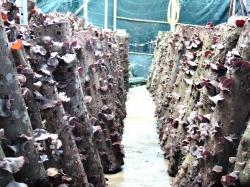
Detailed Explanation of High-Yield Cultivation Techniques for Black Fungus (Wood Ear Mushroom) on Logs
A sandy ground or flat grassland with a warm microclimate, small temperature difference between day and night, humid air, ample sunshine, close to a water source but not prone to waterlogging; for larger-scale cultivation sites, transportation conditions should also be considered. Low-lying plots with poor drainage are not suitable for use as mushroom yards. 1.2 Establishment of the mushroom yard: After selecting the site, it is necessary to...
-
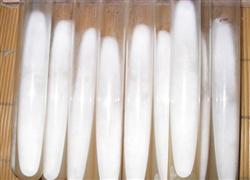
Detailed Explanation of Key Techniques for Identifying Wood Ear (Black Fungus) Spawn
1. The mycelium is snow-white, like fine wool, with short, neat, dense, thick and strong strands, advancing evenly side by side until it reaches the bottom of the bottle, growing uniformly and consistently from top to bottom, coming out in a solid block when dug out, not loose. 2. After the mycelium has fully colonized the bottle, brown water droplets are generally secreted on the surface of the mycelium. Later, pale yellow...
-
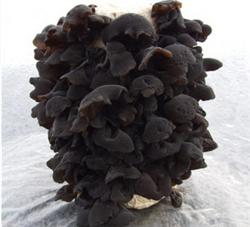
Detailed Explanation of Black Fungus (Wood Ear Mushroom) Spawn Production Techniques and Key Operation Points
After 2-3 flushes of fruiting bodies are harvested in hanging-bag cultivation of black fungus, the bags no longer produce mushrooms due to nutrient depletion and lack of moisture inside the bags, and are generally discarded as waste. In practice, we adopt a sand-covering treatment, and through multiple trials it has been shown that 3-4 more flushes can still be harvested. The specific method is as follows: remove the spawn bags, soak the spawn substrate in nutrient solution for one day to allow it to absorb sufficient water (nutrient...
-
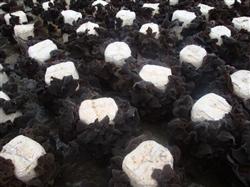
A Detailed Guide to Black Fungus Planting Methods and Cultivation Techniques
I. Overview Black fungus is also called wood ear, smooth wood ear, or cloud ear. Taxonomically it belongs to the class Basidiomycetes, order Tremellales, family Auriculariaceae, genus Auricularia. There are about a dozen or more species in this genus, such as black fungus, hairy wood ear, wrinkled wood ear, felt-cap wood ear, horny wood ear, shield-shaped wood ear, and so on. Among these wood ears, only the smooth wood ear has a plump, tender texture and a delicious flavor...
-
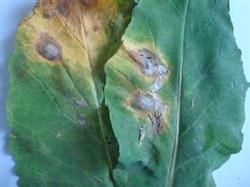
What are the control methods for rape black spot disease?
I. Symptoms Rape black spot disease mainly damages leaves, leaf stalks, stems and siliques. When leaves are infected, brown round spots appear initially, slightly concentric-ringed, sometimes with a yellow halo around them, and under high humidity black mold-like growth forms on them. When the leaf stalk and the junction between the leaf stalk and the main stem are infected, elliptical to spindle-shaped ring-patterned spots form, encircling...
-
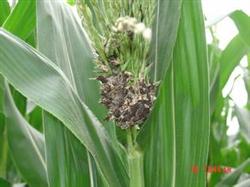
Occurrence Patterns and Control Methods of Black-Streaked Dwarf Disease in Spring Corn
Black-streaked dwarf disease is a viral disease transmitted by the virus-carrying small brown planthopper (Laodelphax striatellus), with the seedling stage being the main susceptible period. Since the 1990s, with changes in planting structure, black-streaked dwarf disease in single-season rice and spring corn in Chun'an County has worsened year by year, especially since 2000, when rice black-streaked dwarf disease has occurred throughout the county,...
-
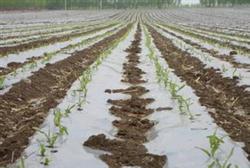
High-Yield Film-Mulched Cultivation Techniques for Spring-Sown Black Corn
Black corn is a new corn variety introduced in recent years and is a precious health-promoting fruit-and-vegetable food. After two consecutive years of trial planting, it achieved a yield of 400-500 kg per 667 sq m. Black corn has a plant height of 120 cm, a growth period of 90 days, a ear length of 12-15 cm, and a single ear weight of 150 g. It is suitable for sale as fresh-eating corn cobs, and can also...
条件筛选