Detailed Explanation of Key Cultivation and Management Techniques for Black-Skinned Winter Melon
The black-skinned winter melon plant has strong growth vigor and wide adaptability, and can be planted in most parts of the country. The fruit is resistant to storage and transport, with dense flesh and excellent quality. It is deeply welcomed by consumers. Characteristics: 1. The plant has strong growth vigor, with vines 450-500 cm long; 2. The first female flower is borne on the 18th-22nd node of the main vine, and thereafter one female flower is borne every 4-5 nodes...
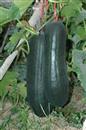
The black-skinned winter melon plant has strong growth vigor and wide adaptability, and can be planted in most parts of the country. The fruit is resistant to storage and transport, with dense flesh and excellent quality. It is deeply welcomed by consumers.
Characteristics: 1. The plant has strong growth vigor, with vines 450-500 cm long; 2. The first female flower is borne on the 18th-22nd node of the main vine, and thereafter one female flower is borne every 4-5 nodes; 3. The fruit is oblong, 60 cm long and 23 cm in transverse diameter; 4. The skin is dark green, the flesh is 6.5 cm thick and pure white in color; 5. The maximum single fruit weight exceeds 25 kg.
Characteristics: 1. Late-maturing, with a growth period of 170-180 days when planted in spring and 120-130 days when planted in summer and autumn; 2. Strong adaptability, can be planted in spring, summer and autumn; 3. Dense flesh, resistant to storage and transport, excellent quality.
Cultivation Key Points
1. Sowing and seedling raising: In the Guangzhou area, sowing can be done from December to September of the following year. After soaking and sprouting the seeds, they can be sown directly or raised as seedlings for transplanting. As the temperature is relatively low in early spring, cold protection measures such as small plastic film arched tunnels should be used for seedling raising.
2. Land preparation and site selection: It is best to choose loam soil where the previous crop was not a cucurbit crop, with good drainage and rich in organic matter. The bed width including the ditch is 1.8 m, and the beds are best oriented north-south rather than east-west.
3. Transplanting and field planting: When the winter melon seedlings grow to 2-3 true leaves, they can be transplanted. The planting spacing is 0.7-0.9 m, in single rows.
4. Fertilizer and water management: Winter melon has a high fertilizer requirement, so sufficient base fertilizer should be applied. Apply 1500-2000 kg of organic fertilizer per mu, 30 kg of peanut bran, and 30 kg of superphosphate. After field planting, apply a light nitrogen fertilizer every 7-10 days. When the fruit reaches 4-5 kg in weight after fruit setting, heavy topdressing should be applied, with 40-50 kg of compound fertilizer per mu and 60-80 jin of peanut bran. Fertilization for winter melon should be frequent and light, lighter in the early stage and heavier later, with a reasonable combination of nitrogen, phosphorus and potassium. After the vines are trained onto the trellis, the water requirement gradually increases, so attention should be paid to frequent watering to keep the soil moist. During rainy periods, care should be taken to drain accumulated water to prevent waterlogging.
5. Vine training and vine pressing: Generally, the main vine bears the fruit, so side vines should be removed promptly, and all side vines should be removed before fruit setting. Before training onto the trellis, coil the main vine within the plant spacing range, pressing the vine once every 3-4 nodes, for a total of 3-4 times, to promote the formation of adventitious roots. When about 16-18 nodes are reached, guide the vine onto the trellis. Trellis methods include the shed trellis method and the drum trellis with dragon-root method. In the Guangzhou area, the drum trellis with dragon-root method is mostly used, using 3 or 4 bamboo poles to form a drum trellis, with a horizontal bamboo pole on top serving as the dragon root. When the winter melon grows to 3-4 kg, use a hemp rope to loop around the fruit stalk and tie it to the dragon root of the drum trellis. After fruit setting, pinch off the growing tip at around the 15th node.
6. Fruit selection: Generally, the 3rd-4th female flower on the main vine at the 25th-32nd node is the most ideal for retaining fruit. If unfavorable weather occurs during the fruit-setting period, artificial pollination should be carried out early in the morning to increase the fruit-setting rate, and fruit-setting promoters can also be used to increase the fruit-setting rate. The young fruit selected should be cylindrical, uniform in size from top to bottom, with broad and flat shoulders, a round and blunt top, and covered all over with fine hairs and a glossy surface. After selecting the fruit, the remaining young fruits should be removed promptly.
7. Pest and disease control: The main diseases are Fusarium wilt, phytophthora blight and anthracnose, which can be controlled with chlorothalonil at 800 times dilution, thiophanate at 500-800 times dilution, and Lüheng No. 1 at 3000 times dilution. The main pest is thrips, which occurs most severely at temperatures of 25-30°C from late July to September. Control should involve timely spraying of cartap at 1000 times dilution, dimehypo at 400-800 times dilution, 20% acetamiprid emulsifiable concentrate at 6000-10000 times dilution, and 5% high-efficiency Dagongchen at 2500-3000 times dilution, spraying once every 5-7 days, with pesticides used alternately.
8. Harvesting: Generally, about 60 days after fruit setting, when the skin becomes glossy and dark green, it can be harvested. If harvested too late, the nutrients in the fruit will undergo transformation, affecting eating quality, so timely harvesting should be carried out.