-
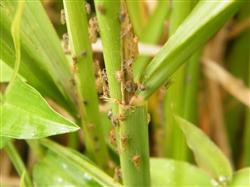
How to control brown planthopper? Detailed explanation of control methods and techniques
How to control brown planthopper? Please introduce methods for controlling brown planthopper. It is necessary to apply insecticides at the appropriate time according to the occurrence and damage characteristics of brown planthopper, and select suitable insecticides according to the occurrence situation of brown planthopper in the field. Occurrence and damage characteristics of brown planthopper: brown planthopper is a migratory pest and cannot overwinter north of 25°N...
-
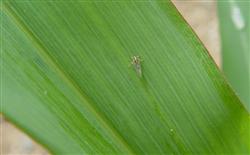
What pesticide should be used to control the small brown planthopper at the rice heading stage?
What pesticide should be used to spray for the small brown planthopper at the rice heading stage? Please note that for the small brown planthopper at the rice heading stage, the following pesticides can be used for reference: the small brown planthopper not only transmits the virus and causes viral diseases such as rice stripe virus disease, but also concentrates on the panicles to cause damage during the heading stage of late rice. The experiment set up per mu with 40% chlorpyrifos emulsifiable concentrate 100 ml, 10% nitenpyram aqueous solution 3...
-
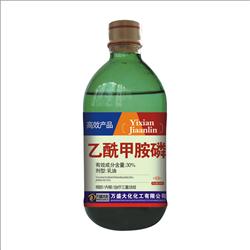
How effective is acephate? A comprehensive analysis of its insecticidal efficacy
How effective is acephate? Please introduce its characteristics. Acephate is a systemic insecticide with stomach-poison and contact action, and it can also kill eggs; it has a certain fumigant effect and is a slow-acting insecticide. If mixed with pesticides such as carbaryl and dimethoate, it has a synergistic effect and can extend the residual effectiveness period. Scope of application: suitable...
-
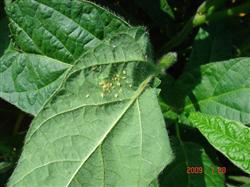
How to control soybean aphids? Growers, master these methods
How to control aphids when growing soybeans? Please provide methods. The soybean aphid is an important pest damaging soybeans. In recent years, due to the occurrence of warm winters and neglect of control, soybean aphid damage has worsened year by year. According to forecasts, soybean aphids will occur at a moderate-to-heavy level in 2000. For this reason, we have preliminarily studied their occurrence patterns and...
-
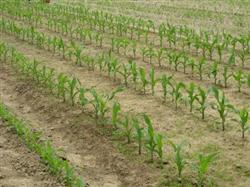
How to control weeds during summer corn cultivation?
How to control weeds when planting summer corn? Please explain the methods. When planting summer corn, you can refer to the following two methods for weed control: The "seal-and-kill" weed control technique involves a "seal-and-kill" treatment before corn emergence after sowing, that is, using a soil-sealing herbicide in combination with a non-selective herbicide, so that a single application achieves both soil sealing and killing of visible weeds...
-
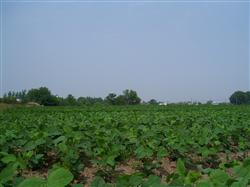
How to Control Weeds in Cotton Fields? A Detailed Guide to Practical Methods
How to control weeds in cotton fields? Please provide methods. When growing cotton, you can refer to the following methods for weed control: (1) Types and occurrence characteristics of cotton field weeds. China is one of the world's major cotton-producing countries, with Shandong, Hebei, Henan, Jiangsu, Hubei, Xinjiang, and Anhui among the main cotton regions. Cotton field weeds mainly include 2...
-
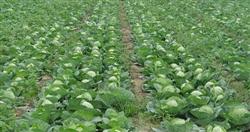
What herbicide is good for weed control when growing vegetables?
What herbicide should be used for weed control when growing vegetables? Please advise. When growing vegetables, you can refer to the following methods for weed control: 1. Chemical weed control in cruciferous vegetable fields. For cruciferous vegetables such as Chinese cabbage, radish, cabbage, cauliflower and rapeseed, choose 48% trifluralin emulsifiable concentrate after sowing and before emergence or at transplanting, at 100 ml per mu (667 sq m, the same below), or 33% pendimethalin emulsifiable concentrate at 75 ml per mu.
-
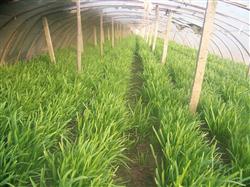
How do you clear weeds when growing chives in a greenhouse?
How do you remove weeds when growing chives in a greenhouse? Please explain the methods. Greenhouse chives are generally grown by transplanting; after transplanting, you can use pendimethalin, prometryn, or butralin for soil-closure treatment. Apply 150 ml of 330 g/L emulsifiable concentrate per mu or 200-250 ml of 48% butralin emulsifiable concentrate, add 50 kg of water...
-
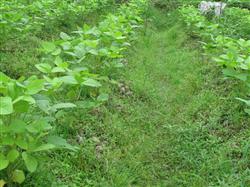
How can weeds be effectively controlled during soybean cultivation?
How do you control weeds when growing soybeans? The main weeds in soybean cultivation include monocotyledonous weeds such as crabgrass, barnyardgrass, goosegrass, lambsquarters, and foxtail; broadleaf weeds include redroot pigweed, eclipta, copperleaf, and velvetleaf. Summer soybeans are usually sown in June, during the hot and rainy season, when weeds emerge aggressively, at high density, grow vigorously, and are diverse in species, easily forming a weed infestation. Generally, weeds begin to emerge 5 days after soybean sowing, and the entire weed emergence period lasts about 60 days, which is extremely unfavorable for high soybean yields. For this reason, accurately mastering chemical weed control techniques is crucial.
-
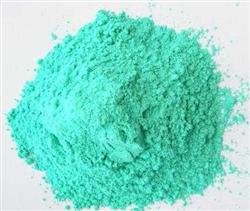
How should copper-based fungicides be used correctly?
How are copper-based fungicides used? Please explain the methods. The role of copper-based fungicides: copper-based fungicides can control both fungal diseases and bacterial diseases; they have both a protective and preventive effect, and at the same time a therapeutic and eradicative effect; they can heal wounds, sterilize and reduce inflammation, and can also treat certain skin diseases; at the same time...
条件筛选