How effective is acephate? A comprehensive analysis of its insecticidal efficacy
How effective is acephate? Please introduce its characteristics. Acephate is a systemic insecticide with stomach-poison and contact action, and it can also kill eggs; it has a certain fumigant effect and is a slow-acting insecticide. If mixed with pesticides such as carbaryl and dimethoate, it has a synergistic effect and can extend the residual effectiveness period. Scope of application: suitable...
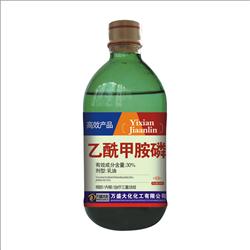
How effective is acephate? Please introduce
Characteristics: Acephate is a systemic insecticide with stomach-poison and contact action, and it can also kill eggs; it has a certain fumigant effect and is a slow-acting insecticide. If mixed with pesticides such as carbaryl and dimethoate, it has a synergistic effect and can extend the residual effectiveness period.
Scope of application: Suitable for crops such as vegetables, tea trees, tobacco, fruit trees, cotton, rice, wheat and rapeseed, to control a variety of chewing and piercing-sucking mouthpart pests and pest mites.
Methods of use
1. Control of vegetable pests
(l) Control of cotton bollworm, cotton red spider mite, tobacco budworm, cutworm and striped flea beetle, etc. Spray with a 500-800 times dilution of 30% or 40% emulsifiable concentrate.
(2) To control imported cabbageworm, spray with an 800-1000 times dilution of 40% emulsifiable concentrate about 1 week after the peak of adult egg-laying. To control diamondback moth and tobacco cutworm, use the same spray concentration as above.
(3) To control wild rice stem borers (striped stem borer and purple stem borer species), cabbage aphid, melon aphid, etc., spray with a 1000-1500 times dilution of 40% emulsifiable concentrate.
(4) To control greenhouse whitefly, spray with 40% emulsifiable concentrate to control nymphs and adults (basically ineffective against eggs and pupae), spraying once every 5-6 days. Carry out continuous control 2-3 times.
2. Control of rice pests
Rice leaf roller: use 125--225 milliliters of 30% emulsifiable concentrate per mu, dilute with 60--75 kilograms of water and spray.
Rice planthopper: use 80-150 milliliters of 30% emulsifiable concentrate per mu, dilute with 60--75 kilograms of water and spray.
3. Control of cotton pests
Cotton aphid: use 100--150 milliliters of 30% emulsifiable concentrate per mu, dilute with 50--75 kilograms of water and spray.
For cotton bollworm, mainly control the second and third generation larvae in cotton fields; for pink bollworm, the appropriate control period is the peak moth emergence and egg-laying period of each generation. The dosage for both is 150--200 milliliters of 30% emulsifiable concentrate per mu, diluted with 75--100 kilograms of water for conventional spraying.
4. Control of fruit tree pests
For peach fruit borer and pear fruit borer, carry out control at the peak of adult egg-laying, using a 500-750 times dilution of 30% emulsifiable concentrate in water and spraying evenly.
For citrus scale insects, the best control effect is achieved at the first-instar nymph stage, using a 300-600 times dilution of 30% emulsifiable concentrate and spraying evenly.
5. Control of dryland grain crop pests: To control armyworm on corn and wheat, before the 3rd-instar larvae stage, use 120-240 milliliters of 30% emulsifiable concentrate per mu, dilute with 75--100 kilograms of water and spray.
6. Control of tobacco pests: To control tobacco budworm, at the 3rd-instar larvae stage, use 100--200 milliliters of 30% emulsifiable concentrate per mu, dilute with 50--100 kilograms of water and spray.
Precautions
1. Do not mix with alkaline substances.
2. It is not suitable for use on mulberry or tea trees.
3. This product is flammable; pay attention to fire prevention during transport and storage, and keep away from ignition sources.
4. The poisoning symptoms are typical organophosphate poisoning symptoms, but the course of the disease lasts relatively long and cholinesterase recovery is relatively slow. Use atropine or pralidoxime for detoxification, provide symptomatic treatment, and take care to prevent cerebral edema.
5. Common bean is sensitive to acephate and this product should not be used on it.
6. This product is flammable; during transport and storage it should be kept away from ignition sources, and attention should be paid to fire prevention.
7. If crystals are found to have precipitated, shake well and immerse the bottle in hot water, then use after dissolution.
8. The aqueous solution of this product can be absorbed by the human body through the skin; when using it, take care not to contaminate the skin.
Click to get more insecticide application techniques
Click to get more pesticide application techniques