What herbicide is good for weed control when growing vegetables?
What herbicide should be used for weed control when growing vegetables? Please advise. When growing vegetables, you can refer to the following methods for weed control: 1. Chemical weed control in cruciferous vegetable fields. For cruciferous vegetables such as Chinese cabbage, radish, cabbage, cauliflower and rapeseed, choose 48% trifluralin emulsifiable concentrate after sowing and before emergence or at transplanting, at 100 ml per mu (667 sq m, the same below), or 33% pendimethalin emulsifiable concentrate at 75 ml per mu.
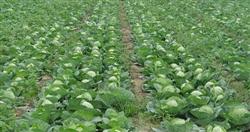
What herbicide should be used for weed control when growing vegetables? Please advise.
When growing vegetables, you can refer to the following methods for weed control:
1. Chemical weed control in cruciferous vegetable fields
For cruciferous vegetables such as Chinese cabbage, radish, cabbage, cauliflower and rapeseed, choose 48% trifluralin emulsifiable concentrate after sowing and before emergence or at transplanting, at 100 ml per mu (667 sq m, the same below), or 33% pendimethalin emulsifiable concentrate at 75 ml per mu.
Because radish and Chinese cabbage are sown when temperatures are high and emerge quickly, treat the surface soil immediately after sowing and before emergence, without incorporating into the soil; the effect is best when combined with watering. Do not use trifluralin before sowing.
2. Weed control in carrot fields
Before sowing or after sowing and before emergence, use 48% trifluralin emulsifiable concentrate at 125-150 ml per mu; or 33% pendimethalin emulsifiable concentrate at 100-125 ml per mu; or 40% prometryn wettable powder at 70-100 g per mu. For trifluralin and pendimethalin, whether applied before or after sowing, the soil must be incorporated 3-5 cm after application. Use prometryn after sowing and before emergence.
3. Weed control in celery fields
At the seedling and transplanting stages, choose 33% pendimethalin emulsifiable concentrate at 100 ml; or trifluralin at 125-150 ml; or 40% prometryn wettable powder at 100 g per mu. Apply as a soil treatment after sowing and before emergence. A low dose can also be used as a foliar treatment when weeds have 1 leaf and 1 heart to 2 leaves and 1 heart. Pendimethalin or trifluralin can also be used before or after transplanting in combination with intertillage; no soil incorporation is needed before transplanting. When using, note that the prometryn dose should not be too large. If there are many dicotyledonous broadleaf weeds after transplanting, prometryn can be used, but it is only safe to use after the transplanted celery has recovered from transplanting. It should not be too late either, as the effect is poor once the weeds are large.
4. Weed control in coriander fields
At the seedling stage, choose 48% trifluralin emulsifiable concentrate at 125-150 ml per mu. Apply before or after sowing and incorporate shallowly into the soil. Coriander has poor herbicide tolerance, so it is best not to carry out foliar treatment at the seedling stage.
5. Weed control in small scallion fields
At the seedling stage, use 40% prometryn wettable powder at 60-75 g per mu; or 33% pendimethalin emulsifiable concentrate at 100-125 ml per mu, alone or in combination. When mixed, halve the dosage of each of the two agents, and apply as a soil treatment after sowing and before emergence. For summer scallions, a low dose may be used when temperatures are high, but the dosage must be strictly controlled to avoid herbicide damage.
6. Weed control in chive fields
For chives in seedling beds, the following agents can be used: 40% prometryn wettable powder at 70-90 g per mu; 33% pendimethalin emulsifiable concentrate at 100-150 ml per mu. Apply at the seedling stage after chive sowing, diluted with 40-50 kg of water, and spray to treat the soil.
For transplanted chives or chives grown from root stubble, 48% trifluralin emulsifiable concentrate can be used at 50-200 ml per mu; or 33% pendimethalin emulsifiable concentrate at 125-150 ml per mu diluted with 50 kg of water, used before or after transplanting, with use after planting being preferable. Incorporate shallowly into the soil after application. For chives grown from root stubble, remove large weeds from the field after each harvest.
Click for moreVegetable growing techniques
Click for moreHerbicide application techniques
Click for more pesticide application techniques