How to control brown planthopper? Detailed explanation of control methods and techniques
How to control brown planthopper? Please introduce methods for controlling brown planthopper. It is necessary to apply insecticides at the appropriate time according to the occurrence and damage characteristics of brown planthopper, and select suitable insecticides according to the occurrence situation of brown planthopper in the field. Occurrence and damage characteristics of brown planthopper: brown planthopper is a migratory pest and cannot overwinter north of 25°N...
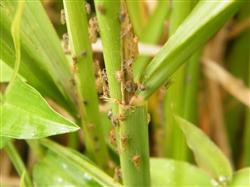
How to control brown planthopper? Please introduce methods
To control brown planthopper, it is necessary to apply insecticides at the appropriate time according to the occurrence and damage characteristics of brown planthopper, and select suitable insecticides according to the occurrence situation of brown planthopper in the field.
Occurrence and damage characteristics of brown planthopper
Brown planthopper is a migratory pest and cannot overwinter north of 25°N. Each year, its sources migrate generation by generation, region by region, in a seasonal north-south back-and-forth movement. In the Yangtze River Basin and areas to its north, brown planthopper generally migrates in after mid-to-late July, usually forming migration peaks when air currents such as typhoons pass from south to north. The number of adults migrating in each time is generally not particularly large and is not enough to immediately cause major damage to rice in the field. Usually, after reproducing for one or two generations in the field, the insect population increases to a level sufficient to cause damage to rice.
Brown planthopper adults have a long lifespan, a long oviposition period, and high fecundity. At temperatures of 26-28°C, female adults of brown planthopper live for 15-25 days (at 17-20°C, they can live as long as 30 days). Female adults have strong reproductive capacity, each laying 150-500 eggs, and the more productive ones (especially brachypterous adults) can lay 700-1000 eggs; the peak oviposition period lasts 10-15 days, and the oviposition peak usually lasts 6-10 days. The time required for brown planthopper eggs to complete embryonic development is closely related to air temperature. At constant temperatures of 15°C, 20°C, 25°C, 28°C, and 29°C, the egg periods are 26.7, 15.2, 8.2, 7.9, and 8.5 days respectively. The egg period is shortest at around 28°C, and the hatching rate is highest at around 25°C.
The damage caused by brown planthopper to rice can be divided into two aspects: direct damage and indirect damage. Direct damage is directly sucking rice sap, consuming nutrients from the rice plant, and causing damage. Both adults and nymphs of brown planthopper can suck sap and damage rice. Indirect damage is that when adults and nymphs of brown planthopper pierce and suck sap and when females lay eggs, they pierce the leaf sheaths and leaves with their ovipositors, making rice plants prone to water loss and infection by sheath blight, and their excrement breeds mold, which also affects rice photosynthesis and respiration.
Control strategy for brown planthopper
Rice has strong tolerance to brown planthopper. When a small amount of brown planthopper occurs in the field, rice growth and development are not affected, and generally no insecticide control is needed. However, in years when brown planthopper outbreaks occur, if the amount of brown planthopper migrating in during the early and middle stages of rice growth is large, insecticides should be applied early to control the pest population in the field and reduce the pest base. For preventive insecticide application in the early and middle stages of rice growth, the control threshold is generally 500 insects per 100 hills, that is, about 5 insects per hill. In the middle and late stages of rice growth, the control threshold for brown planthopper is generally 1000 insects per 100 hills, that is, about 10 insects per hill. For rice not far from harvest, tissues such as stems have aged and have strong tolerance to brown planthopper damage, so the control threshold can be appropriately raised.
For insecticide control of brown planthopper, application is generally required at the peak hatching period of nymphs. When applied at this time, the pest occurrence is concentrated and the pest is highly sensitive to the insecticide. Even with short-residual insecticides such as dichlorvos and chlorpyrifos, a large number of brown planthoppers in the field can be killed, reducing the population to a level insufficient to cause damage.
Suitable insecticides for controlling brown planthopper
At present, the main insecticides suitable for controlling rice brown planthopper include organophosphorus pesticides such as dichlorvos and chlorpyrifos, carbamate pesticides such as isoprocarb, fenobucarb, and carbosulfan, as well as pesticides such as buprofezin, pymetrozine, imidaclothiz, and thiamethoxam. Different types of pesticides each have their own insecticidal characteristics, and only rational use can achieve good control results and save labor and cost.
One experiment is very meaningful. According to an experiment by the Plant Protection Institute of Jinhua Academy of Agricultural Sciences in Zhejiang Province, 25% buprofezin wettable powder was used to control brown planthopper at 25 g, 35 g, and 50 g per mu, all diluted with 60 kg of water for spraying, with 200 mL of 80% dichlorvos emulsifiable concentrate per mu and a blank as controls. Before application, the field was irrigated to a depth of 3 cm, and thereafter water was irrigated whenever it naturally drained dry. The average control effects 7 days after application were 97%, 97%, 98.7%, and 88.5% respectively; the control effects 14 days after application were 99.1%, 99.6%, 99.8%, and 18.2% respectively; the control effects 28 days after application were 98.1%, 98.4%, 99.3%, and -15% respectively. At 28 days after application, nearly two-thirds of the plants in the blank control area had withered stems due to brown planthopper damage, while the rice in each Youlede treatment remained green-stemmed and yellow-ripened. Through this experiment, it was not only proved that buprofezin has a long residual period and good effect in controlling brown planthopper, but the researchers also found during the experiment that using dichlorvos to control brown planthopper has a short residual period and also kills natural enemies of brown planthopper such as spiders and Cyrtorhinus lividipennis, causing heavier occurrence of brown planthopper in the field. At 28 days after application, negative control efficacy appeared, that is, the occurrence degree of brown planthopper was even heavier than without application.
Advantages of systemic long-residual insecticides
Brown planthopper adults and nymphs mostly gather near the base of rice clumps to feed and generally do not move much. In the middle and late stages of rice growth, rice grows densely in the field, and spray application makes it difficult to deliver the pesticide to the base of the rice plants. Using highly systemic pesticides such as buprofezin, after spraying, the pesticide can be absorbed by rice stems and leaves and transported to the feeding sites of brown planthopper, killing the pests.
According to the article "Systemic Translocation and Degradation Dynamics of Buprofezin in Rice" written by Dai Zhiyi and others: rice has strong systemic absorption of buprofezin. After spraying buprofezin, rice leaves can absorb the pesticide and transport it to the base of the rice, killing brown planthoppers damaging the base of the rice; rice leaf sheaths and stems can absorb and enrich buprofezin in field water, with a concentration factor of 24-35. Using different application methods such as coarse spraying, pouring, mist spraying, and spreading poisoned soil (with a water layer), the differences in control efficacy against brown planthopper were not significant. Buprofezin has strong contact action against brown planthopper. When applied by spraying and mist spraying, the pest mortality in the short term after application is relatively high. In addition, when there is a water layer in the field, the leaf sheaths and stems of rice plants can absorb the pesticide that falls on the field surface during application. After application by different methods, the control effect is better when there is a water layer in the field. Therefore, rice fields should maintain an appropriate water layer during the application period to improve the field control efficacy of buprofezin and prolong its effectiveness period.
Systemic long-residual insecticides suitable for controlling brown planthopper
It is understood that among the pesticides currently suitable for controlling brown planthopper, those with systemic activity and long residual period include, in addition to buprofezin, pymetrozine, imidaclothiz, thiamethoxam, carbosulfan, and others. These pesticides each have their own characteristics and can be flexibly selected in production.
Buprofezin, also known as Youlede, Pushi Ling, Daoshi Ling, and Daoshi Jing, is a benzoylurea insecticide with strong contact action and also stomach poison action. Its mechanism of action is to inhibit chitin synthesis in insects and interfere with metabolism, causing nymph molting abnormalities or wing deformities and slow death. Generally, effects can only be seen 3-7 days after application. It has no direct killing power against adults, but can shorten their lifespan, reduce egg production, and most eggs laid are infertile eggs; even if larvae hatch, they soon die. It has good control effects on planthoppers, leafhoppers, whiteflies, and scale insects, with an effectiveness period of more than 30 days. It is relatively safe for natural enemies and has good overall effects. This pesticide has been used in production for many years, and brown planthopper has developed some resistance to it.
Pymetrozine, also known as pyrazinone, has contact action against pests and also systemic activity. It can be translocated in the xylem and phloem within plants. It is suitable for controlling most Homoptera pests, especially pests in Aphididae, Aleyrodidae, Cicadellidae, and Delphacidae, and acts slowly. 25% pymetrozine wettable powder used to control rice planthopper has a recommended dosage of 16-20 g per mu.
Imidaclothiz is a new neonicotinoid insecticide with contact, stomach poison, and systemic actions. It is broad-spectrum, highly effective, low-toxicity, and low-residue. Pests are not prone to developing resistance, and it is safe for humans, livestock, plants, and natural enemies.
25% thiamethoxam water-dispersible granules are a second-generation neonicotinoid insecticide. Its mechanism of action is similar to first-generation neonicotinoid insecticides such as imidacloprid, but it has higher activity. It has stomach poison, contact, and systemic actions, acts quickly, and has a long residual period. It has good control efficacy against piercing-sucking pests such as aphids, planthoppers, leafhoppers, and whiteflies.
Carbosulfan has contact and stomach poison actions against insects (it is metabolized in the insect body into the toxic carbofuran to exert insecticidal action), is systemic, has a long residual period, and has a broad insecticidal spectrum. Currently registered pesticides for controlling rice planthopper include Jinhaonian and others.
Although the above pesticides have systemic activity, when used to control brown planthopper in the middle and late stages of rice growth, the water volume should still be sufficient. Generally, the water volume per mu for spraying with a manual sprayer should reach 50-60 kg, and the water volume per mu for spraying with a mist sprayer should reach 40 kg. In this way, the spray liquid can be sprayed to the base of the rice plants to exert its contact action, and at the same time it is conducive to rice absorbing the pesticide and exerting its efficacy. After application, the field should generally maintain a water layer for 2-3 days.
Imidacloprid, which was widely used in production in earlier years, also has systemic, contact, and stomach poison actions and was once the nemesis of rice planthoppers. However, due to years of abuse, pests such as brown planthopper and small brown planthopper have developed very strong resistance to it, and the control effect has declined significantly. Brown planthopper in particular has extremely strong resistance to this pesticide and is no longer suitable for controlling brown planthopper. Although organophosphorus pesticides such as omethoate and acephate also have relatively strong systemic activity, and chlorpyrifos also has some systemic activity, these pesticides have relatively low insecticidal activity, and brown planthopper has strong resistance to them. The relatively low amount of pesticide in plant tissues is not enough to produce much killing effect on brown planthopper. In production, the contact and fumigant actions of pesticides such as chlorpyrifos are mainly used to kill brown planthopper.
Fast-acting short-residual insecticides can be selected as appropriate
Pesticides such as dichlorvos, chlorpyrifos, isoprocarb, and fenobucarb have good fast-killing activity against brown planthopper. After application, adults and nymphs of brown planthopper in the field will die in large numbers, but these pesticides have short residual periods, as short as only 1-2 days, or at most only about 7 days, and have no sustained control effect on nymphs hatching after the effective period or newly immigrated adults. In production, using these pesticides alone often requires multiple applications, with high labor input and high control costs.
Systemic pesticides with long residual periods such as buprofezin have high control efficacy when used at the peak of young nymphs of brown planthopper or slightly earlier. However, when used when the field population density of brown planthopper is high, especially when there are many late-instar nymphs and adults sufficient to damage rice, such pesticides act slowly. In particular, pesticides such as buprofezin have poor direct killing effect on late-instar nymphs and adults of brown planthopper, and need to be used in combination with fast-acting pesticides to achieve rapid and good insecticidal and yield-protecting effects.
For rice with a relatively short time before harvest, considering the issue of pesticide residues, it is advisable, when the temperature is relatively high, to drain the field water and use dichlorvos, which has good fumigant effect and short residual period, mixed with poisoned soil and broadcast to fumigate the pests.
Click to get more insecticide application techniques
Click to get more pesticide application techniques