How can weeds be effectively controlled during soybean cultivation?
How do you control weeds when growing soybeans? The main weeds in soybean cultivation include monocotyledonous weeds such as crabgrass, barnyardgrass, goosegrass, lambsquarters, and foxtail; broadleaf weeds include redroot pigweed, eclipta, copperleaf, and velvetleaf. Summer soybeans are usually sown in June, during the hot and rainy season, when weeds emerge aggressively, at high density, grow vigorously, and are diverse in species, easily forming a weed infestation. Generally, weeds begin to emerge 5 days after soybean sowing, and the entire weed emergence period lasts about 60 days, which is extremely unfavorable for high soybean yields. For this reason, accurately mastering chemical weed control techniques is crucial.
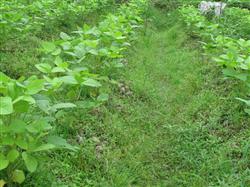
How do you control weeds when growing soybeans? Please explain
The main weeds in soybean cultivation include monocotyledonous weeds such as crabgrass, barnyardgrass, goosegrass, lambsquarters, and foxtail; broadleaf weeds include redroot pigweed, eclipta, copperleaf, and velvetleaf. Summer soybeans are usually sown in June, during the hot and rainy season, when weeds emerge aggressively, at high density, grow vigorously, and are diverse in species, easily forming a weed infestation. Generally, weeds begin to emerge 5 days after soybean sowing, and the entire weed emergence period lasts about 60 days, which is extremely unfavorable for high soybean yields. For this reason, accurately mastering chemical weed control techniques is crucial.
I. Key technical points for control at the sowing stage
1. For plots dominated by grass weeds, within 3 days after sowing and before soybean emergence, apply 100-150 ml of 50% acetochlor emulsifiable concentrate per mu, or 150-200 ml of 33% pendimethalin emulsifiable concentrate, diluted in 50-80 kg of water and sprayed on the soil surface. Under dry conditions, increase the water volume or shallowly incorporate into the soil to 2 cm.
2. For plots dominated by broadleaf weeds such as purslane and copperleaf, before emergence after sowing, apply 100 ml of 50% acetochlor emulsifiable concentrate + 10-15 ml of 24% oxyfluorfen (diphenyl ether herbicide) emulsifiable concentrate per mu sprayed on the soil surface. Use the low dose for soil with low organic matter content, sandy soil, low-lying land, and sufficient moisture; otherwise use the high dose. At the same time, a reminder about awareness of phytotoxicity issues: soybean seedlings are susceptible to herbicide injury under low temperature, high humidity, long-term waterlogging in the field, or excessive dosage, with symptoms of leaf crinkling, but soybeans can resume normal growth after growing 3 trifoliate leaves and when temperatures rise, generally without affecting yield.
II. Key technical points for control during the growing period
1. For plots dominated by grass weeds, at the weed seedling stage, apply 50-70 ml of 5% quizalofop-p-ethyl emulsifiable concentrate per mu, or 20-40 ml of 10.8% haloxyfop-R-methyl emulsifiable concentrate, diluted in 30 kg of water and sprayed.
2. For plots dominated by broadleaf weeds, when the weeds have basically all emerged and are at the seedling stage, apply 10-30 ml of 10% fluoroglycofen-ethyl emulsifiable concentrate per mu, diluted in 30 kg of water and sprayed.
3. For plots with mixed grass and broadleaf weeds, when the weeds have basically all emerged and are at the seedling stage, apply 80-100 ml of 7.5% Hekuoling (registered with the Ministry of Agriculture as fluoroglycofen-ethyl + quizalofop-p-ethyl) emulsifiable concentrate per mu, or 50-75 ml of 5% quizalofop-p-ethyl emulsifiable concentrate + 50 ml of 25% acifluorfen (diphenyl ether herbicide) aqueous solution, diluted in 30 kg of water and sprayed.
For all three situations above, the specific dosage should be determined according to weed conditions and soil moisture; use the high dose when weeds are large and soil moisture is poor. Note here that diphenyl ether herbicides should be applied when soybeans have 2-4 trifoliate leaves; applying too early or too late can easily cause phytotoxicity.
Click to get more soybean cultivation techniques
Click to get more herbicide application techniques
Click to get more pesticide application techniques