Shrubs refer to those relatively short trees that have no obvious main trunk and grow in a clumping form. They can generally be divided into several categories such as ornamental flowers, ornamental fruit, and ornamental branches and trunks, and are short, clumping woody plants. They are perennial. They are generally broadleaf plants, though some coniferous plants are also shrubs, such as juniper.
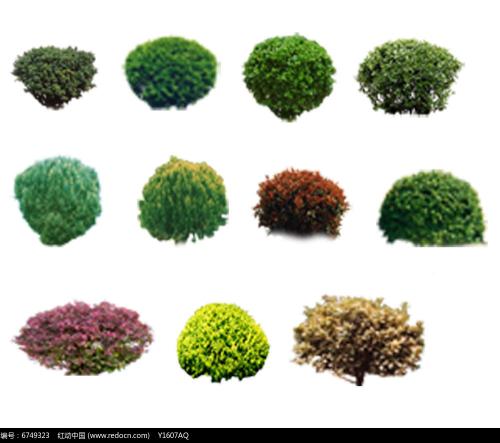
Common shrubs include:
Rose, azalea, peony, barberry, boxwood, sand cypress, creeping juniper, forsythia, winter jasmine, Chinese rose, jasmine, sand willow.
Shrubs refer to those relatively short trees that have no obvious main trunk and grow in a clumping form. They can generally be divided into several categories such as ornamental flowers, ornamental fruit, and ornamental branches and trunks, and are short, clumping woody plants that are perennial.
They are generally broadleaf plants, though some coniferous plants are also shrubs, such as juniper.
If the aboveground part dies back in winter but the root system still survives and new branches sprout again the following year, it is called a "semi-shrub."
For example, some Artemisia species are also perennial woody plants, but they die back in winter.
What tree species are shrubs?
1. It should be judged by the structure of the tree's growth and the growth characteristics of its branches. However, some nursery stock can also serve multiple purposes. For example, osmanthus: large ones with an obvious main trunk of more than two to three meters can be considered trees, but some small osmanthus can only be used as hedges. For instance, 'Fodingzhu' should be regarded as a shrub.
2. Generally, those below 3 m can be called shrubs, but in practice there is no clear dividing line.
3. Tree category: the plant body is tall (usually 6 m to several tens of meters), with an obvious tall main trunk. It can also be divided by height into four grades: great tree (above 31 m), large tree (21-30 m), medium tree (11-20 m), and small tree (6-10 m). Shrub category: the plant body is short (usually below 6 m), with a low main trunk.
From this it can also be seen that some trees are not absolute. As with the osmanthus mentioned above, it may be a small tree or a shrub.
4. Classification by the morphology of the plant stem
Tree: a woody plant with an upright main trunk and a height of more than 5 m is called a tree. Corresponding to low shrubs, the tall trees usually seen are all trees, such as kapok, pine, magnolia, and birch. Trees are also divided by whether they shed their leaves in winter or the dry season into deciduous trees and evergreen trees.
Shrub: a woody plant with no obvious main trunk, often producing multiple branches from the base.
Such plants are called shrubs, such as rose, ixora, azalea, and peony.